
Barley Malt Extract
Hordeum vulgare
additive
335 kcal per 100 g · source: USDA FoodData Central
Checking allergen data…
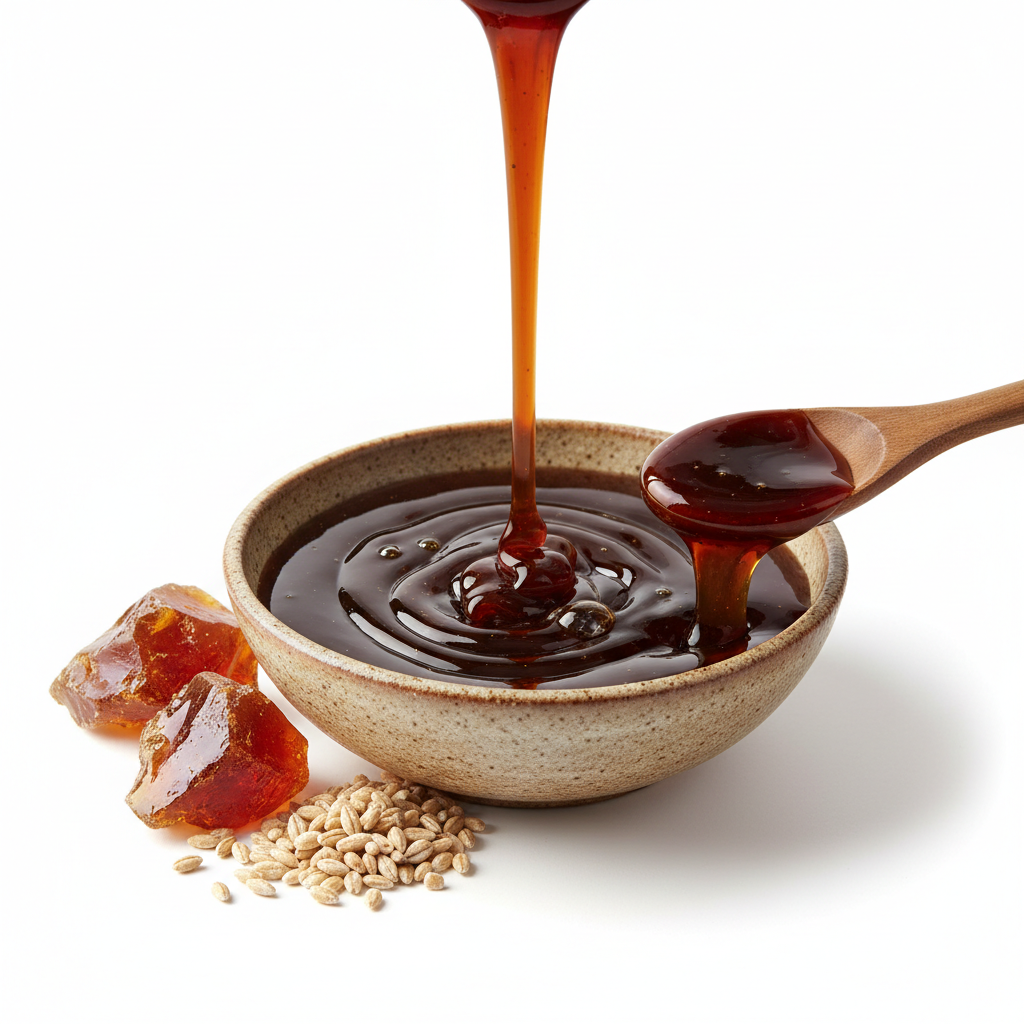
Barley Malt Extract (Hordeum vulgare), a viscous derivative of the Poaceae family, serves as a foundational diastatic and flavoring agent characterized by a deep mahogany hue and a complex sensory profile of toasted biscuit, dark molasses, and a lingering nutty sweetness. Produced through a controlled malting process where germinated grains are kilned to develop melanoidins via the Maillard reaction and subsequently mashed to convert starches into fermentable sugars, this extract provides a concentrated source of alpha-amylase enzymes and maltose. In professional baking, it is the quintessential additive for authentic New York-style bagels and artisanal sourdoughs, where its high sugar content accelerates yeast activity and its proteolytic enzymes soften gluten structures to produce a dense, chewy crumb and a high-gloss, deeply caramelized crust. Beyond the bakery, its rich enzymatic history is rooted in Northern European brewing and distilling traditions, where it functions as the primary fermentable substrate, contributing the essential body and cereal-forward backbone to stouts and porters. This ingredient is distinguished from simple syrups by its complex nitrogenous compounds and mineral density, which not only enhance the depth of savory glazes and malted milk applications but also act as a natural humectant to extend the shelf life of finished goods by retarding starch retrogradation.
Sensory profile
Taste
- sweet · 9/10
- umami · 5/10
- bitter · 3/10
Aroma
- malty · 10/10
- caramel · 8/10
- bread · 7/10
- nutty · 6/10
- roasted · 5/10
Stimulus
- warming · 3/10
- astringent · 2/10
Texture
- viscous · 10/10
- liquid · 6/10
Associated health effects (10)
- Beta-Glucan Cholesterol Reduction
- Caloric Density
- Glycemic Spiking from Refined Starch
- Dental Caries Promotion
- Barley Gluten Exposure Risk
- Exercise Rapid Energy Provision
- Flavor and Culinary Use
- Added Sugar Glycemic Impact
- Allergic Reaction Risk
- Beta-Glucan Prebiotic Support
Nutrition per 100 g (4)
- Energy: 335 kcal
- Protein: 10 g
- Fat: 0.5 g
- Fiber: 5 g