
sativum.ai · Spice blending
Spice blending
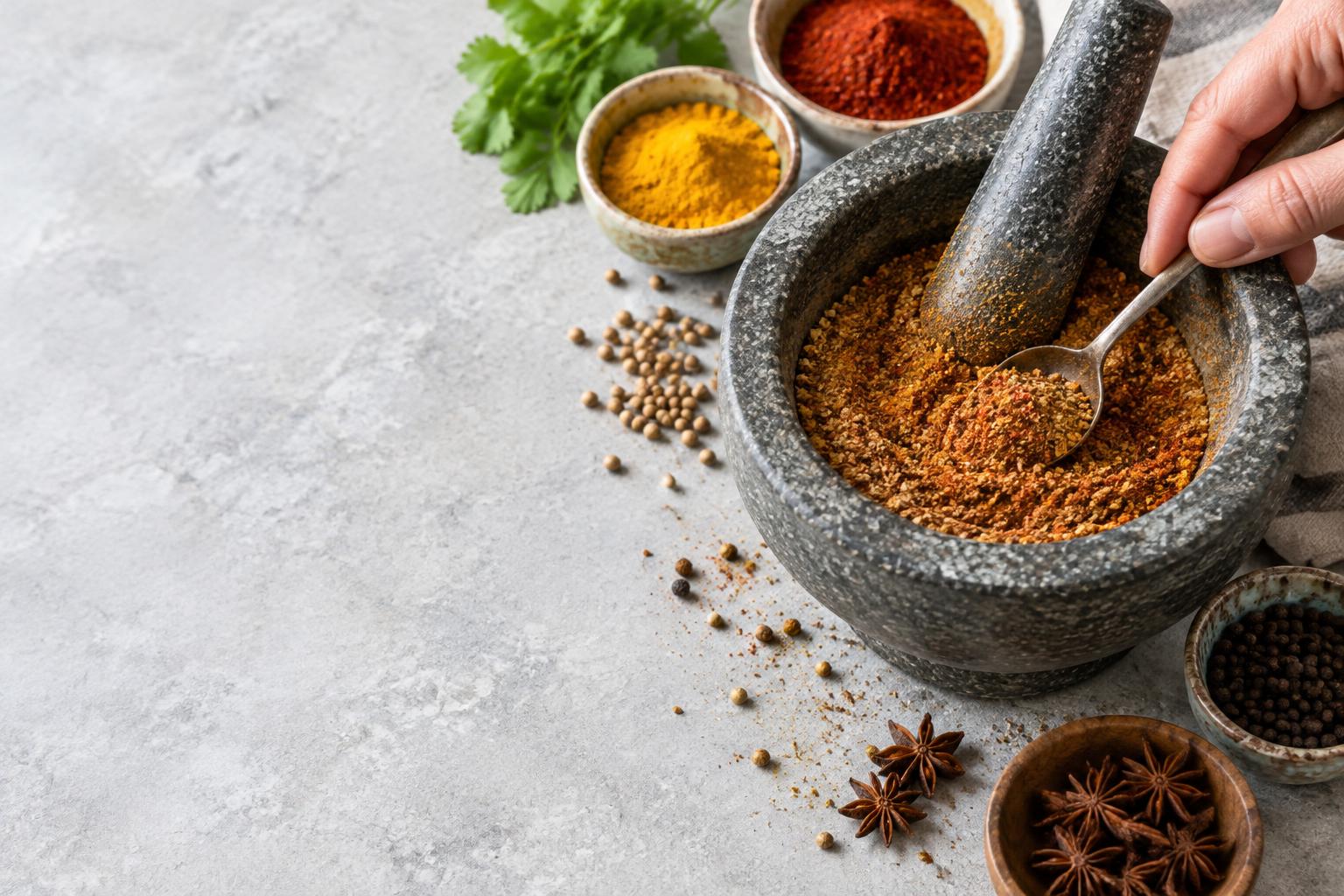
Good spice blends balance a dominant base, supporting spices and small accents. sativum.ai's blend creator applies this structure to real sensory and chemical data so you can build your own blends and recipes.
In the sativum.ai database
Spice blending: how to make your own spice blends
The 70-20-10 principle
Most balanced blends follow a simple structure: roughly 70% base spices that carry the character, 20% supporting spices that round it out, and 10% accents that add lift or heat. Our creator uses this proportion as its starting point.
- Base: the identity of the blend (for example cumin and coriander).
- Modifiers and bridges: spices that connect flavours sharing aroma compounds.
- Accents: small amounts of intense spices like clove or chili.
Heat that is real, not invented
Heat descriptions in generated blends must be backed by the actual pungent ingredients and their hotness tiers. A blend without chili, pepper or ginger will not be described as fiery.
Heritage blends and cuisines
The ingredient database covers classic seasonings by cuisine, and canonical heritage blends such as garam masala, ras el hanut and Cajun seasoning serve as references when judging how authentic a product or recipe is.
Start from a mood or a goal
You can start a blend from a cuisine, a limbic flavour persona discovered in the quiz, or a functional goal. Each blend can be shared as PDF or image with nutrition and allergen data.
Frequently asked questions
- How long do homemade spice blends keep?
- Ground blends are best within a few months when stored airtight, cool and dark; whole spices keep longer.
- Should I toast spices before blending?
- Dry-toasting whole seeds briefly deepens their aroma. Let them cool fully before grinding and mixing.