
Calamansi
Citrus × microcarpa
fruit
40 kcal per 100 g · source: USDA FoodData Central
Checking allergen data…
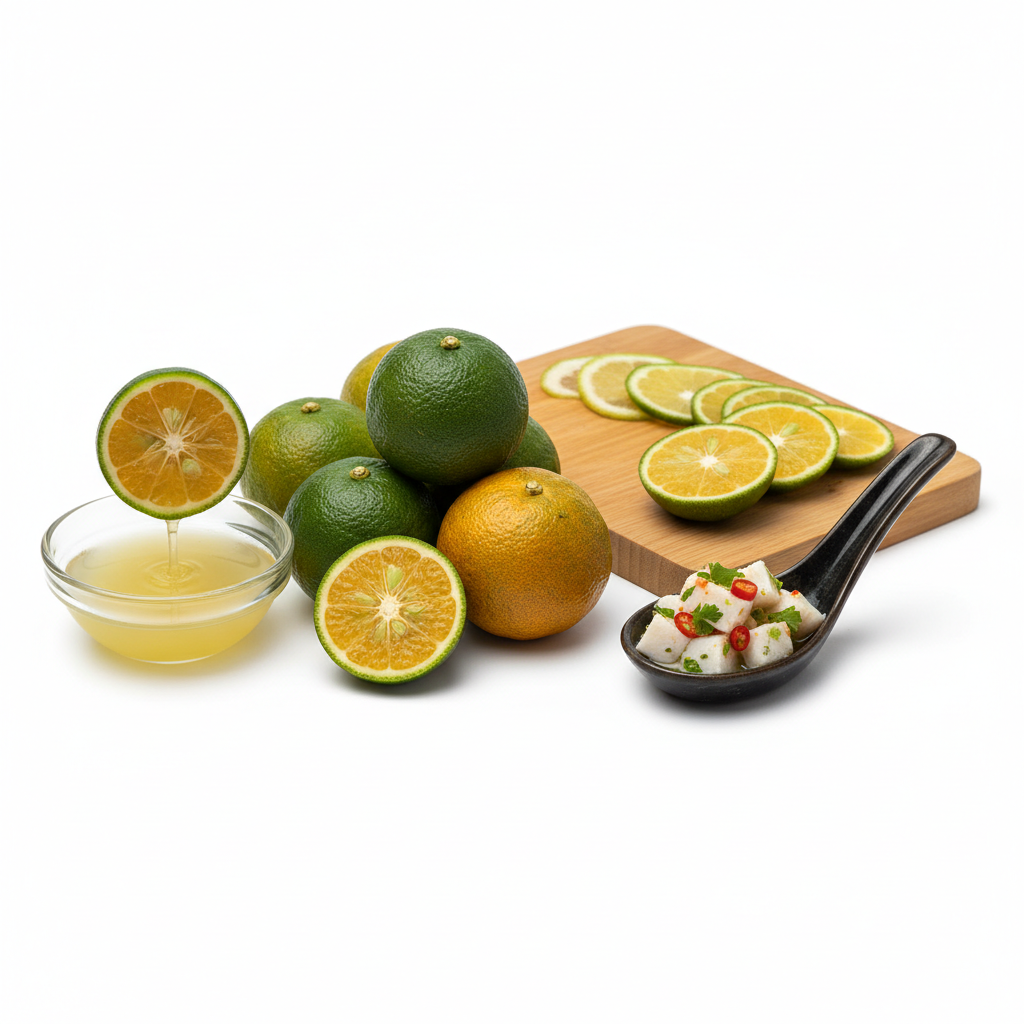
Calamansi (Citrus × microcarpa) is a small, thin-skinned hybrid citrus belonging to the Rutaceae family, prized for a sensory profile that bridges the gap between the sharp acidity of a Persian lime and the floral, honeyed sweetness of a mandarin orange. Its aroma is intensely volatile, releasing concentrated notes of pine and orange blossom when the rind is bruised, while the juice offers a complex tartness with a distinct musky undertone. In Filipino cuisine, it is the foundational acid for *Kinilaw* (a regional ceviche), where its high citric acid concentration rapidly denatures fish proteins to "cook" the flesh while maintaining a bright, translucent texture that harsher vinegars might toughen. Beyond raw applications, it is essential in *Pancit* and *Sawsawan* dipping sauces, acting as a chemical foil to heavy fats and umami-rich soy sauces by cleaving through lipid coatings on the palate. Originating in Southeast Asia and deeply woven into the culinary identity of the Philippines, the fruit is often harvested while the exocarp is still dark green to preserve its bracing acidity, though it develops a mellow, fermented funk and increased brix levels as it ripens to a golden orange. What distinguishes the Calamansi technically is its exceptionally high pectin content and the permeability of its peel; the entire fruit is often pressed whole, allowing the essential oils from the rind to emulsify directly into the juice, creating a naturally stable, aromatic infusion that outperforms standard lemons in curd stability and vinaigrette emulsification.
Sensory profile
Taste
- sour · 9/10
- sweet · 4/10
- bitter · 3/10
Aroma
- citrus · 10/10
- lime · 8/10
- orange-blossom · 6/10
- pine · 4/10
- floral · 4/10
- honey · 3/10
Stimulus
- biting · 7/10
- astringent · 6/10
- piercing · 6/10
Texture
- liquid · 9/10
- moist · 8/10
- viscous · 6/10
Associated health effects (12)
- Low Energy Density and Flavor Substitution
- Collagen Synthesis Enhancement
- Improved Nutrient Absorption
- Antioxidant
- Digestive Discomfort
- Dental Enamel Erosion
- Acid Neutralization
- Antiscorbutic Activity
- Culinary Herb Vitamin C Contribution
- Immune Function
- Digestive Aid
- Anti-inflammatory
Nutrition per 100 g (4)
- Energy: 40 kcal
- Protein: 0.8 g
- Fat: 0.2 g
- Fiber: 1 g