
Okra
Abelmoschus esculentus
vegetable
33 kcal per 100 g · source: USDA FoodData Central
Checking allergen data…
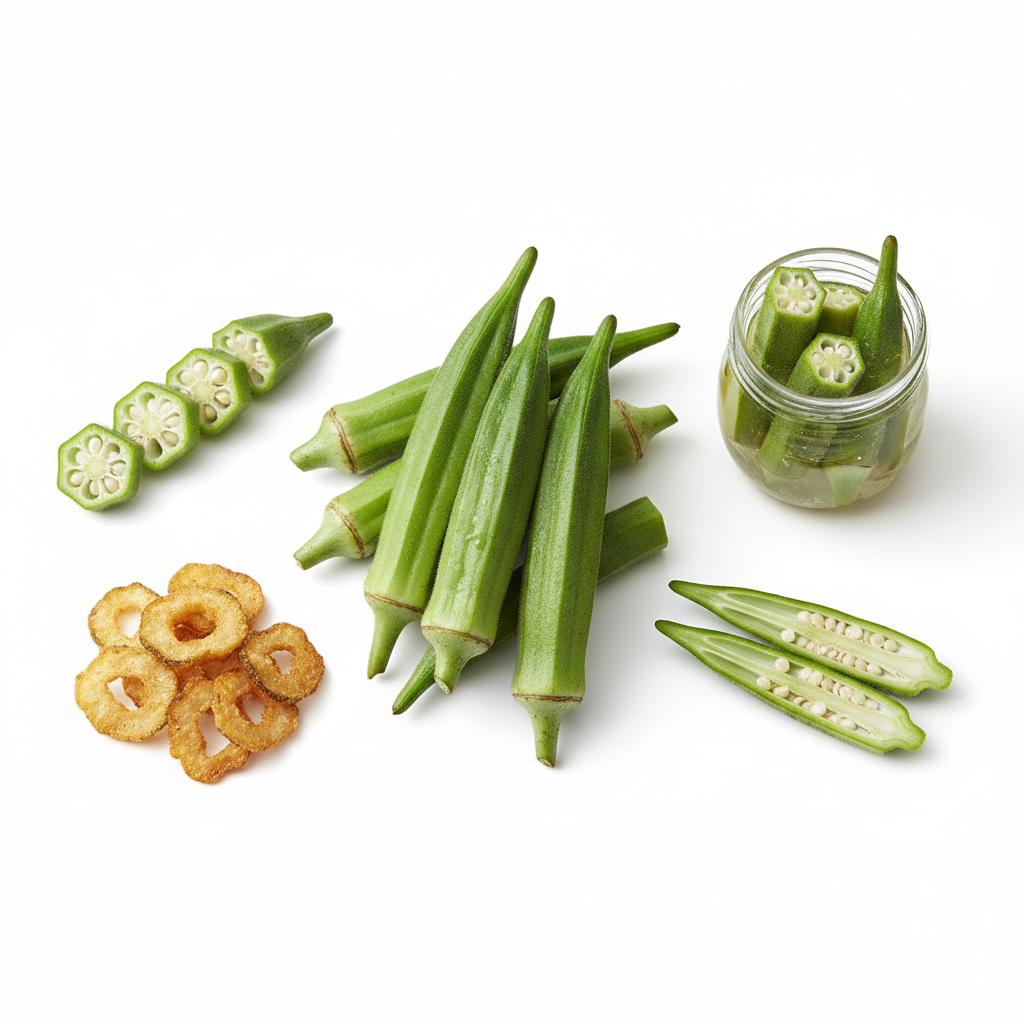
Okra (Abelmoschus esculentus), a prominent member of the Malvaceae family alongside hibiscus and cacao, is defined by its grassy, vegetal flavor profile that balances the sweetness of green beans with a subtle, earthy nuttiness reminiscent of asparagus. When sliced, the pods release a distinctively viscous mucilage—a complex mixture of proteins and polysaccharides—which serves as a powerful natural thickening agent in iconic dishes like Louisiana Gumbo and West African *Supu ya Okra*. This mucilaginous quality is a technical asset in slow-simmered stews, where it emulsifies fats and creates a silky, full-bodied mouthfeel without the need for a flour-based roux. Conversely, high-heat applications such as Indian *Bhindi Masala* or Southern-style deep frying utilize dry heat to caramelize the exterior and neutralize the slime, resulting in a crisp, snap-like texture and a concentrated, toasted aroma. Tracing its provenance to Ethiopia and the Nile Valley, okra traveled through the Middle East and South Asia before becoming a cornerstone of African Diasporic cuisine in the Americas, where it remains a symbol of cultural resilience and agricultural ingenuity. The vegetable is unique for its high concentration of soluble fiber, which allows it to withstand prolonged braising without losing structural integrity, unlike more delicate green vegetables. For modern culinary applications, the pods can also be pickled in a vinegar brine to transform their texture into a firm, crunchy snack, or charred whole over binchotan charcoal to highlight their tender, seed-filled interior. Whether utilized for its chemical thickening properties or its ability to take on a smoky char, okra offers a structural complexity that is indispensable in both traditional heritage cooking and contemporary vegetable-forward gastronomy.
Sensory profile
Taste
- sweet · 4/10
- umami · 3/10
- bitter · 2/10
Aroma
- green · 8/10
- grassy · 7/10
- cooked-vegetable · 6/10
- earthy · 5/10
- nutty · 3/10
Stimulus
- astringent · 3/10
Texture
- viscous · 9/10
- crisp · 7/10
- firm · 6/10
Associated health effects (9)
- Routine Food Safety
- Antioxidant
- Micronutrient Contribution
- Dietary Fiber
- Blood Lipid Profile Improvement
- Digestive Health
- Anticancer Potential
- Anti-inflammatory
- Blood Glucose Regulation
Nutrition per 100 g (4)
- Energy: 33 kcal
- Protein: 2 g
- Fat: 0.2 g
- Fiber: 3.2 g