
Rice Vinegar
Oryza sativa
vinegar
4 kcal per 100 g · source: USDA FoodData Central
Checking allergen data…
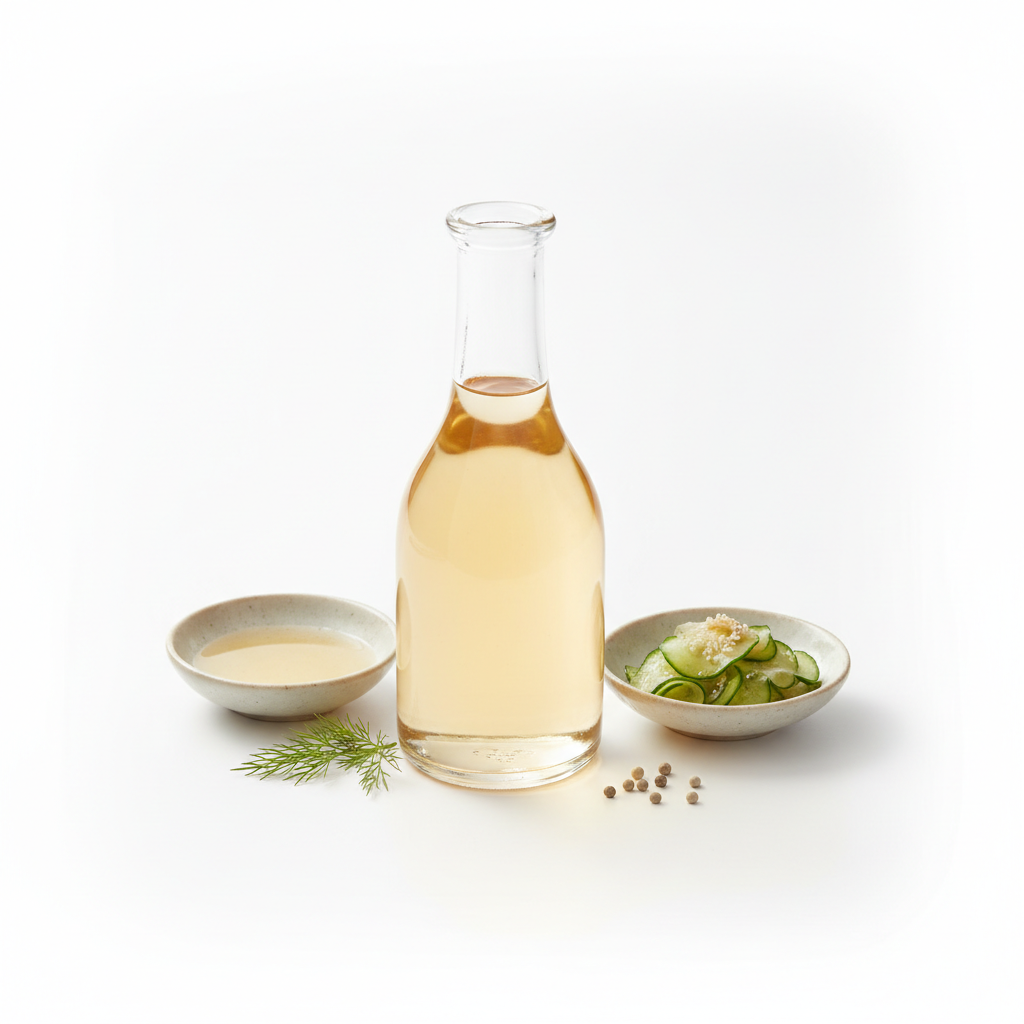
Rice Vinegar (Oryza sativa) is a cornerstone of East Asian fermentation, distinguished by a delicate, pale-straw hue and a mild acidity—typically ranging from 4% to 5% acetic acid—that offers a softer, more rounded palate than the sharp, aggressive profile of distilled grain or wine vinegars. Its sensory profile is defined by a subtle, cereal-like sweetness and a clean, umami-rich finish derived from the breakdown of rice proteins into amino acids during the two-stage fermentation process, where steamed rice is first converted to sake by *Aspergillus oryzae* before being oxidized into vinegar. This gentle acidity makes it indispensable in the preparation of *shari* (sushi rice), where it seasons the grains without toughening the starch, and in *sunomono* (cucumber salads), where its low pH brightens the vegetable’s crispness while the residual sugars balance the salt of the soy sauce. Originating in China before becoming a pillar of Japanese and Korean culinary traditions, authentic rice vinegar is often produced through "static fermentation," a slow aging process in earthenware crops that allows for a complex development of esters and organic acids. Unlike high-acid vinegars that can denature proteins too rapidly, rice vinegar’s moderate acidity allows it to act as a gentle tenderizer in marinades, subtly breaking down connective tissues without turning the exterior of the meat mealy. Its unique chemical composition, particularly the presence of lactic and succinic acids, provides a sophisticated depth that enhances the natural sweetness of seafood and balances the capsaicin heat in Sichuanese dressings, making it a technical necessity for achieving "brightness" without overwhelming the primary ingredients of a dish.
Sensory profile
Taste
- sour · 7/10
- sweet · 3/10
- umami · 2/10
Aroma
- sourish · 8/10
- malty · 5/10
- fruity · 4/10
- balsamic · 3/10
- cooked-vegetable · 2/10
Stimulus
- biting · 4/10
- astringent · 3/10
- pungent · 2/10
Texture
- liquid · 10/10
- viscous · 2/10
Associated health effects (11)
- Acidity-Induced Heartburn
- Acidity-Induced Gastric Irritation
- Acidity-Induced Dental Erosion
- Appetite Reduction
- Food Preservation Support
- Body Fat Reduction
- Acetic Acid-Mediated Calcium Absorption Enhancement
- Blood Lipid Profile Improvement
- Gastric Emptying Delay
- Postprandial Glucose Reduction
- Blood Glucose Regulation
Nutrition per 100 g (4)
- Energy: 4 kcal
- Protein: 0.1 g
- Fat: 0.1 g
- Fiber: 0 g