
Acerola Sensory Map
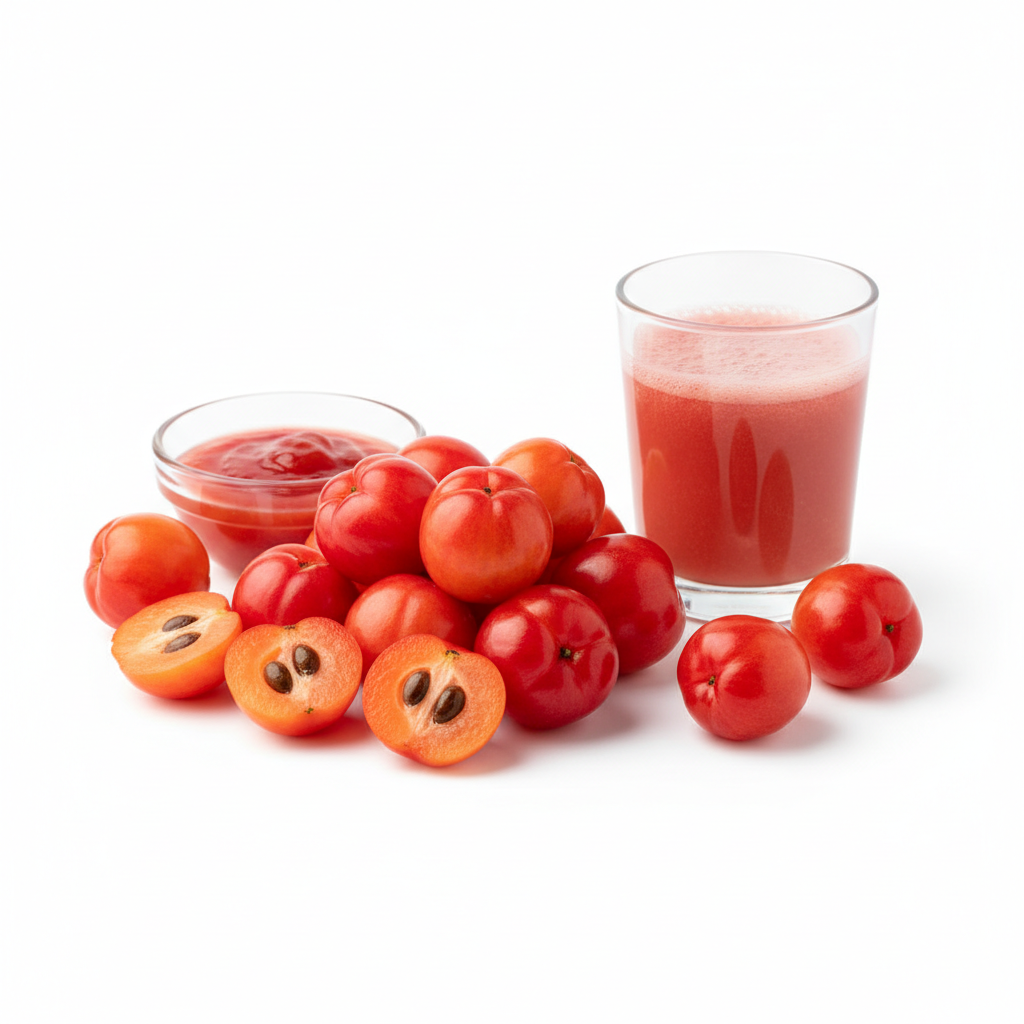
Acerola
Malpighia emarginata
Sensory Profile
Tastes
Basic flavor profiles
Aromas
Scent characteristics
Stimuli
Sensory sensations
Textures
Physical properties
About Acerola
Acerola (Malpighia emarginata), a tropical shrub belonging to the Malpighiaceae family, is prized in the culinary world for its exceptionally high ascorbic acid content and a sensory profile defined by sharp, effervescent acidity balanced by delicate notes of green apple and tart cherry. The fruit’s aroma is subtly floral with a distinct malic undertone, while its texture is characterized by a thin, fragile epicarp and a succulent, melting pulp that yields easily to pressure, though it contains three small, angular seeds that must be managed during processing. In regional Brazilian and Caribbean cuisines, it is the cornerstone of suco de acerola and sophisticated fruit coulis; the fruit’s high acidity acts as a natural brightener, effectively cutting through the richness of fatty proteins or stabilizing the vibrant pigments in fruit-based sauces through pH reduction. Beyond fresh applications, acerola is a critical technical ingredient in artisanal baking, where its concentrated juice serves as a natural dough conditioner; the high vitamin C levels act as an oxidizing agent that strengthens gluten networks, resulting in improved loaf volume and a finer crumb structure. Native to the West Indies and northern South America, the fruit is highly perishable due to its rapid respiration rate, necessitating immediate processing or flash-freezing to preserve its volatile aromatic compounds and prevent the enzymatic browning that occurs shortly after harvest. This unique chemical composition—specifically the synergy between its polyphenols and organic acids—makes acerola not only a nutritional powerhouse but a functional tool for chefs seeking to manipulate texture and acidity without the heavy citrus profile of lemons or limes.
Associated health effects(9)
- Antioxidant
- Kidney Stone Formation Risk
- Allergic Reaction Risk
- Antioxidant Polyphenol Provision
- Antiscorbutic Activity
- Digestive Upset
- Immune Function
- Iron Absorption Enhancement
- Anti-inflammatory
Nutrition per 100 g(4)
- Energy: 38 kcal
- Protein: 0.5 g
- Fat: 0.2 g
- Fiber: 1 g