
Achiote Sensory Map
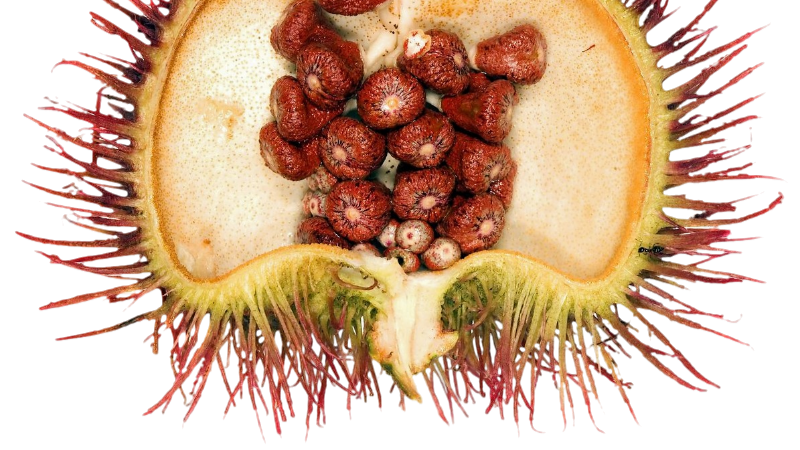
Achiote
Bixa orellana
Sensory Profile
Tastes
Basic flavor profiles
Aromas
Scent characteristics
Stimuli
Sensory sensations
Textures
Physical properties
About Achiote
Achiote, often referred to as annatto, has a mild, slightly sweet, and earthy flavor with subtle notes of pepper and nutmeg. Its unique taste is complemented by a hint of bitterness, making it a versatile spice in various culinary applications. Achiote is primarily used in Latin American and Caribbean cuisines, where it serves as both a spice and a natural coloring agent. It is a key ingredient in traditional dishes such as cochinita pibil, a slow-roasted pork dish from Mexico, and is also used in rice dishes, marinades, and sauces. Achiote paste, made by grinding the seeds with spices and vinegar, is popular for imparting color and flavor to meats and vegetables. Additionally, it can be infused into oils for cooking or as a base for dressings. Achiote is derived from the seeds of the Bixa orellana tree, which is native to tropical regions of Central and South America. Indigenous peoples have utilized achiote for centuries, not only for its culinary applications but also for its use as a dye in textiles and body paint. The seeds of the achiote plant are small, reddish-brown, and encased in spiky pods. When ground, they produce a vibrant orange-red powder that is prized for its natural coloring properties.
Associated health effects(19)
- Safety and Toxicity
- Bixin-Mediated Retinal Protection
- Antioxidant
- Allergic Reactions
- Allergy Risk
- Vitamin E Source
- Analgesic Activity
- Wound Healing
- Antifungal
- Liver Support
- Skin Health
- Tocotrienol Bone Formation Enhancement
- Bone Health
- Antidiarrheal Activity
- Antibacterial
- Heart Health
- Eye Health
- Anticancer Potential
- Anti-inflammatory
Nutrition per 100 g(4)
- Energy: 374 kcal
- Protein: 5 g
- Fat: 9 g
- Fiber: 25 g