
Beta-carotene Sensory Map
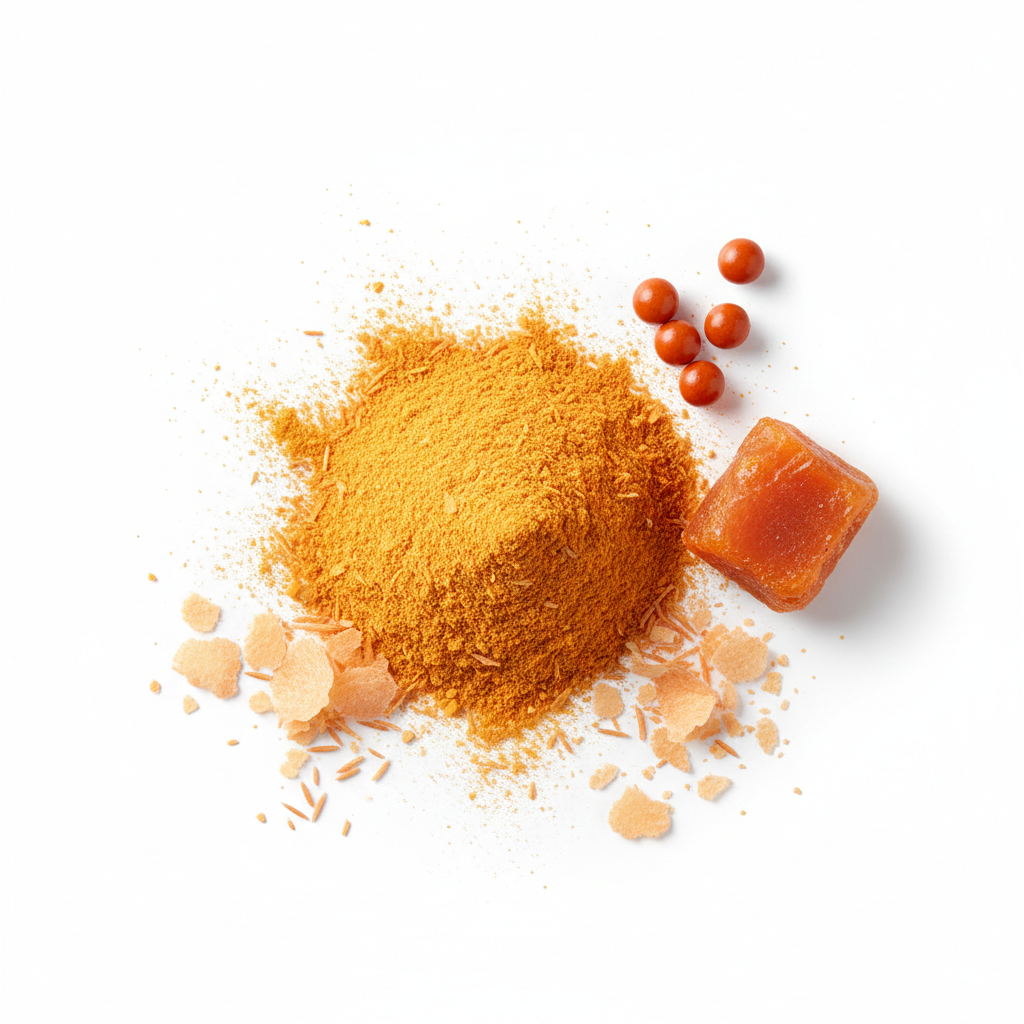
Beta-carotene
Beta-carotenum
Sensory Profile
Tastes
Basic flavor profiles
Aromas
Scent characteristics
Stimuli
Sensory sensations
Textures
Physical properties
About Beta-carotene
Beta-carotene (E160a, green label, safe) is a fat-soluble terpenoid pigment that imparts a spectrum of hues ranging from soft apricot to deep, saturated vermillion, while contributing a subtle, earthy sweetness reminiscent of sun-dried hay and violet root. In iconic applications such as **Traditional Red Leicester cheese** and **Artisanal Cultured Butter**, it is utilized not merely for aesthetics but to mimic the high-vitamin, grass-fed lipid profile of spring milk, where it integrates seamlessly into the fat globules to provide a rich, creamy mouthfeel without altering the delicate lactic acid balance. Historically derived from the maceration of heirloom carrots or the extraction of *Dunaliella salina* algae, this pigment holds deep cultural significance in Northern European dairy traditions, where it was historically used to maintain visual consistency in fats during the pale winter months. Unlike synthetic dyes, beta-carotene acts as a potent antioxidant within culinary matrices, protecting delicate lipids from photo-oxidation and rancidity, a technical property that ensures the flavor stability of high-fat emulsions over extended aging periods. Its unique lipophilic nature allows it to serve as a carrier for fat-soluble aromatic compounds, enhancing the perceived "richness" of a dish by anchoring volatile flavor molecules to the palate.
Associated health effects(8)
- Beta-Carotene Source
- Beta-Carotene-Mediated Vitamin A Support
- Lung Cancer Risk Elevation in Smokers and Asbestos-Exposed Individuals
- Antioxidant
- Carotenemia
- Carotenoid Provision
- Excess Beta-Carotene Intake
- Beta-Carotene-Mediated Eye Health Support
Nutrition per 100 g(4)
- Energy: 4 kcal
- Protein: 0.1 g
- Fat: 0.1 g
- Fiber: 0.2 g