
Carnauba Wax Sensory Map
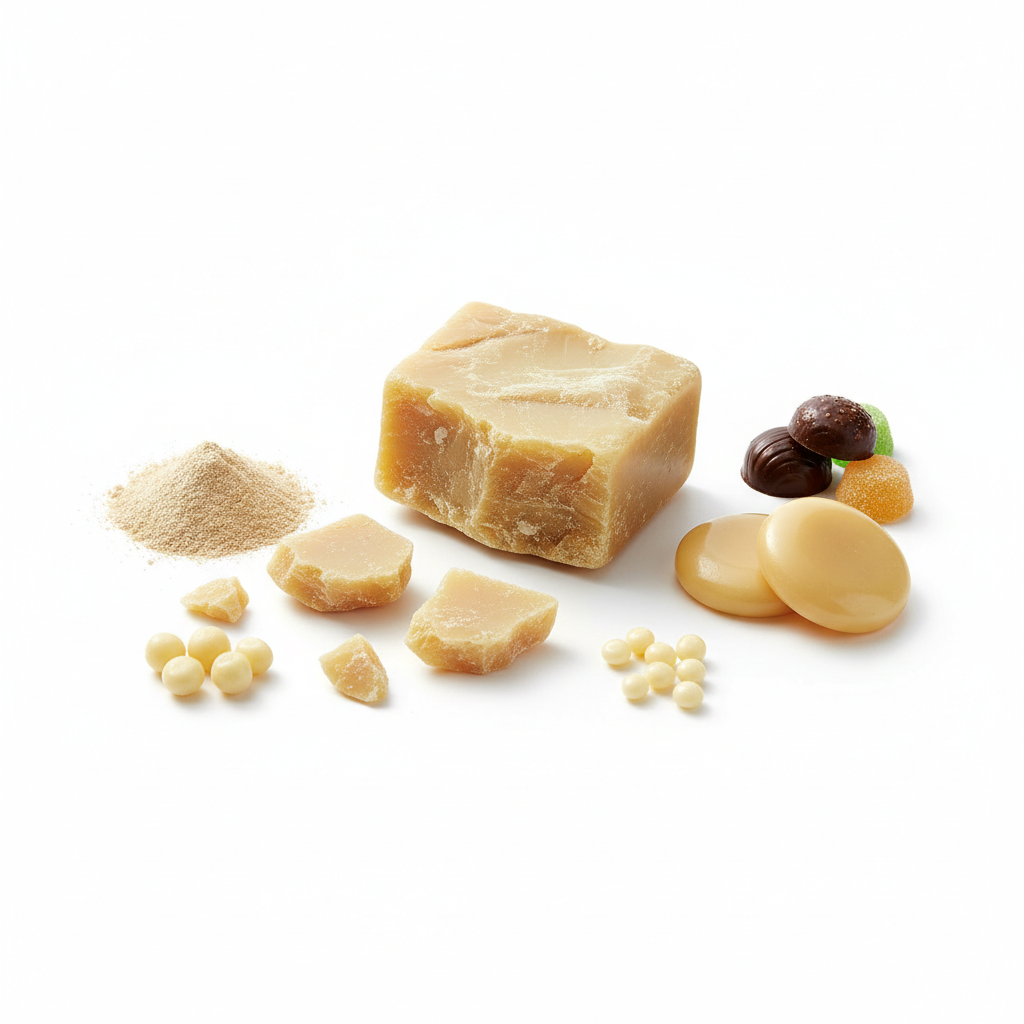
Carnauba Wax
Copernicia prunifera
Sensory Profile
Tastes
Basic flavor profiles
Aromas
Scent characteristics
Stimuli
Sensory sensations
Textures
Physical properties
About Carnauba Wax
Carnauba Wax (Copernicia prunifera) Derived from the foliar secretions of the Brazilian "Tree of Life," Carnauba wax is a high-melting-point botanical lipid characterized by a neutral sensory profile, possessing a faint, hay-like aroma and a brittle, non-tacky texture that remains stable even under intense kitchen heat. In the confectionery arts, it is the definitive glazing agent for iconic items like **panned chocolates** and **gourmet jelly beans**, where it provides a high-gloss, hydrophobic barrier that prevents moisture migration and ensures a crisp "snap" upon consumption. This wax is harvested through a traditional process of sun-drying and thrashing the fronds of palms native to the semi-arid Piauí and Ceará regions of Northeastern Brazil, a method that preserves the long-chain fatty alcohols and esters responsible for its exceptional hardness. Unlike softer beeswax or petroleum-based paraffin, Carnauba boasts a melting point of approximately 82–86°C (180–187°F), making it a technically superior release agent for high-temperature baking molds and a critical component in creating stable, ultra-thin protective coatings for pome fruits to extend post-harvest shelf life. Its unique crystalline structure allows it to be buffed to a mirror-like sheen without imparting any residual oiliness or flavor interference, serving as a functional tool for chefs who require precise moisture control and aesthetic brilliance in complex sugar work.
Associated health effects(7)
- Food Additive-Induced Gut Disruption
- General nutrient support
- Digestive Bulk Support
- Culinary Emulsifier Technological Functionality
- Acute Oral Toxicity
- Gastrointestinal Intolerance at Excessive Intake
- Occupational Handling Irritation
Nutrition per 100 g(4)
- Energy: 900 kcal
- Protein: 0 g
- Fat: 100 g
- Fiber: 0 g