
Carrageenan Sensory Map
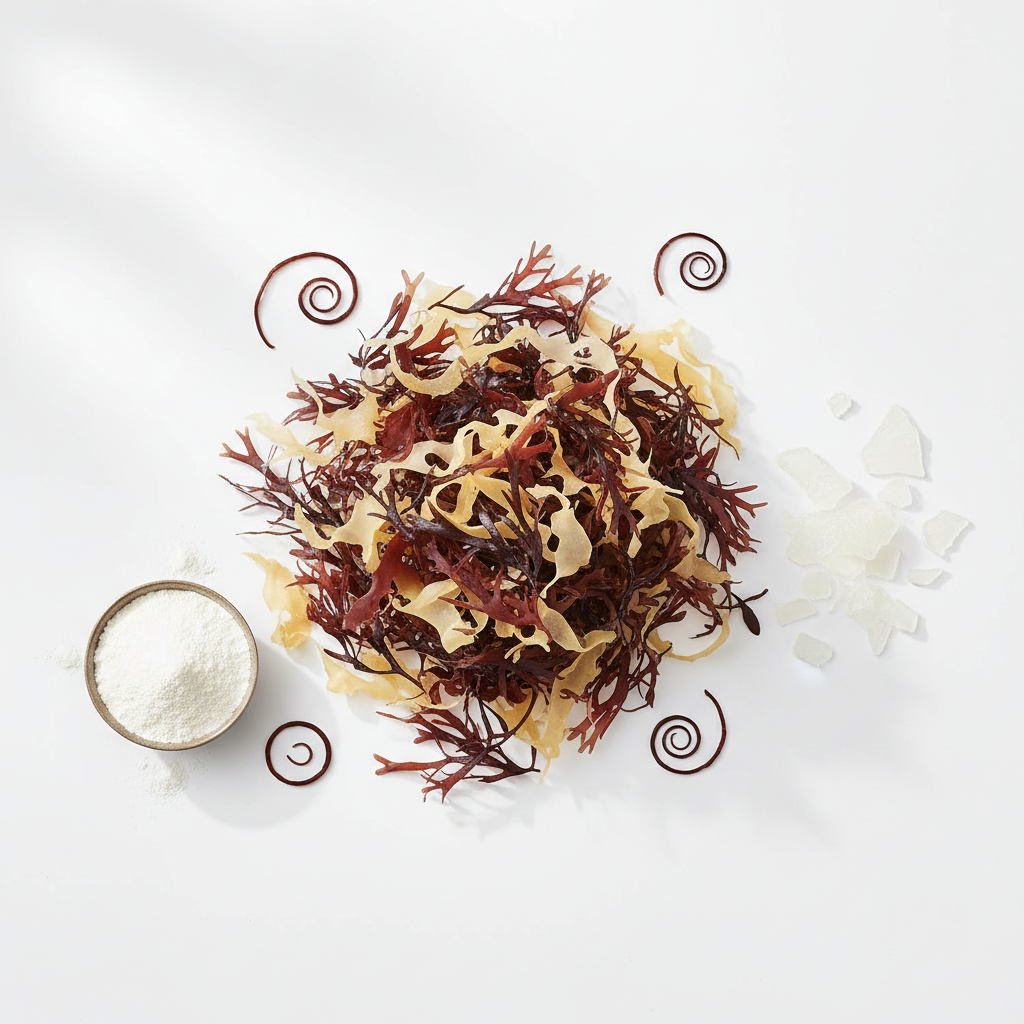
Carrageenan
Chondrus crispus
Sensory Profile
Tastes
Basic flavor profiles
Aromas
Scent characteristics
Stimuli
Sensory sensations
Textures
Physical properties
About Carrageenan
Carrageenan (E407, orange label = unsafe) Derived from red edible seaweeds, Carrageenan is a hydrocolloid prized for its neutral sensory profile, exhibiting a clean, odorless palate and a translucent appearance that ensures the primary flavors of a dish remain unmasked. In professional pastry and dairy applications, it is indispensable for creating the iconic silken mouthfeel of a traditional Blancmange or the structural integrity of a Panna Cotta, where its specific interaction with milk proteins—specifically the formation of a complex with kappa-casein—allows for a stable, thermoreversible gel that mimics the richness of high-fat cream. Historically harvested from the rocky Atlantic coasts of Ireland and the British Isles, where it is known as "Irish Moss," the seaweed was traditionally boiled in milk to release its mucilaginous polysaccharides, a practice that laid the foundation for modern thickening techniques. What distinguishes Carrageenan from other gelling agents like agar or gelatin is its unique ionic sensitivity; the presence of calcium or potassium ions triggers a sophisticated molecular cross-linking that can be calibrated to produce textures ranging from a delicate, elastic wobble to a firm, brittle snap. This technical versatility allows chefs to manipulate the rheology of fluids with surgical precision, ensuring that suspensions remain homogenous and emulsions do not synerese over extended service periods.
Associated health effects(7)
- Gastrointestinal Inflammation Promotion
- Culinary Emulsifier Technological Functionality
- Allergic Reaction Risk
- Culinary Thickener Functionality
- Digestive Aid
- Intestinal Barrier Disruption
- Anti-inflammatory
Nutrition per 100 g(4)
- Energy: 320 kcal
- Protein: 0 g
- Fat: 0.1 g
- Fiber: 0 g