
Cocoa Mass Sensory Map
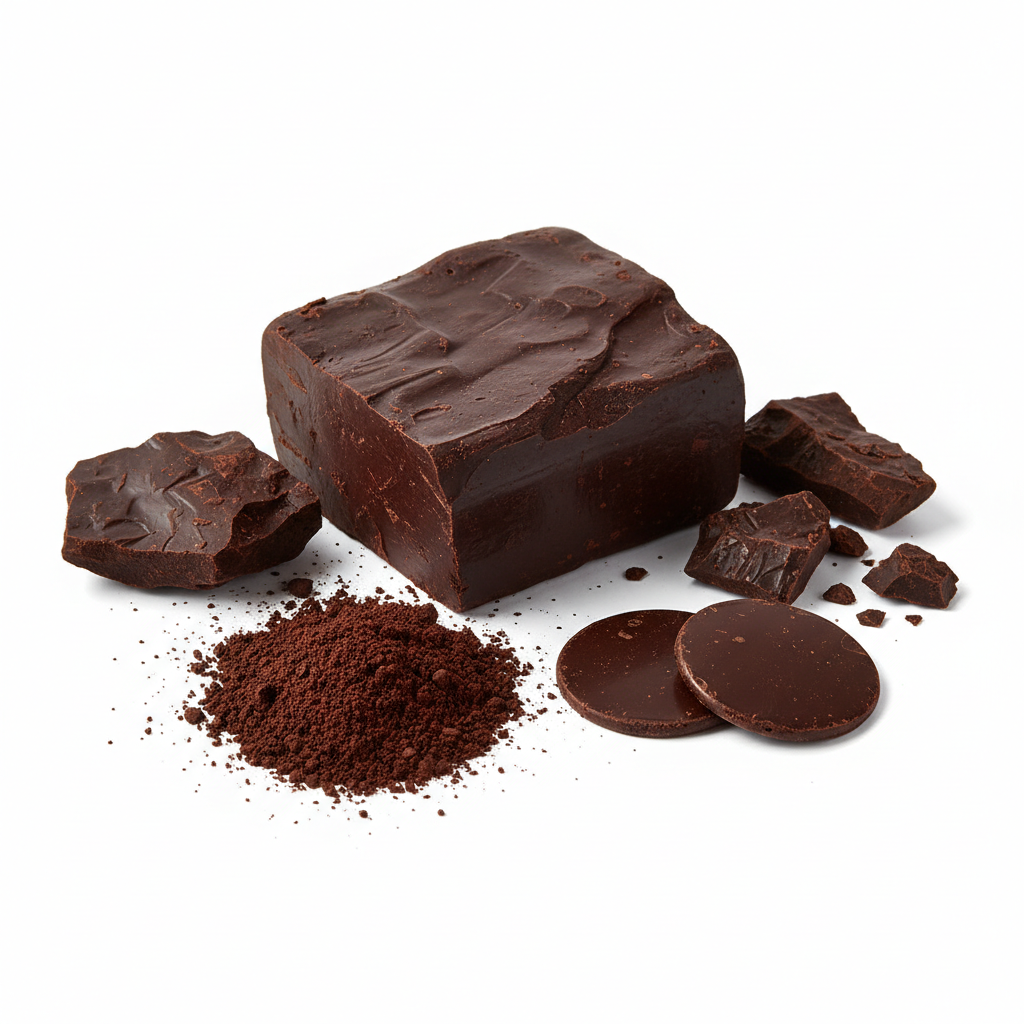
Cocoa Mass
Theobroma cacao
Sensory Profile
Tastes
Basic flavor profiles
Aromas
Scent characteristics
Stimuli
Sensory sensations
Textures
Physical properties
About Cocoa Mass
Cocoa Mass (Theobroma cacao), also known as chocolate liquor, is the pure, unsweetened essence of the cacao bean, produced by grinding fermented and roasted nibs into a smooth, viscous paste that solidifies at room temperature. Its sensory profile is defined by an intense, astringent bitterness and deep earthy undertones, carrying aromatic notes of toasted nuts, red fruit acidity, and a lingering tobacco finish, all delivered through a dense, micro-particulate texture that melts precisely at human body temperature. In professional pastry, it serves as the structural backbone for iconic preparations like *Sacher Torte* or a traditional *Ganache*, where its high concentration of cocoa butter (approximately 53-55%) provides the necessary fat for stable emulsification and a crisp "snap" upon tempering. Originating in the tropical equatorial regions of Mesoamerica, where it was historically revered by the Maya and Aztecs as a sacred ceremonial beverage, modern cocoa mass relies on a rigorous fermentation process that develops complex precursors to flavor, followed by "conching"—a technical aeration and agitation process that rounds out volatile acids and polishes the mouthfeel. Unlike commercial chocolate, cocoa mass contains no added sugar or lecithin, making it a critical technical tool for chefs who require precise control over the sugar-to-fat ratio and the deep, non-alkalized pigment of the finished dish.
Associated health effects(12)
- Cocoa Polyphenol-Linked Cardiometabolic Modulation
- Caloric Density
- Methylxanthine-Induced Stimulation
- Blood Pressure Reduction
- Aflatoxin Contamination Risk
- Cocoa-Derived Heavy Metal Exposure
- Endothelial Function Enhancement
- Added Sugar Glycemic Impact
- Antioxidant Polyphenol Provision
- Triglyceride Reduction
- Digestive Aid
- Cholesterol Improvement
Nutrition per 100 g(4)
- Energy: 590 kcal
- Protein: 20 g
- Fat: 43 g
- Fiber: 10 g