
Cocoa Powder Sensory Map
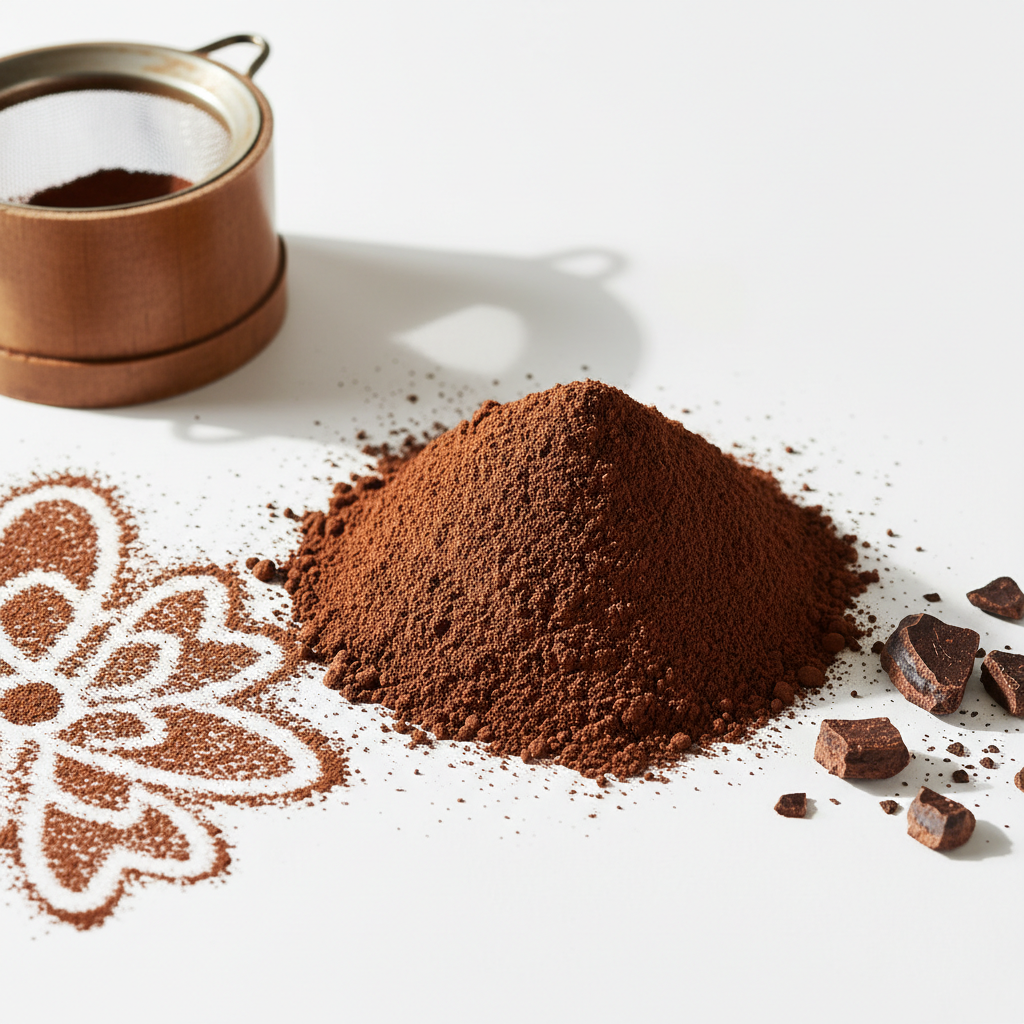
Cocoa Powder
Theobroma cacao
Sensory Profile
Tastes
Basic flavor profiles
Aromas
Scent characteristics
Stimuli
Sensory sensations
Textures
Physical properties
About Cocoa Powder
Cocoa Powder (Theobroma cacao), a derivative of the Malvaceae family, is a concentrated solid produced by hydraulic pressing of fermented, roasted cacao liquor to remove the majority of its lipid content (cocoa butter). Its sensory profile is defined by a complex bitterness and astringency, offering deep notes of dark red fruit, roasted earth, and tobacco, accompanied by a fine, silty texture that provides a matte finish to the palate. In iconic applications like the **French Soufflé**, cocoa powder provides structural stability and intense flavor without the weight of fats that might collapse the egg-white foam, while in a **Mexican Mole Poblano**, its polyphenols act as a thickening agent and flavor bridge, balancing the heat of dried chilies with a savory, umami-rich depth. Originating in the tropical regions of the Americas, particularly the Amazon basin, cacao was historically revered by Mayan and Aztec civilizations as a divine currency before European processing methods—specifically the 19th-century "Dutching" process—transformed it into a global culinary staple. This alkalization process is a critical distinguishing feature, as it neutralizes the natural acidity of the bean (raising the pH from roughly 5.0 to 7.0 or higher), which not only darkens the pigment to a deep mahogany but also dictates how the powder interacts with leavening agents like baking soda. Because natural cocoa powder is highly acidic and hygroscopic, it functions as a tenderizer in baking by interfering with gluten development, resulting in a tighter, more delicate crumb structure than that achieved with melted chocolate.
Associated health effects(10)
- Caloric Density
- Drug Interactions
- Antioxidant
- Blood Pressure Reduction
- Endothelial Function Enhancement
- Heavy Metal Exposure from Cocoa
- High Sugar Content
- Oxalate-Induced Kidney Stone Formation Risk
- Triglyceride Reduction
- Anti-inflammatory
Nutrition per 100 g(4)
- Energy: 228 kcal
- Protein: 20 g
- Fat: 13 g
- Fiber: 33 g