
Collagen Sensory Map
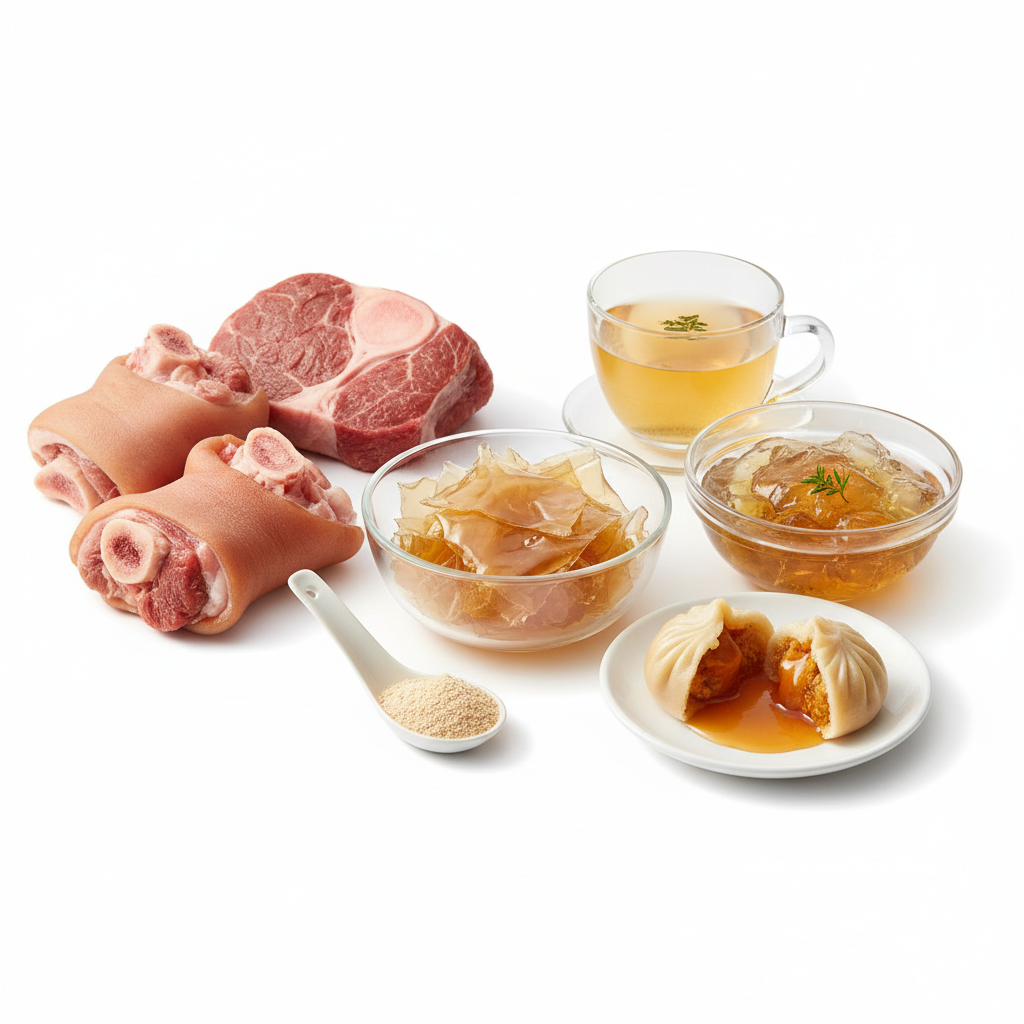
Collagen
Sensory Profile
Tastes
Basic flavor profiles
Aromas
Scent characteristics
Stimuli
Sensory sensations
Textures
Physical properties
About Collagen
Derived from the partial hydrolysis of porcine or bovine connective tissue, culinary collagen—commonly known as gelatin—is a flavorless, translucent protein that functions as a powerful hydrocolloid, providing a clean, melt-in-the-mouth texture due to its unique melting point just below human body temperature. In classical French *Aspic* or the Cantonese *Xiao Long Bao* (soup dumpling), gelatin acts as a structural stabilizer; in the latter, it is chilled into a firm "aspic" jelly that, when steamed, undergoes a phase transition back into a rich, viscous liquid, trapping intense savory juices within the dough. Unlike plant-based thickeners, gelatin forms a thermo-reversible triple-helix protein network that creates a smooth, elastic mouthfeel without masking the delicate aromatics of the base liquid. Its provenance is rooted in the historical "stockpot culture" of Europe and Asia, where long-simmered cartilaginous cuts like trotters and shanks were prized for their ability to transform thin broths into velvety, lip-coating sauces through the slow breakdown of collagen into gelatin. Technically unique for its high concentration of the amino acids glycine and proline, it serves as a superior clarifying agent in *consommé* through a process called "gelatin filtration," where the protein lattice traps impurities as it freezes, yielding a crystal-clear liquid of unparalleled purity.
Associated health effects(8)
- Contaminant Exposure
- Allergic Reactions
- Amino Acid Support
- Joint Comfort and Function Support
- Gastrointestinal Discomfort
- Skin Hydration and Elasticity Support
- Essential Amino Acid Deficiency Risk
- Exercise Recovery Enhancement
Nutrition per 100 g(4)
- Energy: 348 kcal
- Protein: 87 g
- Fat: 0.1 g
- Fiber: 0 g