
Coriander Leaves Sensory Map
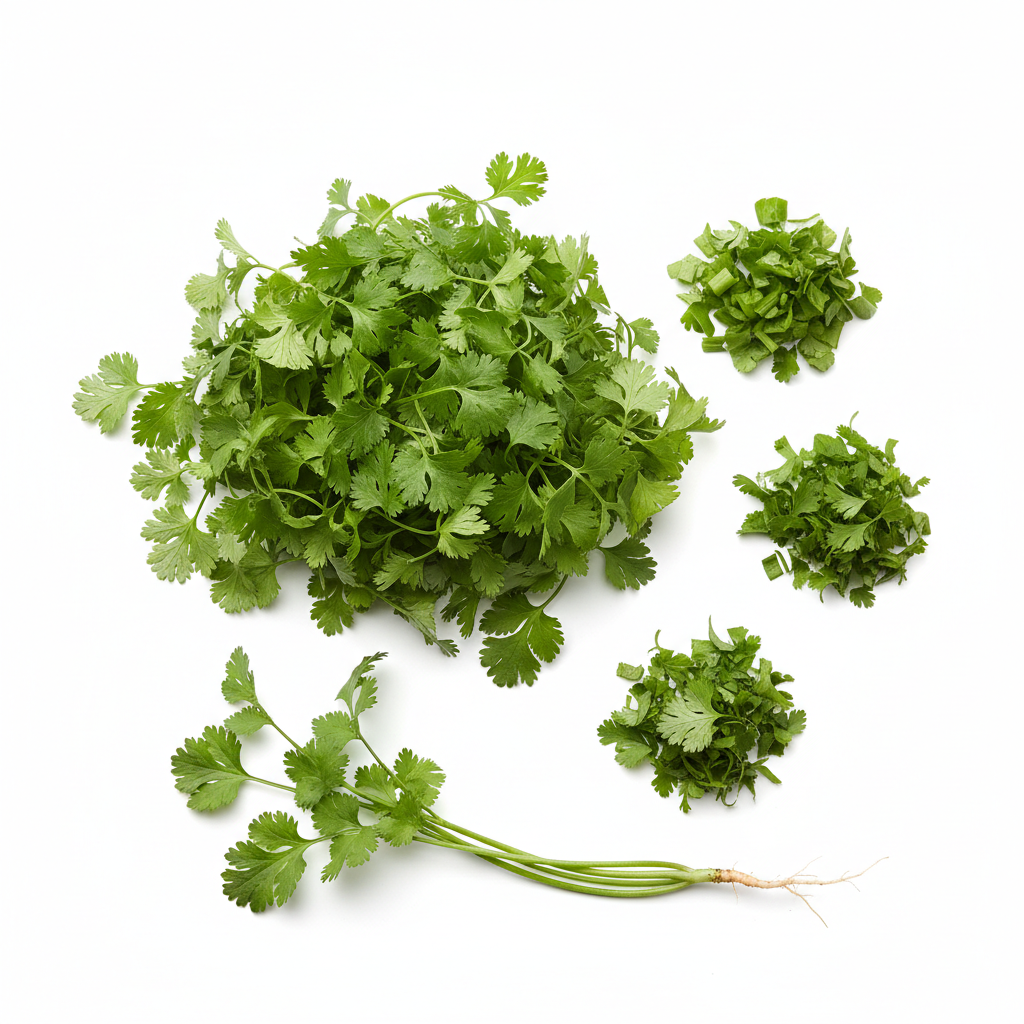
Coriander Leaves
Coriandrum sativum
Sensory Profile
Tastes
Basic flavor profiles
Aromas
Scent characteristics
Stimuli
Sensory sensations
Textures
Physical properties
About Coriander Leaves
Coriander Leaves (Coriandrum sativum), often referred to as cilantro in North American culinary contexts, possess a complex sensory profile defined by bright, citrusy top notes of lime and lemongrass underpinned by a pungent, peppery earthiness and a delicate, succulent leaf texture. This herb is chemically distinguished by a high concentration of unsaturated aldehydes, specifically (E)-2-alkenals, which provide its characteristic "soapy" or metallic edge that acts as a powerful aromatic counterpoint to the rich, capsaicin-heavy fats found in dishes like *Salsa Verde* or Thai *Green Curry*. In these applications, the herb’s volatile oils function as a palate cleanser, cutting through the lipid density of coconut milk or pork fats while providing a vibrant chlorophyll finish that prevents the flavor profile from becoming overly heavy. Historically rooted in the Mediterranean and Western Asia, the plant has become a cornerstone of Mexican, Indian, and Southeast Asian cuisines, where it is traditionally harvested young to ensure the highest concentration of essential oils before the plant bolts and the flavor shifts toward the floral bitterness of the seed-bearing stage. Unlike its dried seeds, the fresh leaves are highly heat-sensitive; their cellular structure collapses rapidly when exposed to high temperatures, making them a technical "finishing herb" that must be added *à la minute* to preserve the enzymatic integrity and the bright, volatile aromatics that define its culinary identity.
Associated health effects(17)
- Drug Interactions
- Antioxidant
- Culinary Herb Vitamin A Contribution
- Culinary Herb Vitamin K Contribution
- Cilantro-Linked Allergy Risk
- Culinary Herb Folate Contribution
- Culinary Herb Skin Sensitization
- Culinary Herb Micronutrient Contribution
- Allergic Reaction Risk
- Culinary Herb Cardiometabolic Modulation
- Culinary Herb Polyphenol Contribution
- Culinary Herb Nutrient Density
- Culinary Herb Vitamin C Contribution
- Contact Dermatitis
- Anti-inflammatory
- Carminative
- Culinary Herb Glycemic Modulation
Nutrition per 100 g(4)
- Energy: 23 kcal
- Protein: 2.1 g
- Fat: 0.6 g
- Fiber: 2.8 g