
Corn Flour Sensory Map
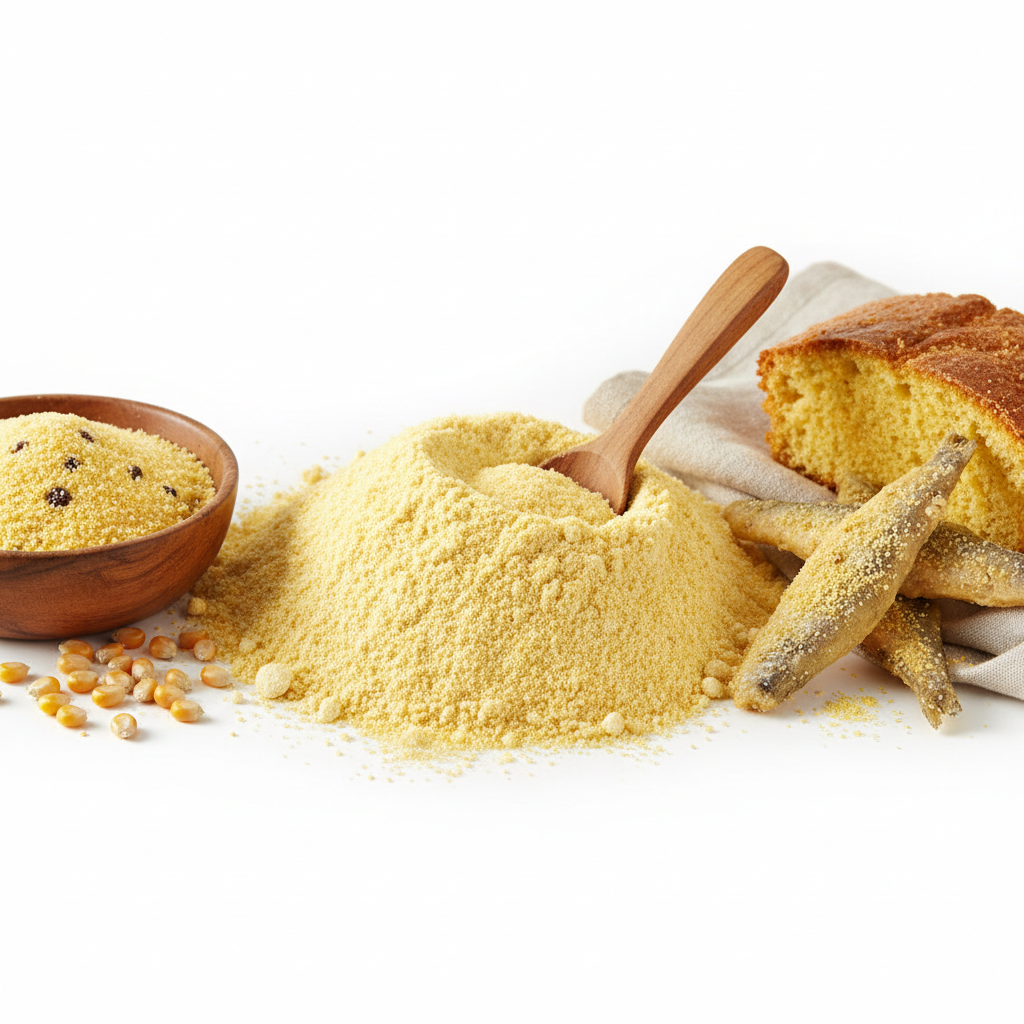
Corn Flour
Zea mays
Sensory Profile
Tastes
Basic flavor profiles
Aromas
Scent characteristics
Stimuli
Sensory sensations
Textures
Physical properties
About Corn Flour
Corn flour is a finely milled powder derived from the entire kernel of dried maize, distinguished by a sweet, sun-dried grain aroma and a flavor profile defined by toasted nuttiness and earthy, vegetal undertones. Unlike cornstarch, which is purely extracted endosperm, corn flour retains the germ and bran, providing a soft, velvety texture that contributes significant structural integrity and a golden hue to baked goods. In Southern American traditions, it is the cornerstone of **crusty cornbread**, where its lack of gluten allows for a tender, crumbly crumb, while in Italian cuisine, a finer "fioretto" grind is utilized for **pastry and biscotti** to achieve a delicate, sandy mouthfeel known as frollatura. Because corn flour is gluten-free, it relies on the gelatinization of its high starch content when combined with boiling water or fats to provide viscosity, making it an essential component in **Southern-style fish fries** where it creates a crisp, non-greasy barrier that seals in moisture through rapid dehydration during frying. Historically rooted in the agricultural heartlands of the Americas and later integrated into the rural "cucina povera" of Northern Italy, the highest quality corn flour is often stone-ground to prevent frictional heat from oxidizing the volatile oils in the germ, preserving the complex carotenoids that give the flour its characteristic depth of flavor.
Associated health effects(7)
- Antioxidant
- Corn Bran-Mediated LDL Cholesterol Reduction
- Gluten-Free Suitability
- Appetite Reduction via Fiber-Induced Satiety
- Amylose-Mediated Blood Sugar Modulation
- Iron Content Support
- Digestive Prebiotic Support
Nutrition per 100 g(4)
- Energy: 365 kcal
- Protein: 7 g
- Fat: 1.2 g
- Fiber: 7.3 g