
Disodium guanylate Sensory Map
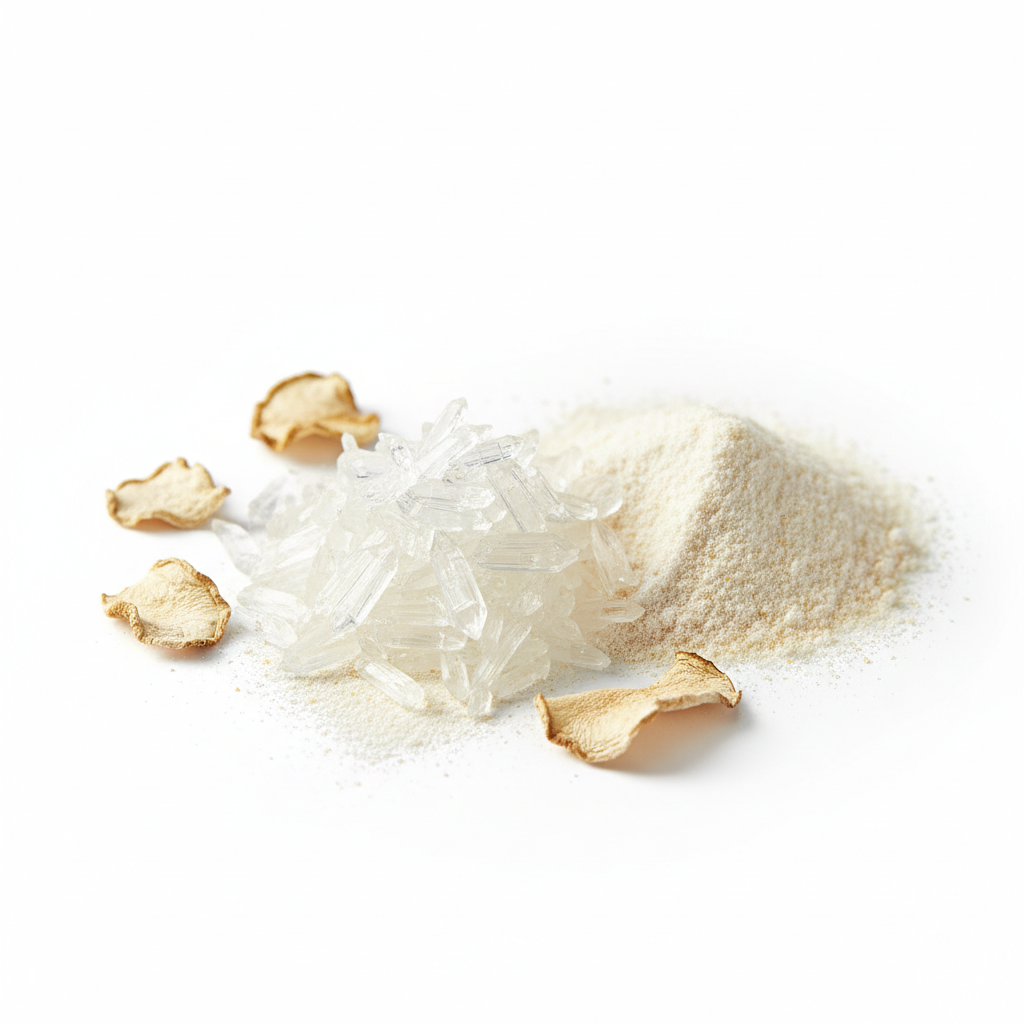
Disodium guanylate
Sensory Profile
Tastes
Basic flavor profiles
Aromas
Scent characteristics
Stimuli
Sensory sensations
Textures
Physical properties
About Disodium guanylate
Disodium guanylate (E627, orange label = unsafe; may trigger gout, not permitted in foods for infants and young children) is a potent flavor enhancer derived from the sodium salt of guanylic acid, characterized by its ability to provide a deep, resonant "kokumi" (heartiness) and a savory profile reminiscent of slow-simmered bone broths and sun-dried fungi. Unlike simple salt, it possesses a clean, crystalline texture that dissolves instantly to trigger the umami receptors on the tongue, specifically amplifying the perception of viscosity and "mouth-filling" richness without adding distinct aroma or bitterness. In professional kitchens, it is most effectively utilized in synergy with disodium inosinate and MSG—a combination known as "ribonucleotides"—to create a synergistic effect that increases umami intensity by up to eight times, making it indispensable in the production of high-clarity *consommé* and the complex, layered broths of *Hakata-style Tonkotsu Ramen*. Historically sourced from the enzymatic fermentation of seaweed or dried skipjack tuna (*katsuobushi*), this additive functions by physically altering how taste bud proteins bind to glutamate, effectively prolonging the finish of savory notes and masking the metallic aftertastes often found in preserved proteins. Its unique technical advantage lies in its stability under high-heat processing, allowing it to maintain the structural integrity of flavor in long-reduction sauces like *Demi-glace* or industrial-scale savory glazes where natural nucleotide levels might otherwise degrade.
Associated health effects(7)
- Flavor Enhancement-Mediated Appetite Stimulation
- Allergic Reactions
- Cardiovascular Risk
- Behavioral Changes
- All-Cause Mortality Risk Elevation
- Uric Acid Elevation
- Neurological Symptoms
Nutrition per 100 g(4)
- Energy: 2 kcal
- Protein: 0.1 g
- Fat: 0.1 g
- Fiber: 0 g