
Glycerol Sensory Map
Glycerol
Sensory Profile
Tastes
Basic flavor profiles
Aromas
Scent characteristics
Stimuli
Sensory sensations
Textures
Physical properties
About Glycerol
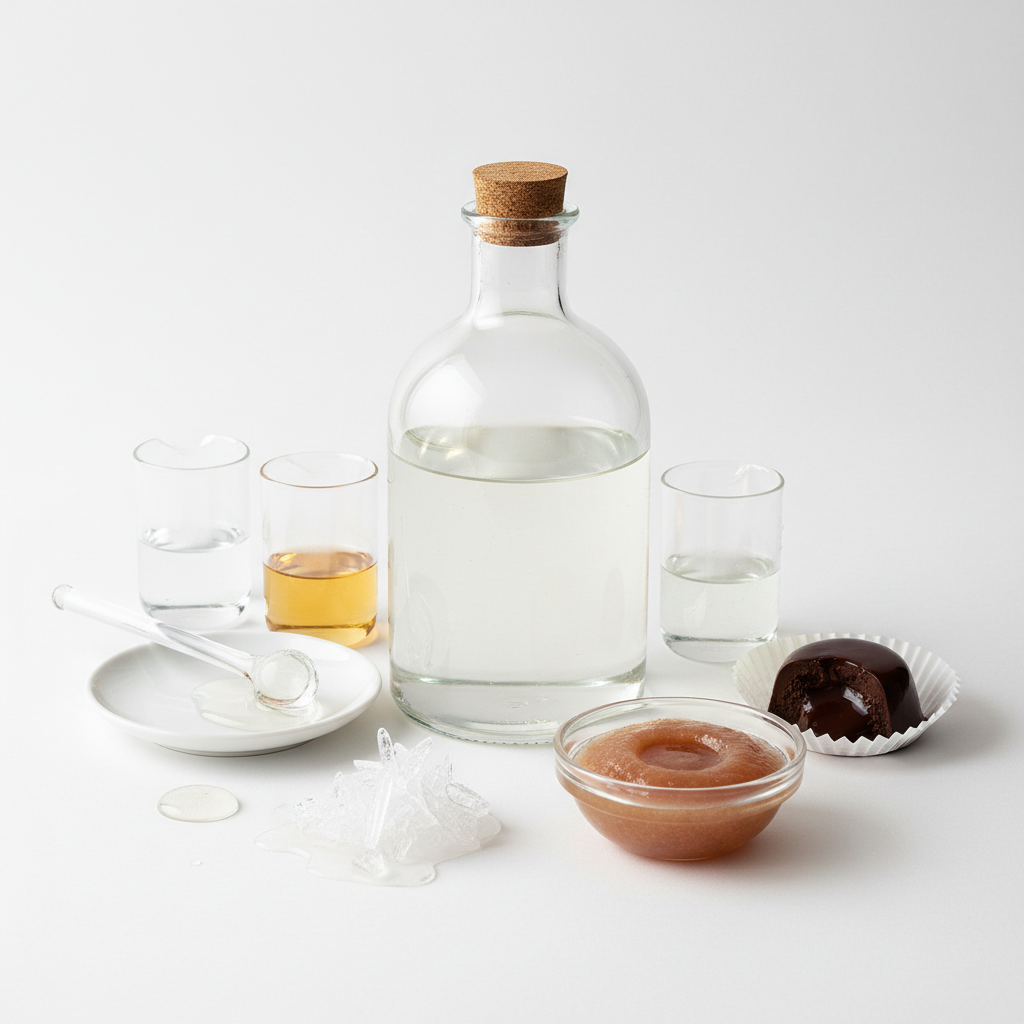
Glycerol (Glycerin, E422, yellow label = no known side effects) is a colorless, odorless, and highly viscous sugar alcohol that possesses a clean, mild sweetness—approximately 60% that of sucrose—without the lingering metallic aftertaste often associated with synthetic sweeteners. In the professional kitchen, it functions as a powerful humectant and cryoprotectant, essential for producing the ultra-smooth, elastic texture of **Italian Gelato** and **sorbets** by depressing the freezing point and inhibiting the formation of large, jagged ice crystals. Its unique ability to bind water molecules while remaining non-volatile makes it indispensable in **modernist confectionery**, such as soft-centered ganaches and fruit pastes, where it prevents sugar crystallization and maintains a supple, moist crumb in high-sugar baked goods. Historically derived as a byproduct of the saponification process in traditional soap-making across Europe and the Mediterranean, contemporary culinary-grade glycerol is typically sourced through the hydrolysis of vegetable fats like coconut or palm oil. What distinguishes glycerol from other polyols is its high hygroscopicity and its role as a solvent for fat-soluble flavors; it allows chefs to incorporate essential oils and botanical extracts into aqueous solutions without the cloudiness or rapid evaporation associated with ethanol-based carriers.
Associated health effects(11)
- Constipation Relief
- Sweetening
- Osmotic Diarrhea
- Hyperhydration
- General overconsumption risks
- Food Moisture Retention
- Gastrointestinal Discomfort
- Dental Caries Risk Reduction
- Hydration Support
- Low Glycemic Impact
- Digestive Aid
Nutrition per 100 g(4)
- Energy: 400 kcal
- Protein: 0 g
- Fat: 0 g
- Fiber: 0 g