
Kelp Sensory Map
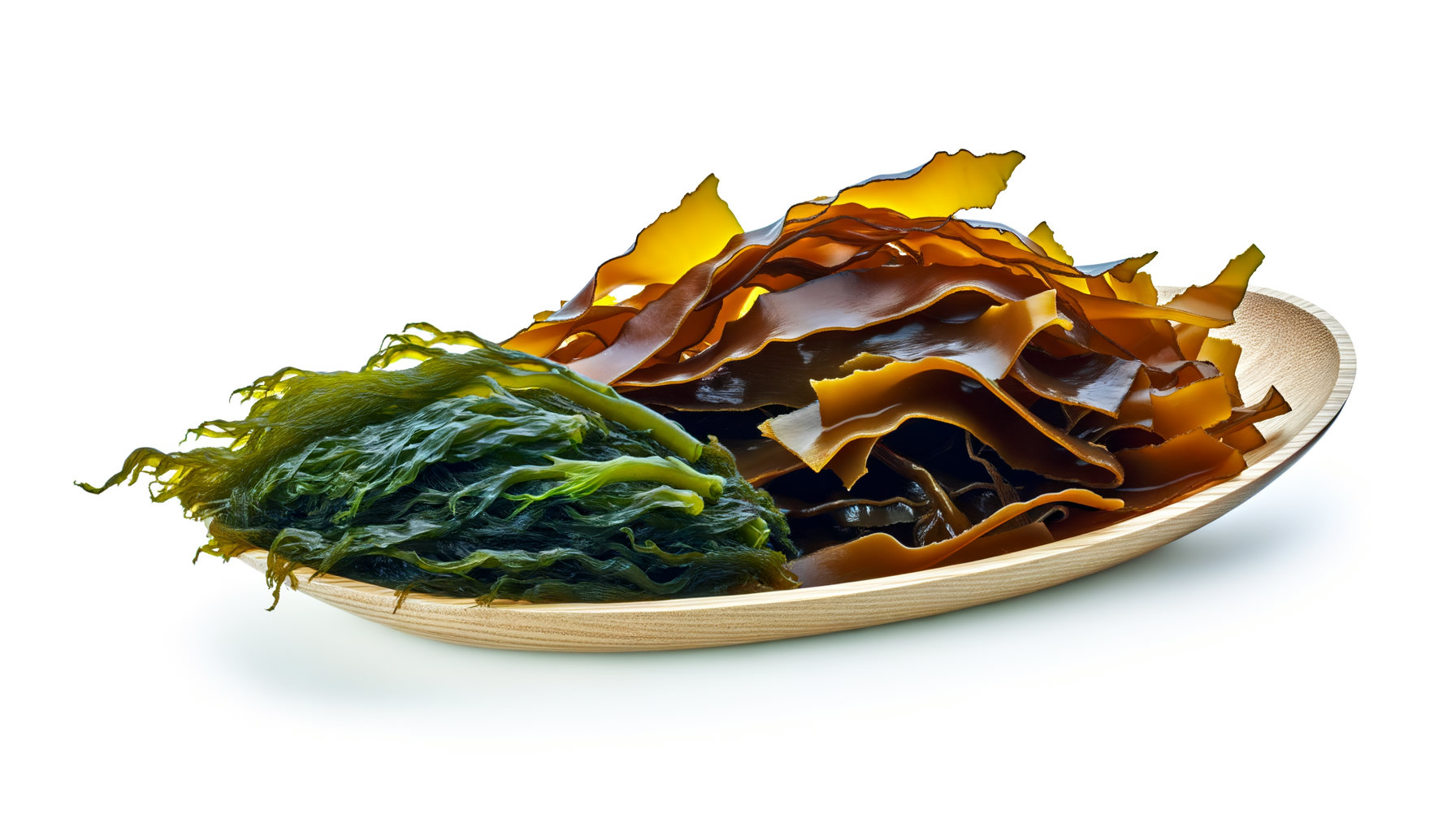
Kelp
Laminaria hyperborea
Sensory Profile
Tastes
Basic flavor profiles
Aromas
Scent characteristics
Stimuli
Sensory sensations
Textures
Physical properties
About Kelp
Kelp (Laminaria hyperborea), a prominent member of the Laminariaceae family, is a robust marine algae celebrated for its umami-rich flavor profile and distinctive oceanic aroma, reminiscent of brine and fresh sea air. Its texture is notably firm yet tender, providing a satisfying chew that enhances dishes without overwhelming them. In culinary applications, kelp shines in iconic dishes such as Japanese dashi, where it serves as a foundational ingredient, imparting depth and complexity through its natural glutamate content, which enhances the savory notes of the broth. Additionally, in Korean cuisine, it is a key component of miyeok-guk, a nourishing seaweed soup traditionally consumed for health benefits, particularly postpartum recovery, where its mineral-rich profile contributes to both flavor and nutrition. Sourced primarily from the cold waters of the North Atlantic and North Pacific, kelp has deep cultural significance, particularly in coastal communities where it has been harvested for centuries using sustainable methods such as hand-harvesting and controlled drying. This practice not only preserves the algae’s nutritional properties but also enhances its flavor through natural enzymatic processes. Unique to kelp is its ability to act as a natural thickening agent due to its high alginate content, which, when hydrated, forms a gel-like consistency that can stabilize sauces and soups, making it invaluable in modern gastronomy. Furthermore, when aged or fermented, kelp develops a more complex flavor profile, with hints of nuttiness and sweetness, making it an intriguing ingredient for innovative chefs looking to elevate their culinary creations.
Associated health effects(61)
- Blood Pressure Support
- Butyrate Production Enhancement
- Micronutrient Density
- Heavy Metal Accumulation
- Colonic Transit Enhancement
- Drug Interactions
- Weight Management and Anti-obesity Activity
- Antioxidant
- Diabetes Management
- Dose-Dependent Effects
- Satiation Enhancement
- Short-Chain Fatty Acid Production
- Satiety Enhancement via Polysaccharides
- Inorganic Arsenic Accumulation
- Blood Pressure Reduction
- Gut Microbiota Modulation
- Folate Source
- Nutritional Advantages
- Liver Toxicity
- Fucoxanthin-Mediated Weight Regulation
- Lipid Profile Improvement
- Blood Cholesterol Reduction
- Heavy Metal Accumulation from Edible Seaweeds
- Blood Sugar Support
- Appetite Reduction via Fiber-Induced Satiety
- Heavy Metal Contamination Risk
- Low Caloric Density
- Vitamin K Source
- Vanadium-Mediated Insulin Mimetic Activity
- Iodine Excess-Induced Thyroid Dysfunction
- Antidiabetic Activity
- Blood Sugar Regulation
- Polyphenol-Mediated Antioxidant Activity
- Anti-steatotic Activity
- Anti-obesity Activity
- At-Risk Populations
- Mineral Content
- Dietary Fiber
- Prebiotic Fiber-Mediated Gut Microbiota Improvement
- Bone Health
- Cognitive Function Enhancement
- Anemia Prevention
- Brain Health
- Alginate-Mediated Fat Absorption Reduction
- Weight Management
- Digestive Upset
- LDL Cholesterol Reduction
- Iodine Excess Risk
- Iodine Provision
- Polysaccharide-Mediated Gut Barrier Support
- Digestive Prebiotic Support
- Antiviral
- Thyroid Homeostasis Support
- Colorectal Cancer Risk Reduction
- Sodium Overload
- Lipid Metabolism Support
- Digestive Aid
- Short-Chain Fatty Acid Production Enhancement
- Digestive Health
- Anticancer Potential
- Anti-inflammatory
Nutrition per 100 g(4)
- Energy: 43 kcal
- Protein: 1.68 g
- Fat: 0.56 g
- Fiber: 1.3 g