
Lactic Acid Sensory Map
Lactic Acid
Acidum lacticum
Sensory Profile
Tastes
Basic flavor profiles
Aromas
Scent characteristics
Stimuli
Sensory sensations
Textures
Physical properties
About Lactic Acid
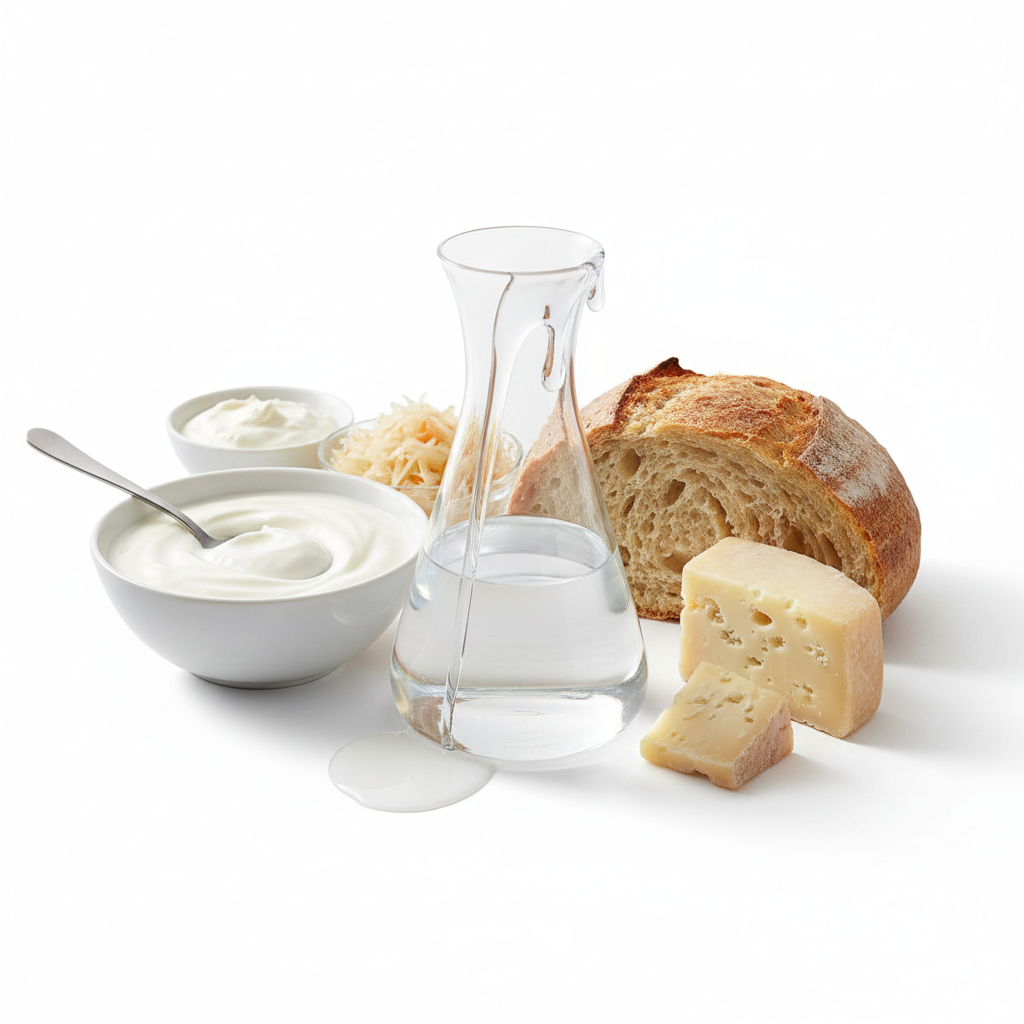
Lactic acid (E270, yellow label, no known side effects) is a primary organic acid characterized by a mild, creamy acidity and a clean, lingering tartness that lacks the sharp, volatile pungency of acetic acid (vinegar). Produced through the controlled fermentation of sugars by *Lactobacillus* bacteria, this additive functions as a sophisticated pH regulator that yields a velvety mouthfeel and a subtle, yogurt-like aroma. In iconic applications such as sourdough bread, lactic acid works in tandem with acetic acid to soften wheat proteins (gluten), resulting in a more extensible dough and a tender, open crumb structure; similarly, in the production of traditional German *Sauerkraut*, it acts as both a preservative and a flavor developer, transforming the sulfurous notes of raw cabbage into a complex, tangy profile. Historically rooted in the preservation traditions of Central Europe and East Asia, it remains the cornerstone of dairy fermentation, where it triggers the denaturation of casein proteins to create the thick, spoonable textures of Greek yogurt and crème fraîche. Unlike citric acid, which provides a bright, fleeting citrus spike, lactic acid is distinguished by its ability to provide a "round" acidity that integrates seamlessly into fats and proteins, making it an essential tool for stabilizing emulsions and enhancing the savory depth of aged cheeses and cured meats.
Associated health effects(8)
- Eye/skin/airway irritation
- Caustic Irritation
- Food Preservation Support
- Fermentation-Derived Flavor Contribution
- Food Spoilage Prevention
- No meaningful nutritional burden at food levels
- Food Safety Enhancement
- Gastrointestinal Irritation
Nutrition per 100 g(4)
- Energy: 96 kcal
- Protein: 0 g
- Fat: 0.1 g
- Fiber: 0 g