
Lactose Sensory Map
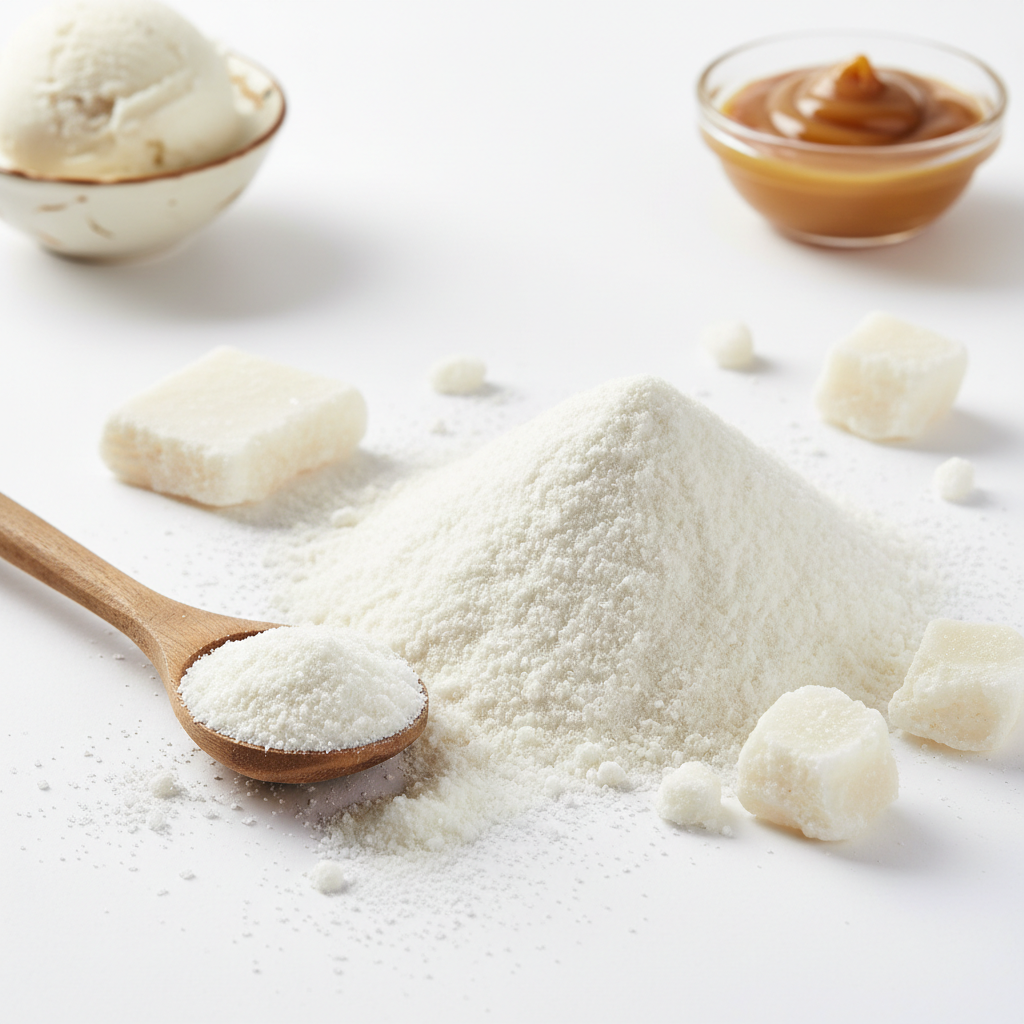
Lactose
Sensory Profile
Tastes
Basic flavor profiles
Aromas
Scent characteristics
Stimuli
Sensory sensations
Textures
Physical properties
About Lactose
Lactose (Milk Sugar) is a unique disaccharide derived from bovine whey, characterized by a muted, clean sweetness—approximately 20% that of sucrose—and a dense, crystalline texture that provides a smooth, non-gritty mouthfeel in high-solids formulations. Unlike most sugars, lactose is not fermented by traditional brewer’s yeast, making it the essential additive in **Milk Stouts**, where it remains unattenuated to provide a creamy residual body and a silky counterpoint to roasted malts. In the production of **traditional Dulce de Leche**, lactose plays a critical role in the Maillard reaction; because it is a reducing sugar with a high caramelization temperature, it facilitates a complex browning process that yields deep toffee notes and a viscous, stable emulsion without the cloying intensity of cane sugar. Historically sourced as a byproduct of the Alpine cheesemaking industry, it is refined through a process of evaporation and crystallization to ensure a high-purity powder that serves as an exceptional carrier for volatile aromatics. Its most distinguishing technical feature is its low solubility and ability to inhibit the crystallization of other sugars, which chefs leverage to create stable, fine-textured fudges and ice creams that resist graininess even after prolonged cold storage.
Associated health effects(9)
- Glycemic Index Modulation
- Dietary Prebiotic Support
- Calcium Absorption Enhancement via Lactose
- Flatulence and Bloating
- Energy Intake Stimulation
- Digestive Discomfort
- Bone Health
- Dental Caries Risk
- Lactose Malabsorption Digestive Symptoms
Nutrition per 100 g(4)
- Energy: 399 kcal
- Protein: 0.1 g
- Fat: 0.1 g
- Fiber: 0 g