
Macadamia Sensory Map
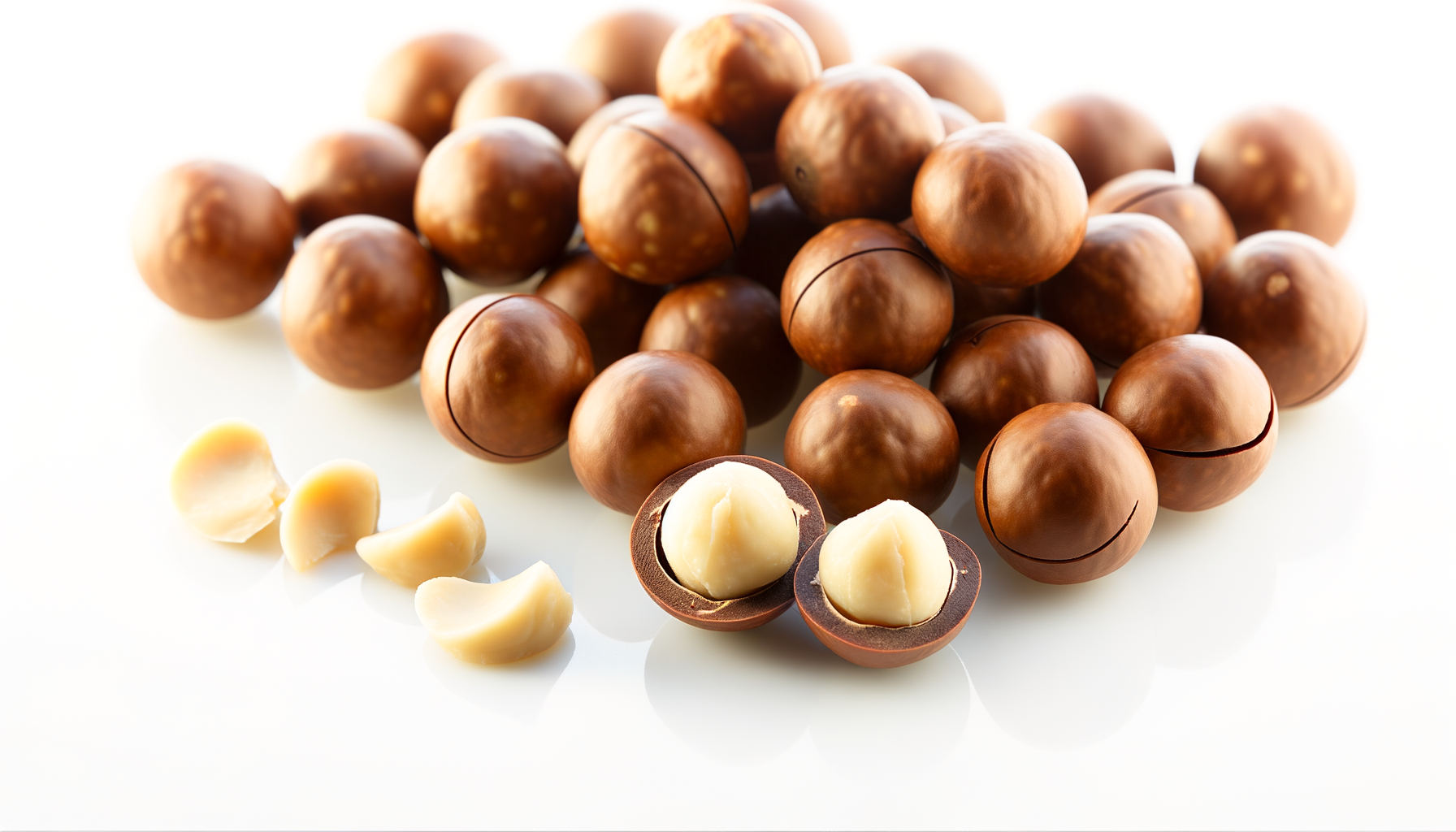
Macadamia
Macadamia integrifolia
Sensory Profile
Tastes
Basic flavor profiles
Aromas
Scent characteristics
Stimuli
Sensory sensations
Textures
Physical properties
About Macadamia
Macadamia nuts possess a rich, buttery flavor with a subtle sweetness and a creamy texture. Their unique taste is often described as mildly nutty, with hints of vanilla and a slight earthiness, making them a versatile ingredient in both sweet and savory dishes. Macadamia nuts are widely used in various culinary applications. They are popular in baking, particularly in cookies, cakes, and desserts, where their creamy texture adds richness. In savory dishes, they can be used as a crunchy topping for salads, incorporated into grain bowls, or blended into sauces and pestos for added depth. Macadamia oil, extracted from the nuts, is prized for its high smoke point and is ideal for frying, sautéing, and salad dressings. Native to Australia, macadamia nuts were first discovered by Indigenous Australians, who utilized them as a food source. The nuts were later cultivated commercially in the late 19th century, with Hawaii becoming a significant producer. Today, macadamia trees are also grown in various tropical and subtropical regions worldwide, including South Africa, Brazil, and California. Macadamia nuts are characterized by their round shape and hard, woody shell, which encases a smooth, creamy kernel. They are one of the highest-fat nuts, predominantly composed of monounsaturated fats, which contribute to their
Associated health effects(16)
- Caloric Density
- Antioxidant
- Allergic Reactions
- Allergy Risk
- Phytosterol-Mediated Cholesterol Reduction
- Blood Sugar Support
- Blood Sugar Regulation
- Polyphenol-Mediated Antioxidant Activity
- Dietary Fiber
- Monounsaturated Fatty Acid Support
- Cholesterol Management
- Weight Management
- LDL Cholesterol Reduction
- Palmitoleic Acid Support
- Heart Health
- Anti-inflammatory
Nutrition per 100 g(4)
- Energy: 718 kcal
- Protein: 7.9 g
- Fat: 76.1 g
- Fiber: 8.6 g