
Mascarpone Sensory Map
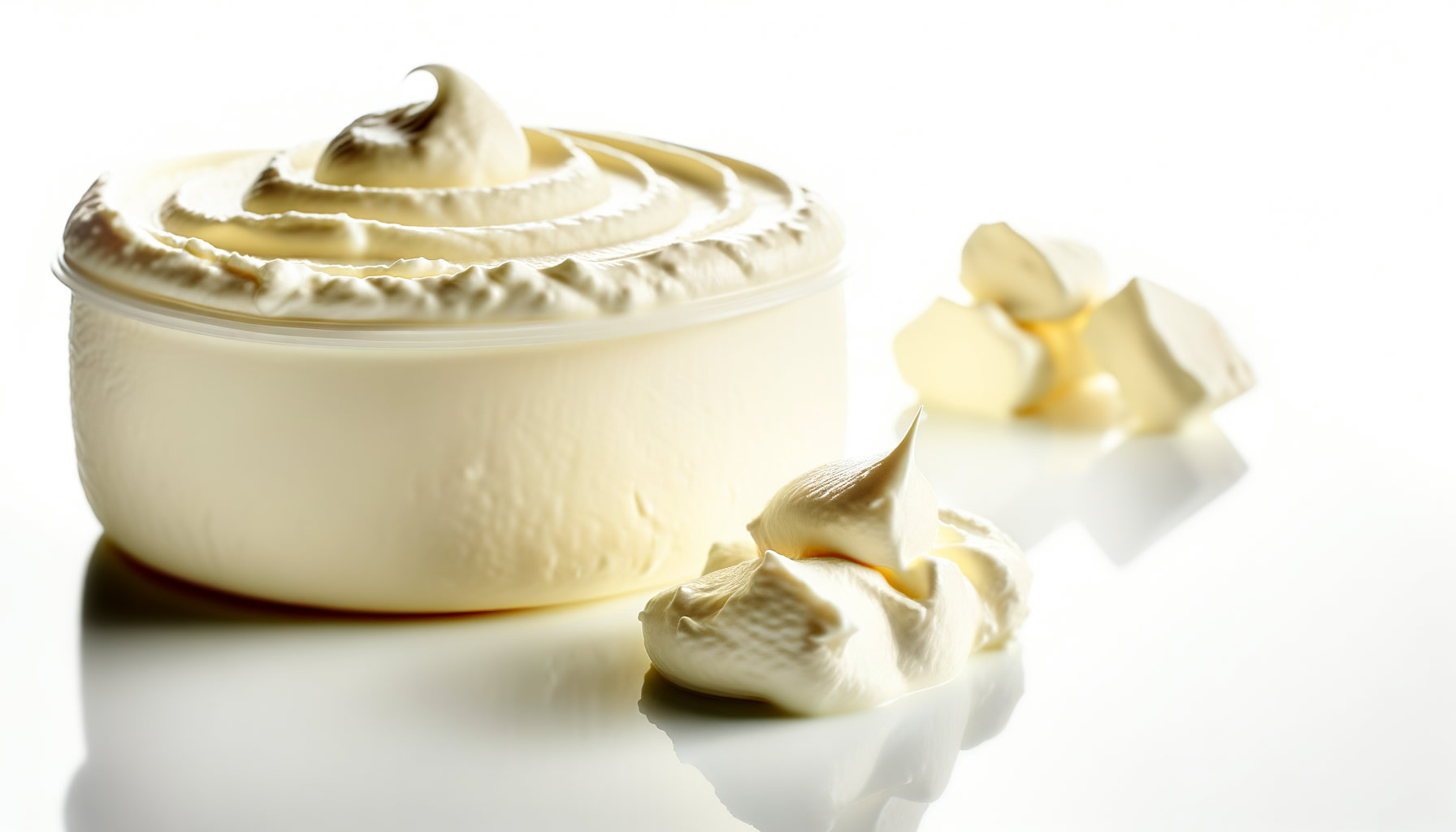
Mascarpone
Mascarpone
Sensory Profile
Tastes
Basic flavor profiles
Aromas
Scent characteristics
Stimuli
Sensory sensations
Textures
Physical properties
About Mascarpone
Mascarpone (Mascarpone) is a rich, creamy Italian cheese renowned for its luxurious texture and subtly sweet flavor profile, characterized by notes of fresh cream and a hint of nuttiness. Its velvety mouthfeel, achieved through a delicate emulsification of cream and citric acid or tartaric acid, allows it to seamlessly blend into both sweet and savory dishes, imparting a luscious body without overwhelming other flavors. The aroma is reminiscent of freshly churned butter, with a faint whisper of dairy sweetness that invites culinary exploration. In the realm of iconic dishes, Mascarpone is the star of the classic Italian dessert Tiramisu, where its creamy consistency and mild flavor balance the robust bitterness of espresso and cocoa, creating a harmonious interplay of textures and tastes. Additionally, it plays a pivotal role in Risotto alla Milanese, where it enriches the dish with a silky finish, enhancing the umami notes of the saffron and Parmigiano-Reggiano. The cheese’s ability to emulsify and stabilize mixtures makes it an excellent choice for sauces and fillings, providing a luxurious mouthfeel that elevates the overall dining experience. Originating from the Lombardy region of Italy, Mascarpone is deeply embedded in Italian culinary tradition, often associated with rustic farmhouses where it was traditionally made from the cream skimmed from cow's milk. The production process involves heating the cream and adding an acid, which causes the proteins to coagulate, resulting in a thick, spreadable cheese that requires no aging, thus preserving its fresh, delicate flavor. What distinguishes Mascarpone is its high fat content, typically around 60%, which not only contributes to its creamy texture but also allows it to act as a stabilizing agent in various culinary applications. Unlike many cheeses, it does not undergo a fermentation process that develops sharp flavors; instead, its mildness and creaminess make it an ideal canvas for both sweet and savory creations, showcasing its unique ability to enhance dishes without overpowering them.
Associated health effects(17)
- Fat-Soluble Vitamin Support
- Satiety Enhancement
- Caloric Density
- Milk Allergy
- Residual Lactose Tolerance Support
- LDL and Total Cholesterol Elevation
- Lactose Intolerance
- Vitamin A Support
- Mineral Content
- High Saturated Fat Content
- Obesity and Weight Gain
- Bone Health
- Caloric Excess
- Gluten-Free Nature
- Conjugated Linoleic Acid Support
- Protein Content
- B Vitamin Nervous System Support
Nutrition per 100 g(4)
- Energy: 450 kcal
- Protein: 6 g
- Fat: 44 g
- Fiber: 0 g