
Parsley Root Sensory Map
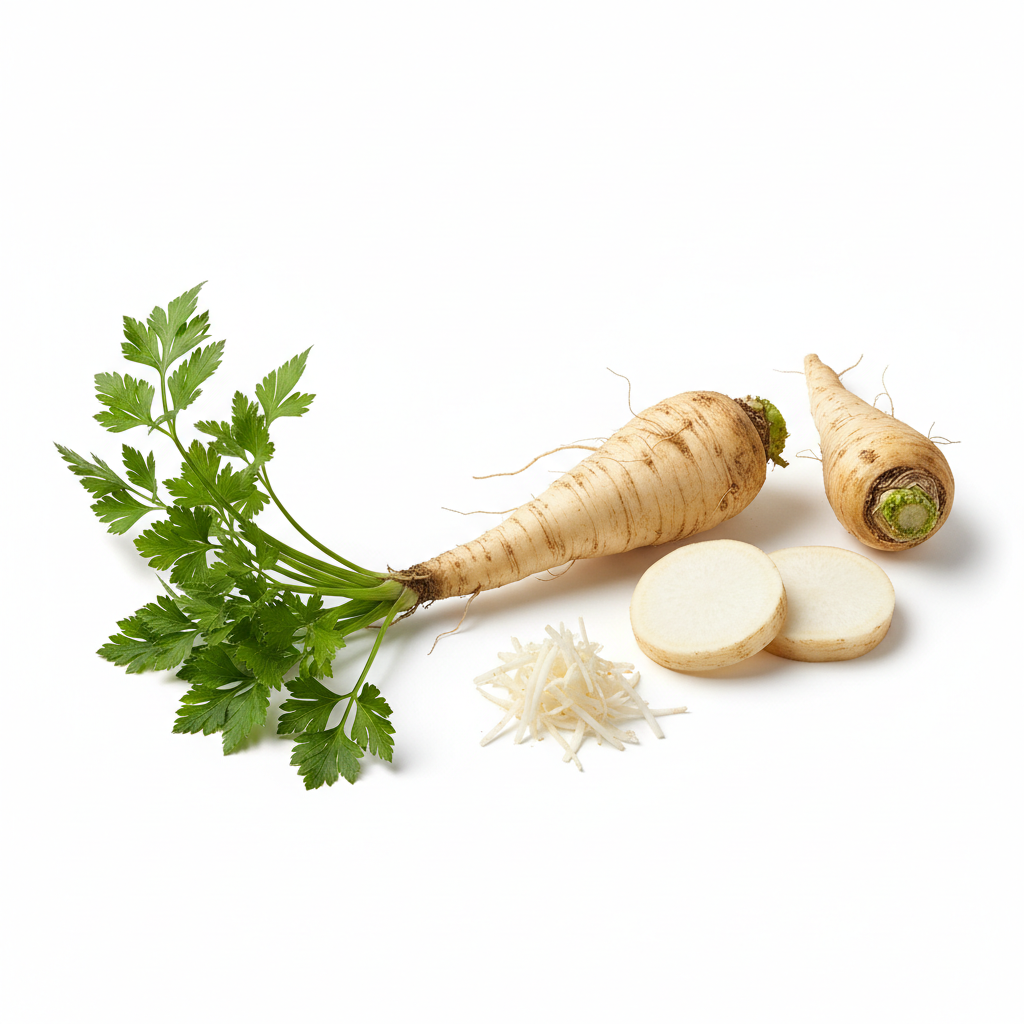
Parsley Root
Petroselinum crispum
Sensory Profile
Tastes
Basic flavor profiles
Aromas
Scent characteristics
Stimuli
Sensory sensations
Textures
Physical properties
About Parsley Root
Parsley Root (Petroselinum crispum subsp. tuberosum), often distinguished from its leafy cousin by its tapered, cream-colored tuber, offers a complex sensory profile characterized by a concentrated herbaceous sweetness and an aroma reminiscent of celeriac, nutmeg, and earthy parsnip. Unlike the fibrous texture of many root vegetables, the flesh of the parsley root is remarkably crisp and fine-grained, retaining its structural integrity during long braises while releasing essential oils that provide a clean, peppery finish to stocks and sauces. In Central and Eastern European gastronomy, it is an indispensable component of *Suppengrün* (soup greens) and the iconic Polish *Sałatka Jarzynowa*, where its high starch content and aromatic intensity act as a foundational flavor bridge between pungent onions and sweet carrots. The vegetable’s unique chemical composition, rich in apiol and myristicin, allows it to withstand high-heat roasting—which caramelizes its natural sugars into a nutty crust—or fine grating into raw remoulades where its volatile oils provide a bright, acidic lift. Historically cultivated in the Mediterranean before becoming a staple of the Prussian and Austro-Hungarian larders, parsley root is prized by chefs for its dual-purpose utility: the foliage provides a robust garnish, while the root serves as a superior thickening agent in purées due to its elegant balance of moisture and dense cellular structure.
Associated health effects(11)
- Root Vegetable Micronutrient Contribution
- Antithrombotic Activity
- Antioxidant
- Anti-anxiety Effects
- Blood Sugar Regulation
- Dietary Fiber
- Culinary Herb Micronutrient Contribution
- Diuretic Activity
- Gastroprotection
- Hypolipidemic Activity
- Anti-inflammatory
Nutrition per 100 g(4)
- Energy: 75 kcal
- Protein: 1.5 g
- Fat: 0.3 g
- Fiber: 4 g