
Pear Sensory Map
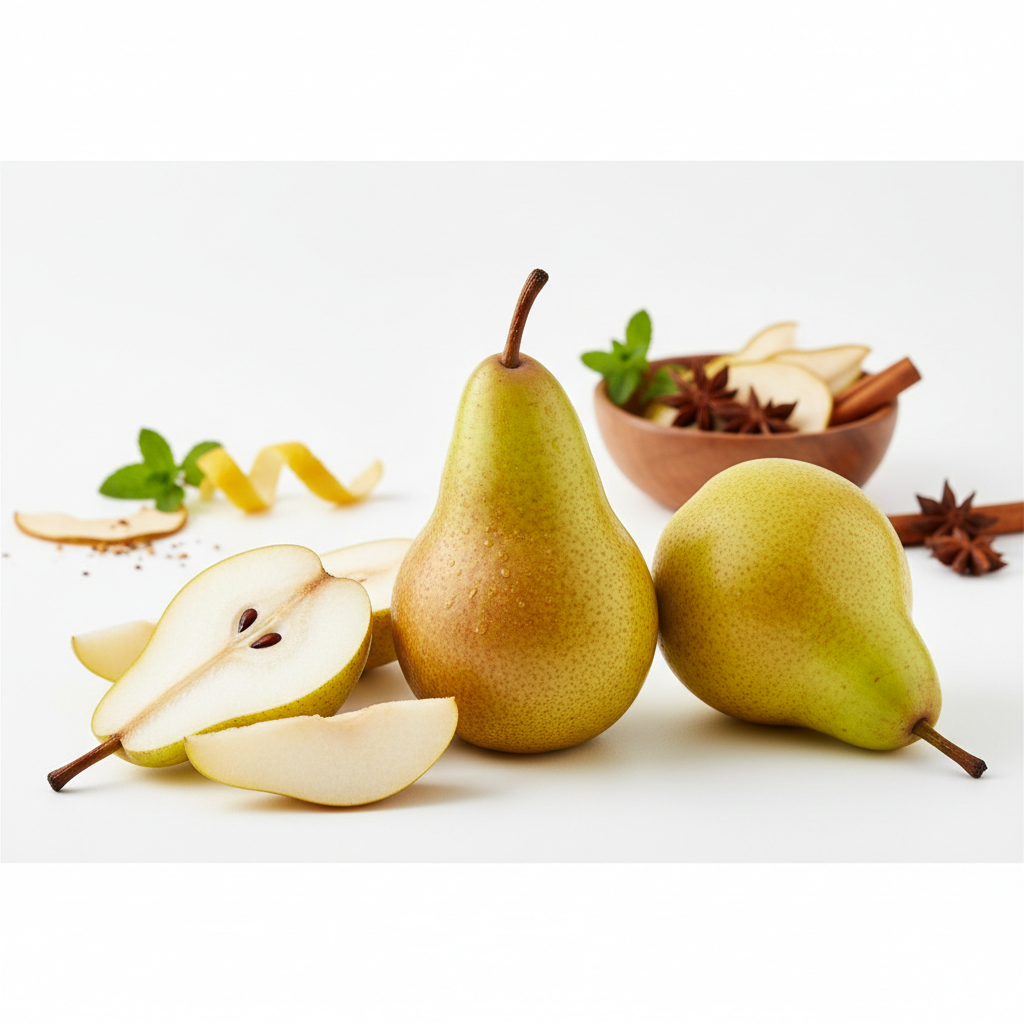
Pear
Pyrus communis
Sensory Profile
Tastes
Basic flavor profiles
Aromas
Scent characteristics
Stimuli
Sensory sensations
Textures
Physical properties
About Pear
The Pear (Pyrus communis) is a sophisticated pome fruit characterized by a complex sensory profile that transitions from crisp, floral brightness to a buttery, melting texture as its starches convert to sugars during post-harvest ripening. Unlike most fruits, the European pear develops its optimal flavor—a nuanced bouquet of vanilla, clove, and musk—through a controlled chilling process followed by room-temperature maturation, which softens the characteristic "stone cells" (sclereids) to create a velvety mouthfeel. This unique cellular structure makes them indispensable in classic preparations like *Poire à la Beaujolaise*, where the fruit’s dense parenchyma tissue absorbs the tannins and anthocyanins of a red wine reduction without collapsing, and in savory tarts where its high pectin content provides a structural counterpoint to the lipid-heavy richness of Roquefort or Gorgonzola. Tracing its lineage to the foothills of the Caucasus, the pear has been refined through centuries of European pomology, particularly in France and Belgium, where it became a symbol of aristocratic horticulture and a staple in the *fin de siècle* dessert tradition. From a technical standpoint, the pear is highly valued by pastry chefs for its subtle acidity and high levulose content, which allows it to caramelize deeply during roasting or sautéing through the Maillard reaction while maintaining a delicate aromatic profile that does not overpower secondary ingredients. Furthermore, in regional traditions like those of the Swiss Alps and Normandy, the fruit is subjected to long-term fermentation to produce Perry, a sophisticated cider where the presence of non-fermentable sorbitol ensures a natural, residual sweetness and a silky viscosity that distinguishes it from apple-based ferments.
Associated health effects(6)
- Constipation Relief
- FODMAP-Induced Gastrointestinal Distress
- Appetite Reduction via Fiber-Induced Satiety
- Allergic Reaction Risk
- Cholesterol Absorption Inhibition
- Digestive Prebiotic Support
Nutrition per 100 g(4)
- Energy: 57 kcal
- Protein: 0.36 g
- Fat: 0.14 g
- Fiber: 3.1 g