
Pecorino Romano Sensory Map
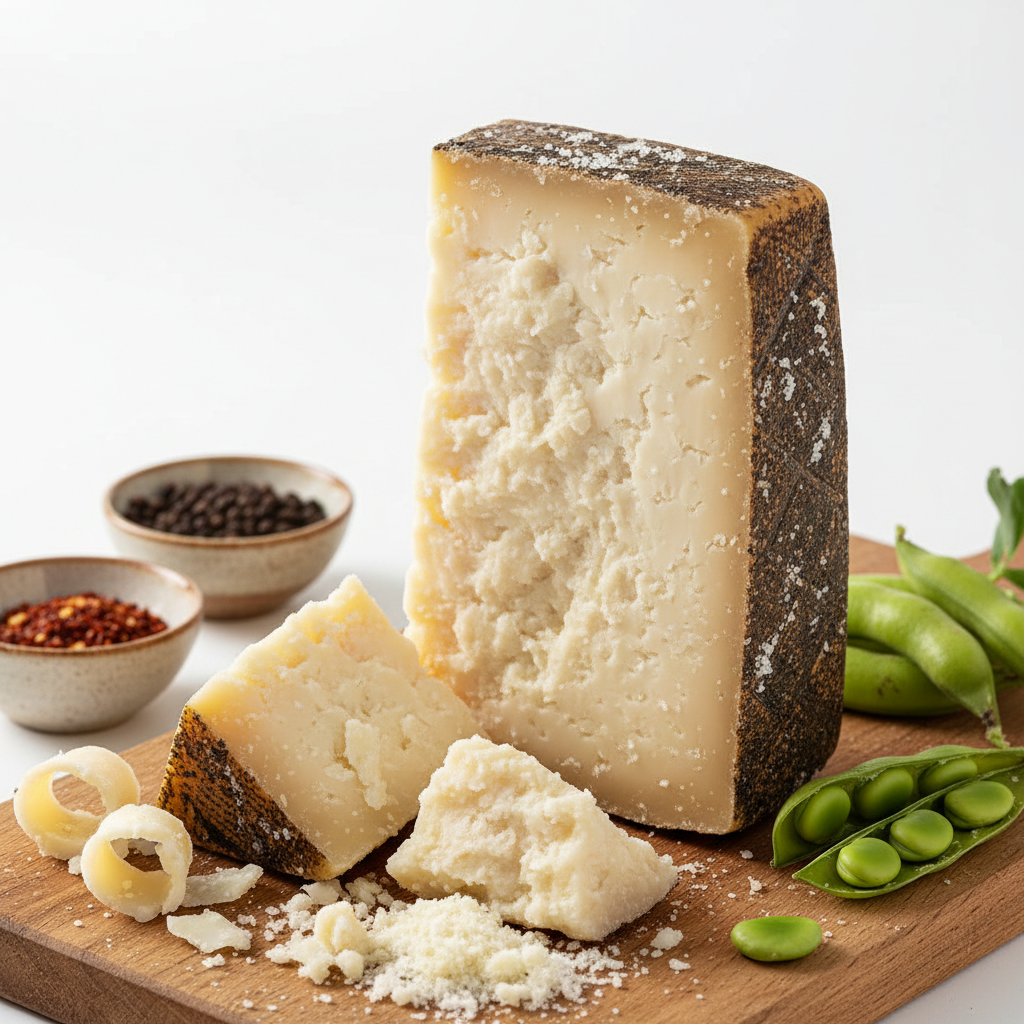
Pecorino Romano
Pecorino romano
Sensory Profile
Tastes
Basic flavor profiles
Aromas
Scent characteristics
Stimuli
Sensory sensations
Textures
Physical properties
About Pecorino Romano
Pecorino Romano (Pecorino romano) is a foundational Italian DOP (Protected Designation of Origin) cheese crafted exclusively from the whole milk of pasture-raised sheep, primarily within the regions of Lazio, Sardinia, and the province of Grosseto. Characterized by a dense, straw-white paste and a crumbly, granular texture that lacks eyes, it undergoes a rigorous dry-salting process and a minimum five-month aging period, resulting in a sharp, piquant flavor profile defined by high salinity and a distinctively "sheepy" funk (caprylic acid). This high salt content and low moisture level make it a superior emulsifying agent in Roman "Cucina Povera" classics like *Cacio e Pepe* and *Carbonara*; when finely grated and whisked with hot pasta water, its proteins (casein) break down to create a stable, creamy suspension without the need for supplemental fats. Unlike its bovine counterpart, Parmigiano-Reggiano, Pecorino Romano possesses a bold, assertive aroma of toasted nuts and dried herbs, providing a necessary acidic counterpoint to rich, fatty ingredients like *guanciale*. Beyond its role as a finishing salt substitute, its high calcium-to-protein ratio ensures it maintains structural integrity when shaved over raw fava beans—a traditional Roman springtime pairing—while its long fermentation process develops complex glutamates that provide an intense umami depth essential for authentic Amatriciana sauces.
Associated health effects(12)
- Caloric Density
- CLA-Mediated Anti-inflammatory Activity
- Cheese Matrix Cholesterol Neutrality
- Lactose Intolerance is not zero-risk
- Brined Cheese-Linked Sodium Overload
- High Sodium Content
- Fat-Soluble Vitamin Provision
- High Saturated Fat Content
- CLA-Mediated Blood Lipid Regulation
- Milk Protein Allergy Risk
- High-Quality Protein Provision
- Calcium-Phosphorus Bone Support
Nutrition per 100 g(4)
- Energy: 348 kcal
- Protein: 28 g
- Fat: 25 g
- Fiber: 0 g