
Persimmon Sensory Map
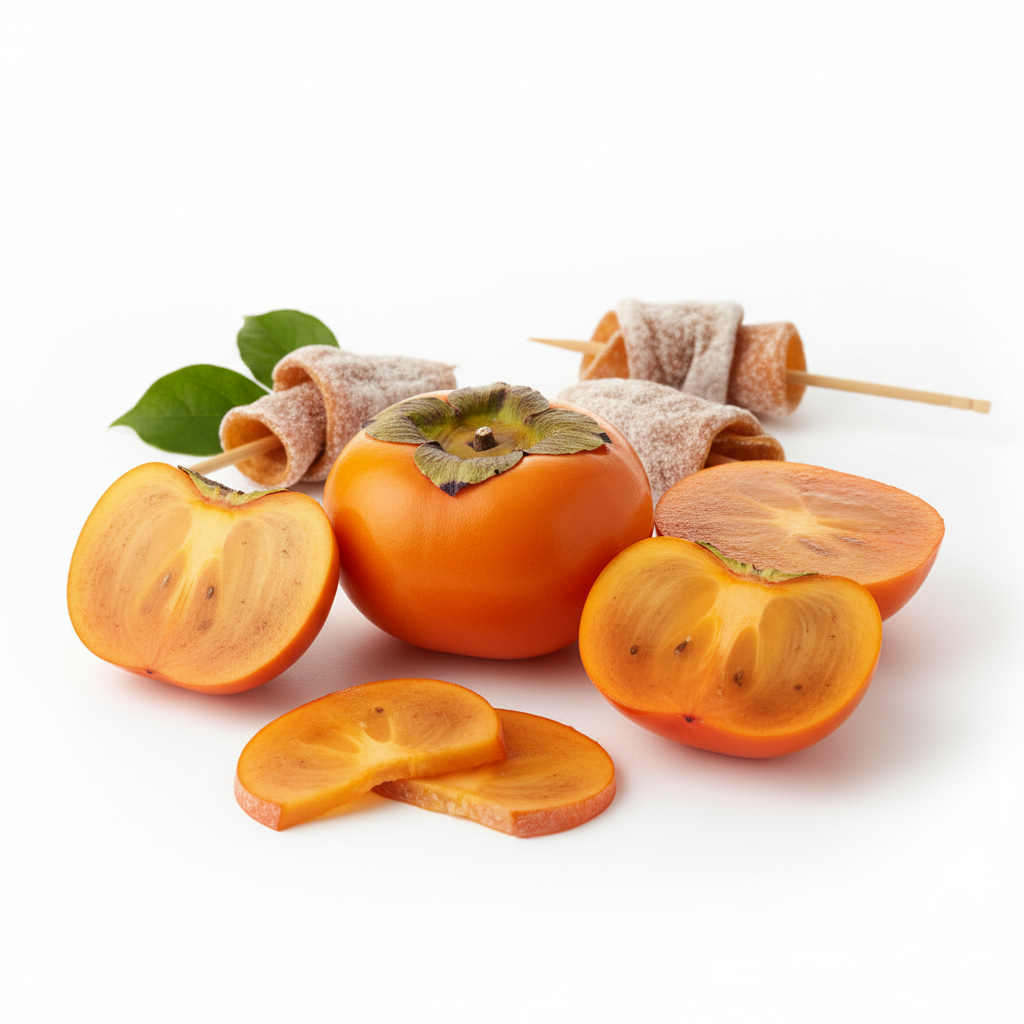
Persimmon
Diospyros kaki
Sensory Profile
Tastes
Basic flavor profiles
Aromas
Scent characteristics
Stimuli
Sensory sensations
Textures
Physical properties
About Persimmon
The Persimmon (Diospyros kaki), often referred to as the "Divine Fruit," is characterized by a complex sensory profile that transitions from the crisp, honeyed sweetness of an autumn apple in firm varieties to a silken, jam-like consistency with deep notes of brown sugar, cinnamon, and apricot when fully ripened. Originating in East Asia—where it remains a cultural cornerstone in China, Japan, and Korea—the fruit is traditionally preserved through the *hoshigaki* method, a labor-intensive process of hand-massaging and air-drying that concentrates sugars into a floral, chewy delicacy coated in a natural white bloom of crystallized glucose. In the professional kitchen, the persimmon’s high pectin content and natural tannins make it a powerful structural component; for instance, in the iconic American Persimmon Pudding, the fruit’s pulp reacts with baking soda to create a dense, fudgy crumb through a Maillard-driven browning process that mimics the texture of a steamed suet pudding without the need for heavy fats. When utilized in savory applications, such as a Shaved Persimmon and Burrata Salad, the fruit’s mild acidity and dense cellular structure provide a structural foil to creamy lipids, while its subtle astringency—caused by soluble tannins—cleanses the palate between rich bites. What distinguishes the *Diospyros kaki* from other pome fruits is its unique chemical evolution: as the fruit matures, its water-soluble tannins become insoluble, a transformation that eliminates mouth-puckering bitterness and replaces it with a velvety mouthfeel and a high sugar concentration that excels in fermented vinegars or as a natural glaze for roasted proteins.
Associated health effects(16)
- Vitamin C Content Support
- Colonic Transit Enhancement
- Digestive Discomfort from Excess Fruit Fiber
- Antioxidant
- Blood Pressure Reduction
- Blood Cholesterol Reduction
- Blood Sugar Regulation
- High Sugar Content
- Dietary Fiber
- Allergic Reaction Risk
- Potassium Content Support
- Beta-Carotene-Mediated Eye Health Support
- Immune Function
- Anti-inflammatory
- Intestinal Bezoar Formation
- Complete Protein Profile
Nutrition per 100 g(4)
- Energy: 81 kcal
- Protein: 0.6 g
- Fat: 0.3 g
- Fiber: 3.6 g