
Pesto Sensory Map
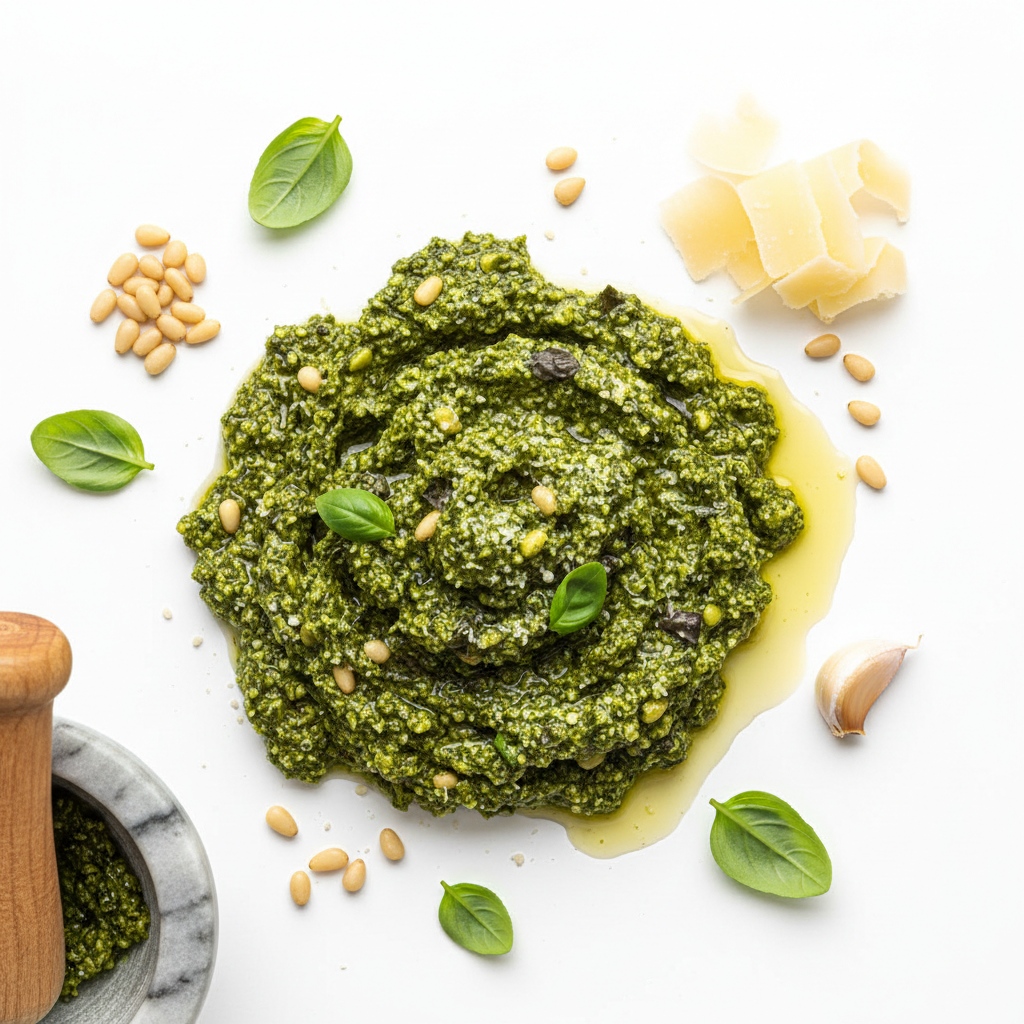
Pesto
Pesto
Sensory Profile
Tastes
Basic flavor profiles
Aromas
Scent characteristics
Stimuli
Sensory sensations
Textures
Physical properties
About Pesto
Pesto alla Genovese is a vibrant, uncooked cold emulsified sauce defined by its high-frequency herbal notes of anise and clove from young Ligurian basil, balanced by the fatty, crystalline richness of aged Parmigiano-Reggiano and the buttery, resinous undertones of Mediterranean pine nuts. Traditionally crafted using a marble mortar and wooden pestle, this mechanical shearing process ruptures the basil’s cell walls without the oxidative heat of a blade, preserving the volatile essential oils and creating a rustic, variegated texture rather than a uniform purée. In its most iconic application, *Trenette al Vantaggio*, the sauce’s high lipid content acts as a lubricant that coats the starch, while the residual heat of the pasta slightly melts the cheese proteins to create a creamy, cohesive film that binds the noodles to traditional additions of waxy potatoes and green beans. The sauce is chemically unique due to its delicate balance of lactic acid from the cheese and polyphenols from the extra virgin olive oil, which serve to stabilize the emulsion and prevent the rapid enzymatic browning of the chlorophyll. Originating in the port city of Genoa, this preparation represents a pinnacle of raw preservation, where the sharp, sulfurous bite of raw garlic is tempered by the alkalinity of the nuts, resulting in a complex, umami-forward profile that provides a cooling contrast to hot, starch-heavy Mediterranean grains.
Associated health effects(11)
- Satiety Enhancement
- Caloric Density
- Calcium Content Support
- Antioxidant
- Vitamin K Contribution
- High Sodium Content
- High Saturated Fat Content
- Bone Health
- Blood Lipid Profile Improvement
- Anti-inflammatory
- Cardiometabolic Syndrome Protection
Nutrition per 100 g(4)
- Energy: 410 kcal
- Protein: 6 g
- Fat: 40 g
- Fiber: 1 g