
Polenta Sensory Map
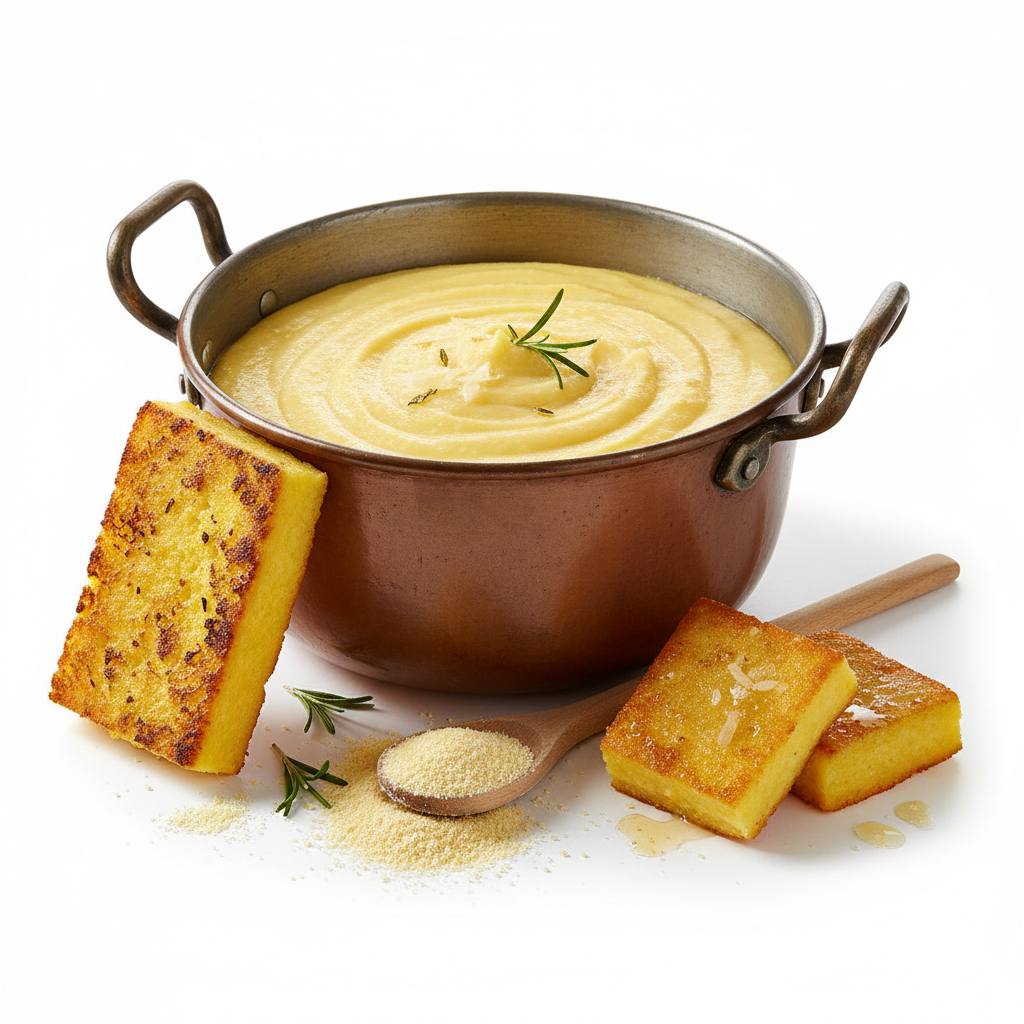
Polenta
Polenta
Sensory Profile
Tastes
Basic flavor profiles
Aromas
Scent characteristics
Stimuli
Sensory sensations
Textures
Physical properties
About Polenta
Polenta is a foundational Northern Italian staple derived from flint corn, characterized by a deep, toasted cereal aroma and a flavor profile that balances sweet, sun-dried corn notes with a subtle, earthy bitterness. Traditionally stone-ground to a coarse meal, the high ratio of hard starch to soft starch in flint corn allows the grains to maintain structural integrity during the long, slow hydration process, eventually yielding a creamy, gelatinized matrix that serves as a rich vehicle for fats. In iconic applications like *Polenta Taragna*—a blend of corn and buckwheat—the ingredient’s ability to form a stable emulsion with alpine cheeses and browned butter is paramount, while in *Polenta Arrostita*, the high starch content facilitates the Maillard reaction, creating a crisp, shattered-glass exterior that contrasts a soft, silken interior. Unlike finer cornmeals, polenta’s unique culinary identity is defined by its "toothsome" al dente quality and its capacity for retrogradation; as it cools, the amylose molecules realign to form a firm, sliceable gel that can be grilled or fried without disintegrating. Historically rooted in the rural traditions of Veneto and Lombardy, the quality of the final dish depends heavily on the mechanical friction of the copper paiolo (pot), which ensures even heat distribution and the optimal release of starches for a luxurious, velvet-like mouthfeel.
Associated health effects(11)
- Caloric Density
- Glycemic Spiking from Refined Starch
- Carbohydrate Content
- Digestive Bulk Support
- Gluten-Free Starch Provision
- Gluten-Free Suitability
- Appetite Reduction via Fiber-Induced Satiety
- Dietary Fiber
- Gluten-Free Nature
- Complex Carbohydrate Content
- Corn Carotenoid Provision
Nutrition per 100 g(4)
- Energy: 358 kcal
- Protein: 7 g
- Fat: 1.2 g
- Fiber: 1.5 g