
Porcini Sensory Map
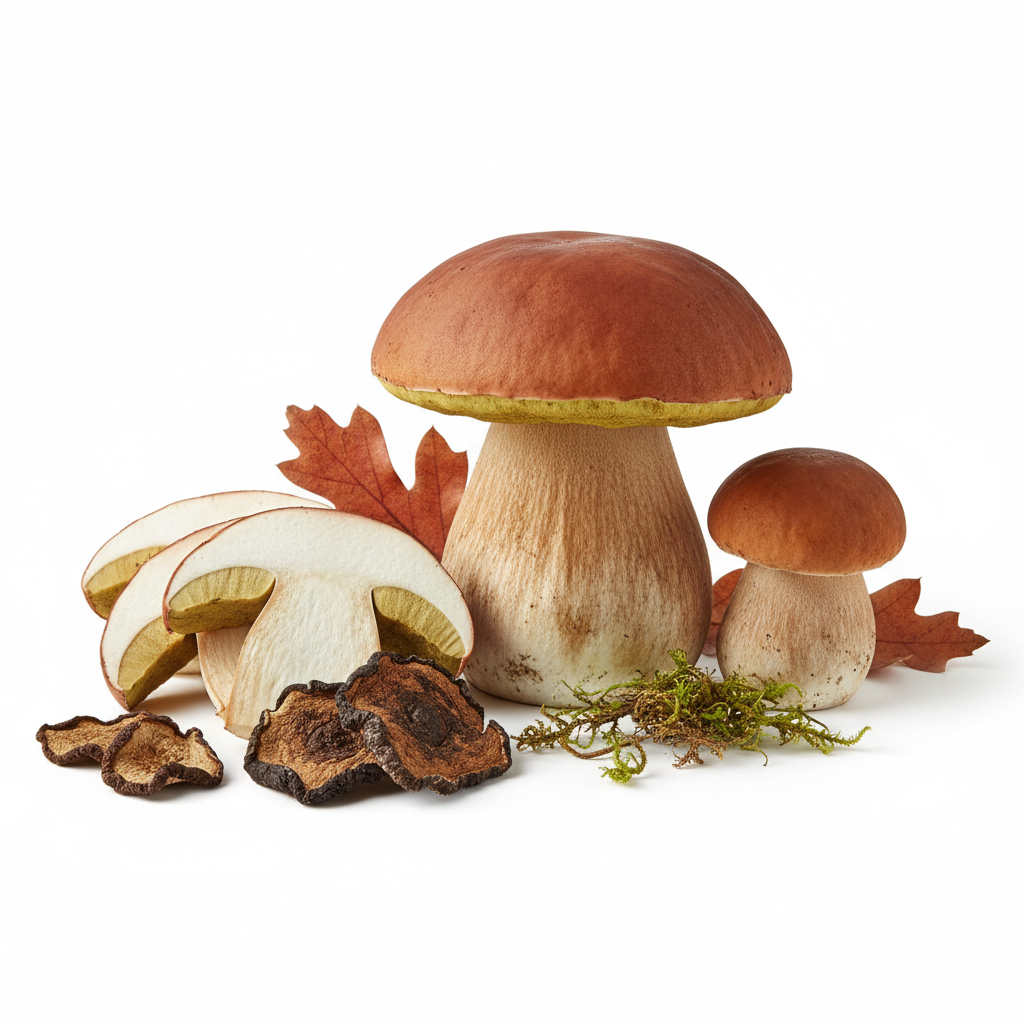
Porcini
Boletus edulis
Sensory Profile
Tastes
Basic flavor profiles
Aromas
Scent characteristics
Stimuli
Sensory sensations
Textures
Physical properties
About Porcini
Porcini (Boletus edulis), a cornerstone of the Boletaceae family, is defined by a profound sensory profile characterized by a dense, meaty texture and a complex aromatic bouquet of toasted hazelnut, damp forest floor, and a concentrated umami finish. Unlike gilled mushrooms, the Porcini’s sponge-like hymenophore undergoes a significant chemical transformation when dried, as the breakdown of proteins into free amino acids—specifically glutamate—intensifies its savory potency, making it an unrivaled natural flavor enhancer. This chemical depth is traditionally harnessed in Italian Risotto ai Funghi Porcini, where the mushroom’s polysaccharides thicken the cooking liquid into a velvety emulsion, and in the French Cèpes à la Bordelaise, where the firm, non-fibrous stipe maintains its structural integrity against high-heat sautéing in duck fat. Primarily foraged from the wild symbiotic relationships within coniferous and deciduous forests across the Northern Hemisphere, particularly in the Apennine Mountains and the foothills of the Alps, the Porcini holds a prestigious status in European gastronomy as a seasonal harbinger of autumn. Its culinary uniqueness lies in its high moisture content when fresh, which allows for a clean, crisp sear, contrasted by its ability to act as a potent base for broths and *glaces* when dehydrated. Because the Porcini cannot be commercially cultivated, its provenance remains tied to traditional foraging cycles, ensuring that each specimen retains a terroir-driven intensity that synthetic alternatives cannot replicate.
Associated health effects(17)
- Environmental Contaminant Accumulation Risk
- Antioxidant
- Immunomodulatory Activity
- B Vitamin Enrichment
- Gut Microbiota Modulation
- Cytotoxic Activity Against Cancer Cell Lines
- Blood Sugar Support
- Dietary Mineral Content
- Heavy Metal Accumulation from Wild Foraging
- Foodborne Illness Risk
- Dietary Fiber
- Allergic Reaction Risk
- Misidentification Toxicity
- Dietary Lectin Exposure
- Digestive Aid
- High-Quality Protein Provision
- Anti-inflammatory
Nutrition per 100 g(4)
- Energy: 50 kcal
- Protein: 3.5 g
- Fat: 1 g
- Fiber: 2.5 g