
Potato Starch Sensory Map
Potato Starch
Amylum solani
Sensory Profile
Tastes
Basic flavor profiles
Aromas
Scent characteristics
Stimuli
Sensory sensations
Textures
Physical properties
About Potato Starch
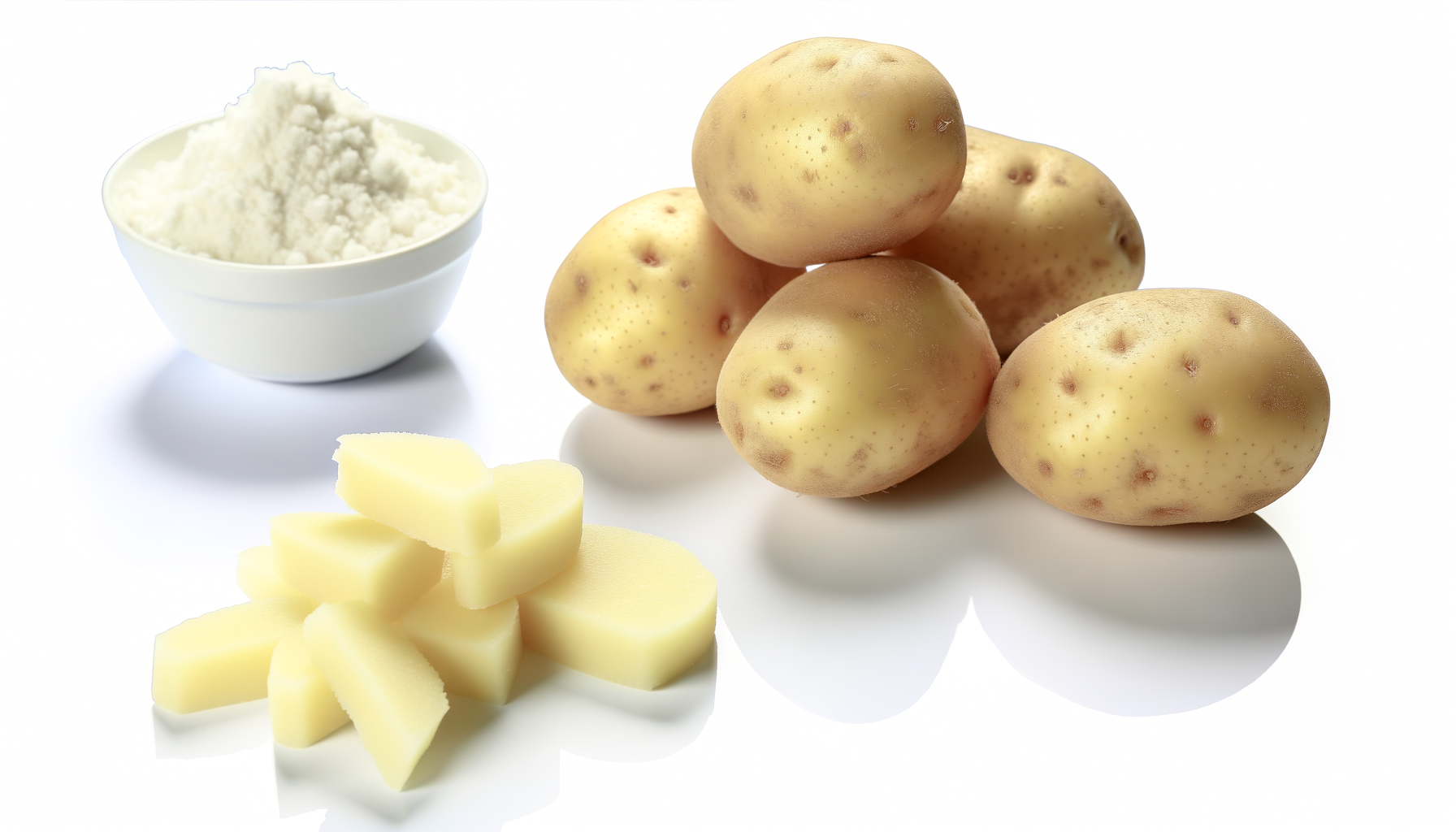
Potato starch is a neutral-flavored thickening agent, offering a subtle, slightly earthy taste that does not overpower other ingredients. Its mild profile makes it an ideal choice for a variety of dishes where a delicate balance of flavors is desired. Widely utilized in both home and professional kitchens, potato starch serves as an excellent thickener for sauces, soups, and gravies. It is also favored in gluten-free baking, providing moisture retention and a tender texture in products like cakes and breads. Additionally, potato starch can be used to create a crisp coating for fried foods, enhancing crunchiness without altering the flavor of the dish. Potato starch is derived from the tubers of the potato plant (Solanum tuberosum), which is native to the Andean region of South America. It has been cultivated for centuries, with its use spreading globally as potatoes became a staple crop in various cuisines. Potato starch is known for its high viscosity and ability to form a clear gel when cooked, making it a preferred choice for clear sauces and puddings. Unlike cornstarch, it remains stable under freezing and thawing conditions, making it suitable for frozen dishes. Its fine, powdery texture allows for easy incorporation into recipes without clumping, ensuring a smooth finish in culinary applications. Additionally, potato starch is naturally gluten-free, catering
Associated health effects(9)
- Blood Sugar Support
- Foodborne Illness Risk
- Glycoalkaloid Toxicity
- Dietary Fiber
- Cholesterol Management
- Gluten-Free Nature
- Weight Management
- Gastrointestinal Distress
- Anti-inflammatory
Nutrition per 100 g(4)
- Energy: 358 kcal
- Protein: 2 g
- Fat: 0.1 g
- Fiber: 0.5 g