
Quinoa Sensory Map
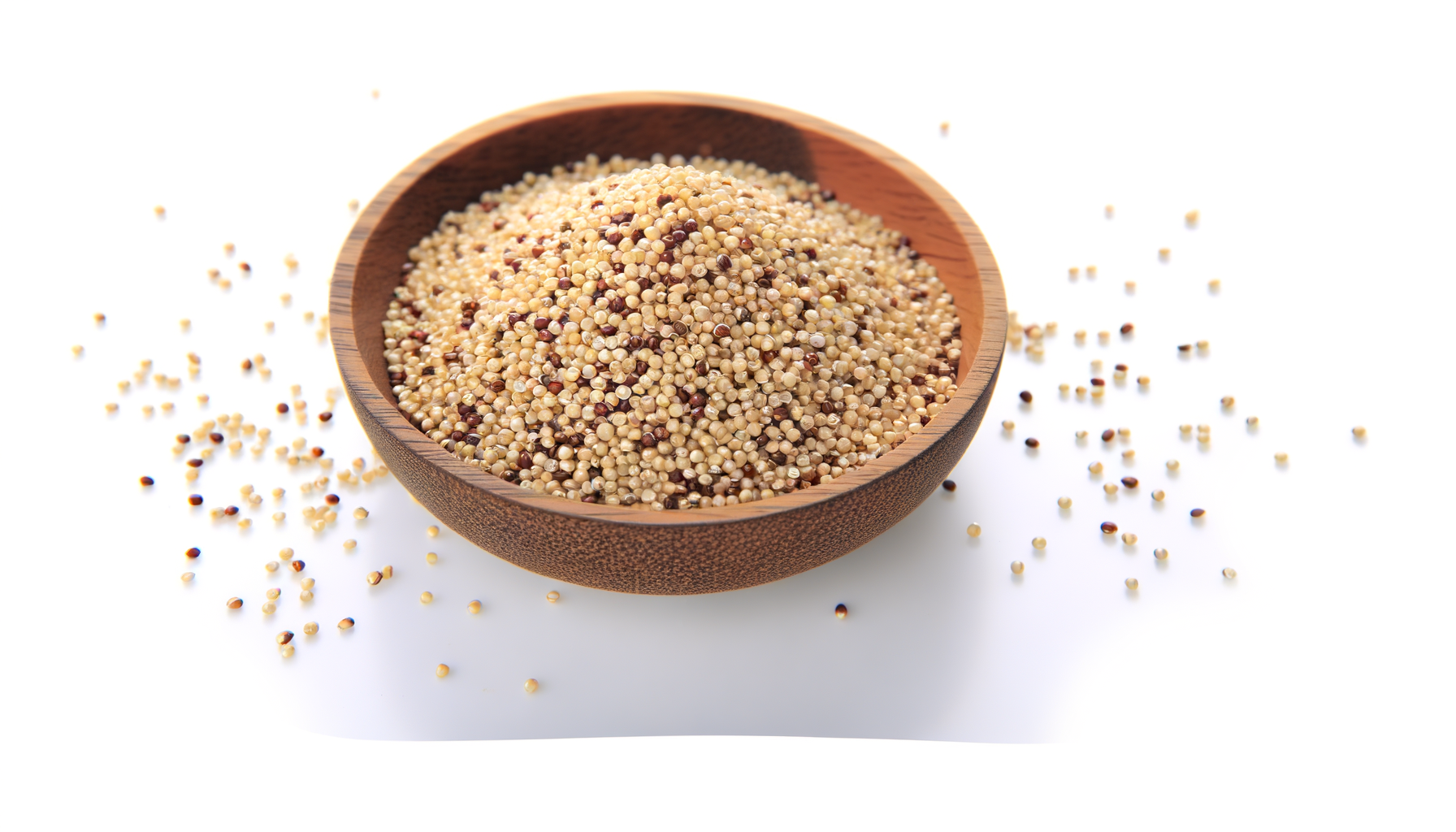
Quinoa
Chenopodium quinoa
Sensory Profile
Tastes
Basic flavor profiles
Aromas
Scent characteristics
Stimuli
Sensory sensations
Textures
Physical properties
About Quinoa
Quinoa (Chenopodium quinoa), a nutrient-dense pseudocereal of the *Amaranthaceae* family, is distinguished by its complex sensory profile, characterized by a pronounced earthy, nut-like base note with subtle grassy undertones and a mineral finish reminiscent of beet greens. Upon hydration and cooking, the grain exhibits a unique dual-texture: the outer germ ring remains resilient and "al dente," providing a distinctive pop or snap, while the inner endosperm softens into a delicate, fluffy consistency. This structural integrity makes it the essential foundation for the Andean *Sopa de Quinua*, where its high protein content—comprising all nine essential amino acids—contributes to a rich, viscous mouthfeel without the gummy starch release typical of true grains. In modern applications like a toasted quinoa pilaf, the Maillard reaction intensifies its pyrazine compounds, enhancing the roasted aroma and allowing the grain to act as a structural scaffold that absorbs vinaigrettes without losing its individual definition. Historically cultivated for over 5,000 years in the high-altitude Altiplano of the Andes, quinoa was revered by the Incas as *chisaya mama* (mother of all grains) and was traditionally processed through a rigorous washing cycle to remove bitter saponins—natural triterpene glycosides found in the pericarp that act as a chemical defense against pests. Unlike true cereals, quinoa is technically a seed, possessing a high concentration of globulin and albumin proteins that do not form gluten, yet provide a significant structural lift and moisture retention when ground into flour for traditional *pan de quinua*. Its culinary superiority is further defined by its high lipid content compared to wheat, which lends a luxurious, buttery quality to the palate, and its ability to expand to four times its original volume, making it a highly efficient medium for carrying bold, acidic, or herbaceous flavor profiles.
Associated health effects(23)
- Micronutrient Support
- Phytate Mineral Bioavailability Reduction
- Cardiovascular Protection
- Antioxidant
- Allergic Reactions
- Protein Quality Support
- Cancer-Preventive
- Blood Sugar Support
- Blood Sugar Regulation
- Digestive Irritation
- Dietary Fiber
- Cholesterol Management
- Antinutrient Exposure
- Gluten-Free Nature
- Protein Content
- Nutrient Interference
- Weight Management
- Antibacterial
- Heart Health
- Digestive Aid
- Anticancer Potential
- Anti-inflammatory
- Complete Protein Profile
Nutrition per 100 g(4)
- Energy: 368 kcal
- Protein: 14.1 g
- Fat: 6.1 g
- Fiber: 7 g