
Raspberry Sensory Map
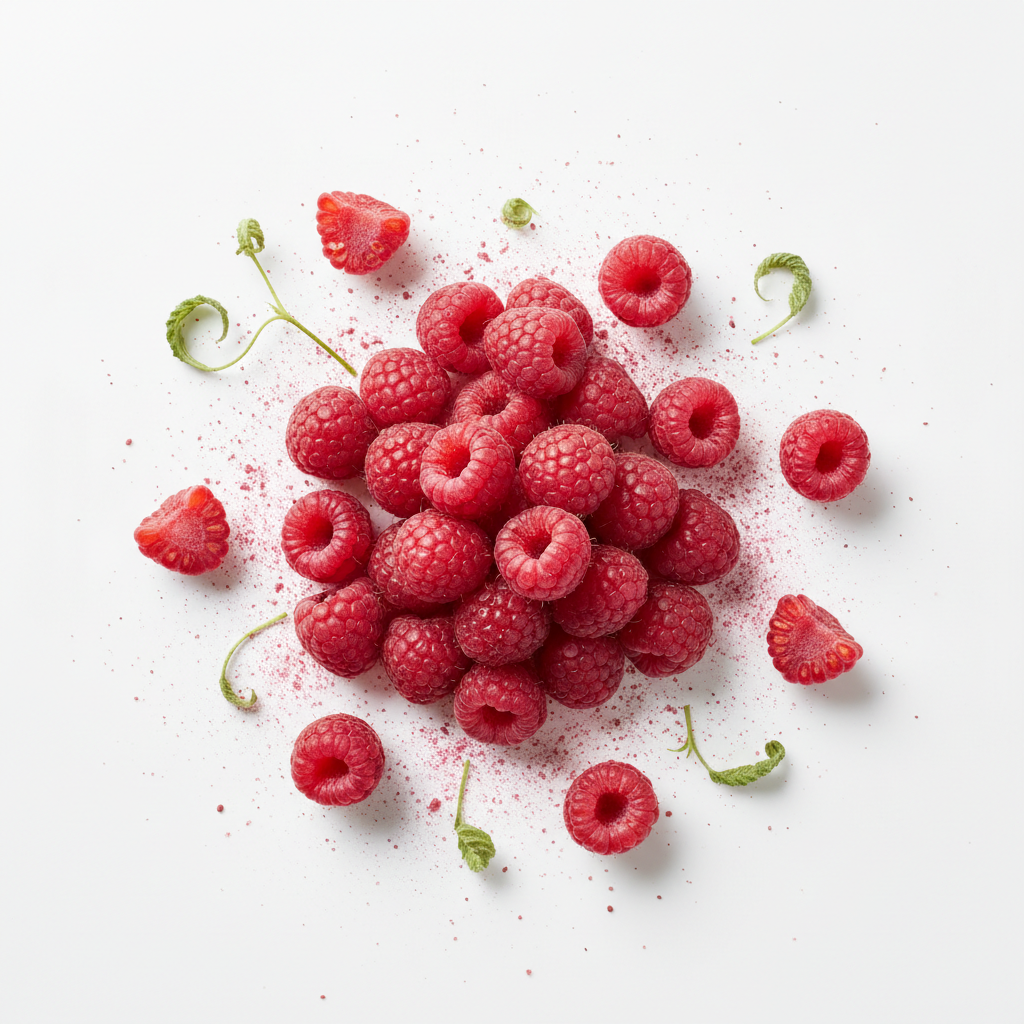
Raspberry
Rubus idaeus
Sensory Profile
Tastes
Basic flavor profiles
Aromas
Scent characteristics
Stimuli
Sensory sensations
Textures
Physical properties
About Raspberry
The Raspberry (Rubus idaeus) is defined by its complex aggregate structure, composed of dozens of individual drupelets that offer a delicate, velvet-like mouthfeel and a high surface-area-to-volume ratio, resulting in a concentrated release of volatile esters and ionones that produce its signature floral, woody, and slightly jammy aroma. On the palate, it presents a sophisticated balance of sharp citric and malic acidity against a subtle, honeyed sweetness, a profile that makes it indispensable in classic preparations like the *Framboise Soufflé*, where its acidity cuts through the richness of egg yolks, or the *Melba*, where its vibrant tannins provide a structural counterpoint to creamy vanilla fats. Native to the cool, temperate forests of Europe and Northern Asia, the fruit has been cultivated since the Middle Ages, evolving from a wild medicinal forage to a cornerstone of French *pâtisserie* and Eastern European preserves, where traditional low-temperature maceration is employed to preserve its heat-sensitive aromatic compounds. Unlike many other berries, the raspberry detaches from its central receptacle (the torus) upon harvest, creating a hollow core that allows for innovative culinary stuffing or rapid infusion in spirits and vinegars. Furthermore, the fruit’s high pectin content and significant concentration of anthocyanins allow it to function as a natural gelling agent and a potent pH-sensitive pigment, providing both structural integrity and a brilliant crimson hue to glazes and reductions without the need for synthetic additives.
Associated health effects(12)
- Digestive Discomfort from Excess Fruit Fiber
- Antioxidant
- Nutrient Density
- Bacterial Contamination Risk
- Blood Sugar Regulation
- Anthocyanin-Rich Polyphenol Provision
- Dietary Fiber
- Allergic Reaction Risk
- Cognitive Function Enhancement
- Blood Lipid Profile Improvement
- Postprandial Glycemic Control Enhancement
- Anti-inflammatory
Nutrition per 100 g(4)
- Energy: 52 kcal
- Protein: 1.2 g
- Fat: 0.65 g
- Fiber: 6.5 g