
Tabasco Sensory Map
Tabasco
Capsicum frutescens
Sensory Profile
Tastes
Basic flavor profiles
Aromas
Scent characteristics
Stimuli
Sensory sensations
Textures
Physical properties
About Tabasco
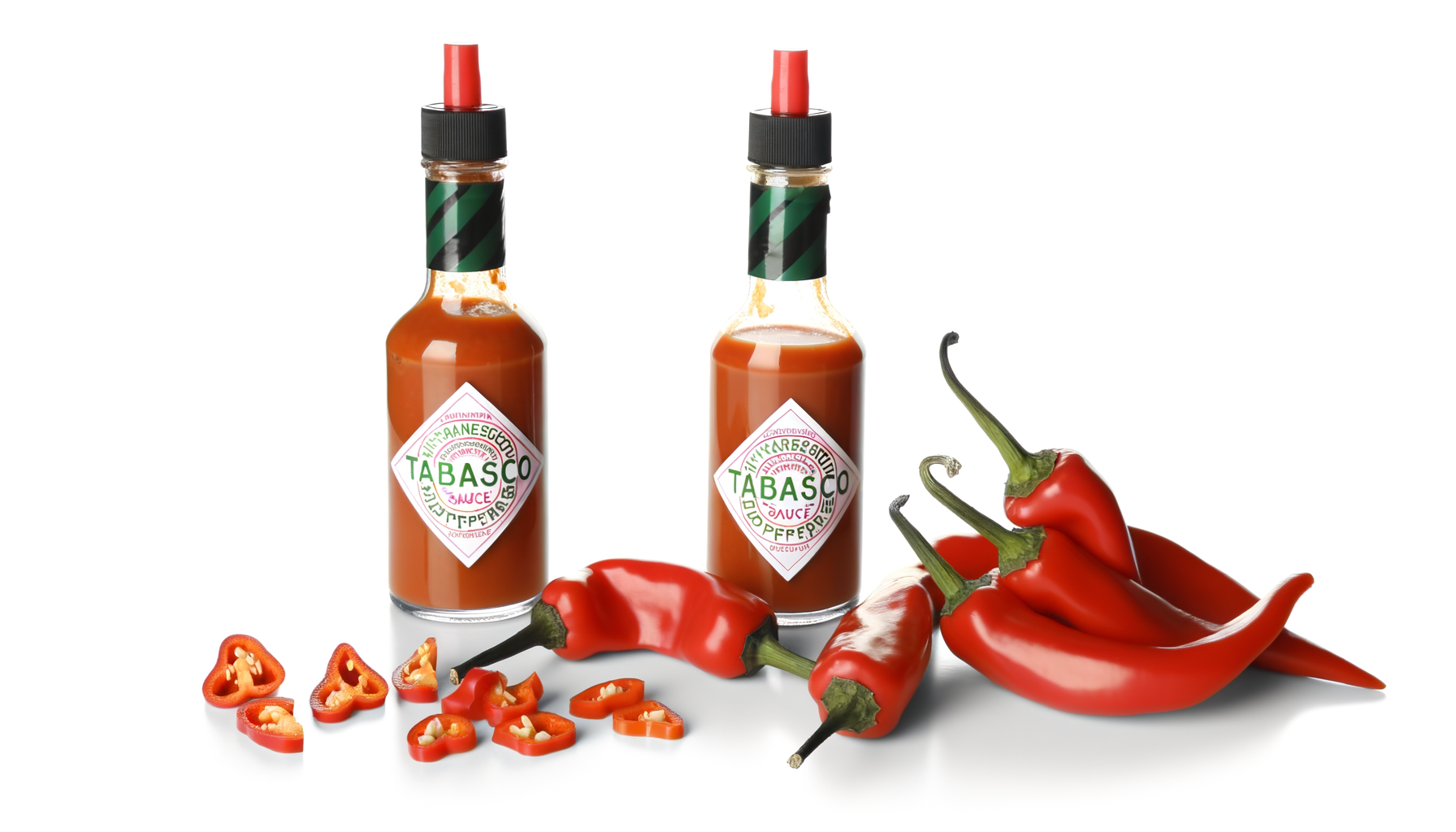
Tabasco peppers are renowned for their vibrant heat and tangy flavor. They possess a sharp, biting spiciness that ranges from 30,000 to 50,000 Scoville Heat Units, making them significantly hotter than jalapeños. The flavor is characterized by a bright, fruity undertone that complements the heat, providing a well-rounded taste experience. Tabasco peppers are most famously used to produce Tabasco sauce, a staple condiment that enhances a wide variety of dishes, from eggs and seafood to soups and marinades. The sauce is often used to add heat to cocktails, particularly the Bloody Mary. Beyond sauces, fresh or dried Tabasco peppers can be incorporated into salsas, hot sauces, and spice blends, or used to infuse oils for a spicy kick. Originating from the region of Tabasco in Mexico, these peppers have a rich history that dates back to the indigenous cultures of the area. They were cultivated by the Aztecs and later popularized by the McIlhenny Company, which began producing Tabasco sauce in the mid-19th century. Today, Tabasco peppers are grown in various warm climates around the world, but the original sauce remains a hallmark of Louisiana cuisine. Tabasco peppers are small, elongated, and typically ripen from green to a bright red.
Associated health effects(53)
- Blood Pressure Support
- Capsaicin-Induced Appetite Suppression
- Capsaicin-Induced Sensory Burning
- Satiety Enhancement
- Insulin Sensitivity Enhancement
- Capsaicin-Induced Satiety Enhancement
- Acidity-Induced Heartburn
- Anti-arthritic
- Capsaicin Overexposure Syndrome
- Cardiovascular Protection
- Adipogenesis Suppression
- Antioxidant
- Capsaicinoid-Mediated LDL Cholesterol Reduction
- Allergic Reactions
- Dose-Dependent Effects
- Acidity-Induced Gastric Irritation
- Capsaicin Pain Receptor Desensitization
- Blood Pressure Reduction
- Gut Microbiota Modulation via Capsaicin
- Nutritional Advantages
- Cancer-Preventive
- Pain Relief
- Fermentation-Enhanced Capsaicin Activity
- Decongestant
- Capsaicin-Induced Pain Relief
- Immune Booster
- High Sodium Content
- Immune Modulation
- Atherosclerosis Prevention
- Capsaicin-Induced Gastroesophageal Reflux Aggravation
- Capsaicin-Induced LDL Oxidation Reduction
- Anti-obesity Activity
- Capsaicin-Induced Thermogenesis
- Capsaicin Sensory Burning
- At-Risk Populations
- Capsaicin-Induced Gastroprotection
- Interaction with Medications
- Capsaicin-Induced Fat Oxidation Enhancement
- Antioxidant Immunity Support
- Metabolism Booster
- Weight Management
- LDL Cholesterol Reduction
- Antimicrobial Activity (Capsaicin-Specific)
- Antibacterial
- Capsaicin-Induced Endothelial Function Enhancement
- Capsaicin-Induced Gastrointestinal Irritation
- Low-Calorie Flavor Support
- Colorectal Cancer Risk Reduction
- Digestive Aid
- Cholesterol Improvement
- Gastrointestinal Irritation
- Anticancer Potential
- Anti-inflammatory
Nutrition per 100 g(4)
- Energy: 24 kcal
- Protein: 1 g
- Fat: 0.5 g
- Fiber: 1.5 g