
Tahini Sensory Map
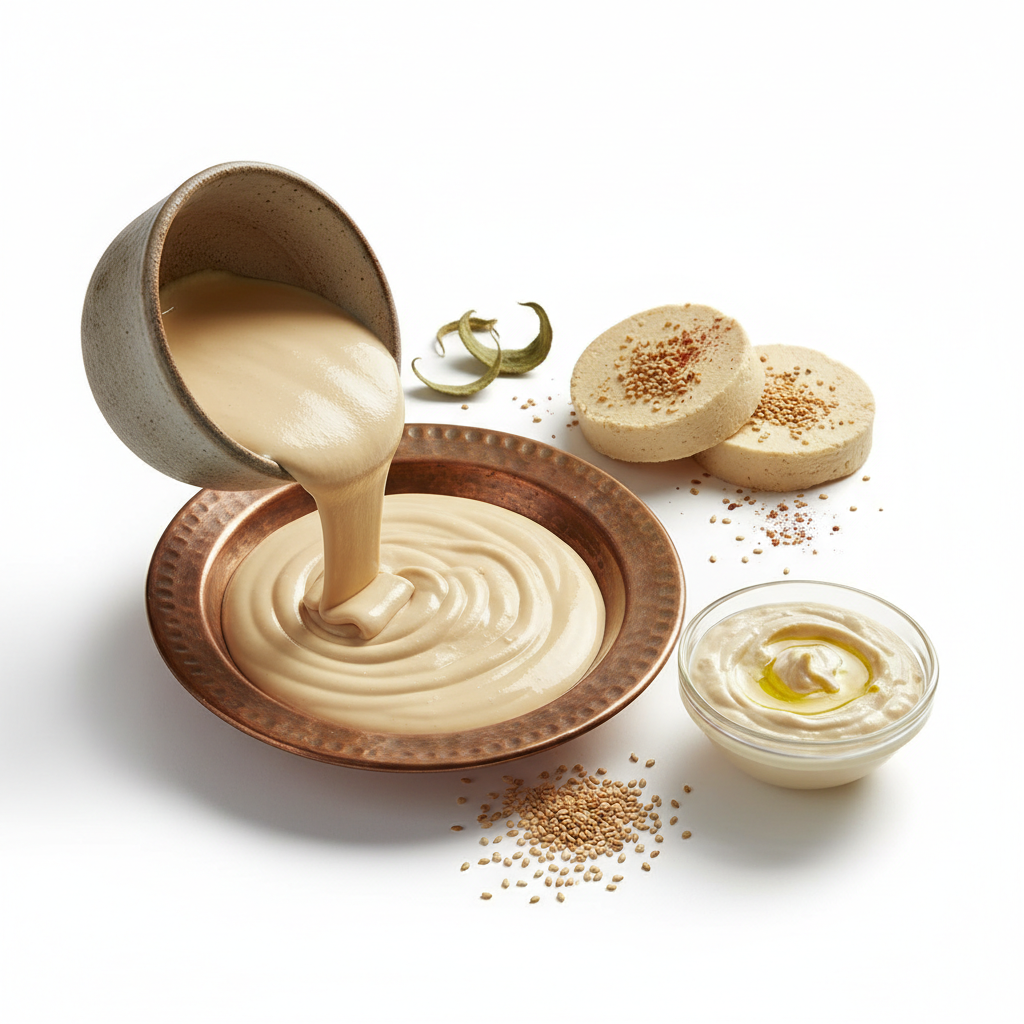
Tahini
Sesamum indicum
Sensory Profile
Tastes
Basic flavor profiles
Aromas
Scent characteristics
Stimuli
Sensory sensations
Textures
Physical properties
About Tahini
Tahini (Sesamum indicum) is a sophisticated, oil-rich paste derived from hulled sesame seeds that have been lightly toasted and stone-ground to a fluid, silk-like consistency. Its sensory profile is defined by a deep, nutty base with distinct notes of toasted parchment and a pleasant, lingering bitterness, while its aroma evokes warm earth and roasted legumes. In iconic applications like Hummus bi Tahini or Baba Ganoush, the ingredient acts as a powerful emulsifier; its high lecithin content binds acidic lemon juice and water-heavy vegetable purees into a stable, aerated cream that coats the palate. Originating in the Levant and widely celebrated across Middle Eastern, North African, and Eastern Mediterranean cuisines, traditional production relies on a multi-stage process of soaking seeds in brine to separate the bran, followed by precise roasting to develop Maillard reaction products without scorching the delicate oils. What distinguishes tahini from other nut or seed butters is its unique chemical reaction when hydrated: despite being an oil-based paste, the addition of water triggers a thickening effect as the sesame proteins and carbohydrates absorb the liquid, creating a stiff, pale matrix that can then be thinned into a velvet-textured sauce.
Associated health effects(12)
- Caloric Density
- Sesame Allergy
- Antioxidant
- Blood Pressure Reduction
- Nutrient Density
- Heavy Metal Contamination Risk
- General overconsumption risks
- Blood Sugar Regulation
- Endothelial Function Enhancement
- Oxalate Exposure
- Blood Lipid Profile Improvement
- Anti-inflammatory
Nutrition per 100 g(4)
- Energy: 595 kcal
- Protein: 17 g
- Fat: 53 g
- Fiber: 9 g