
Thai Chili Sensory Map
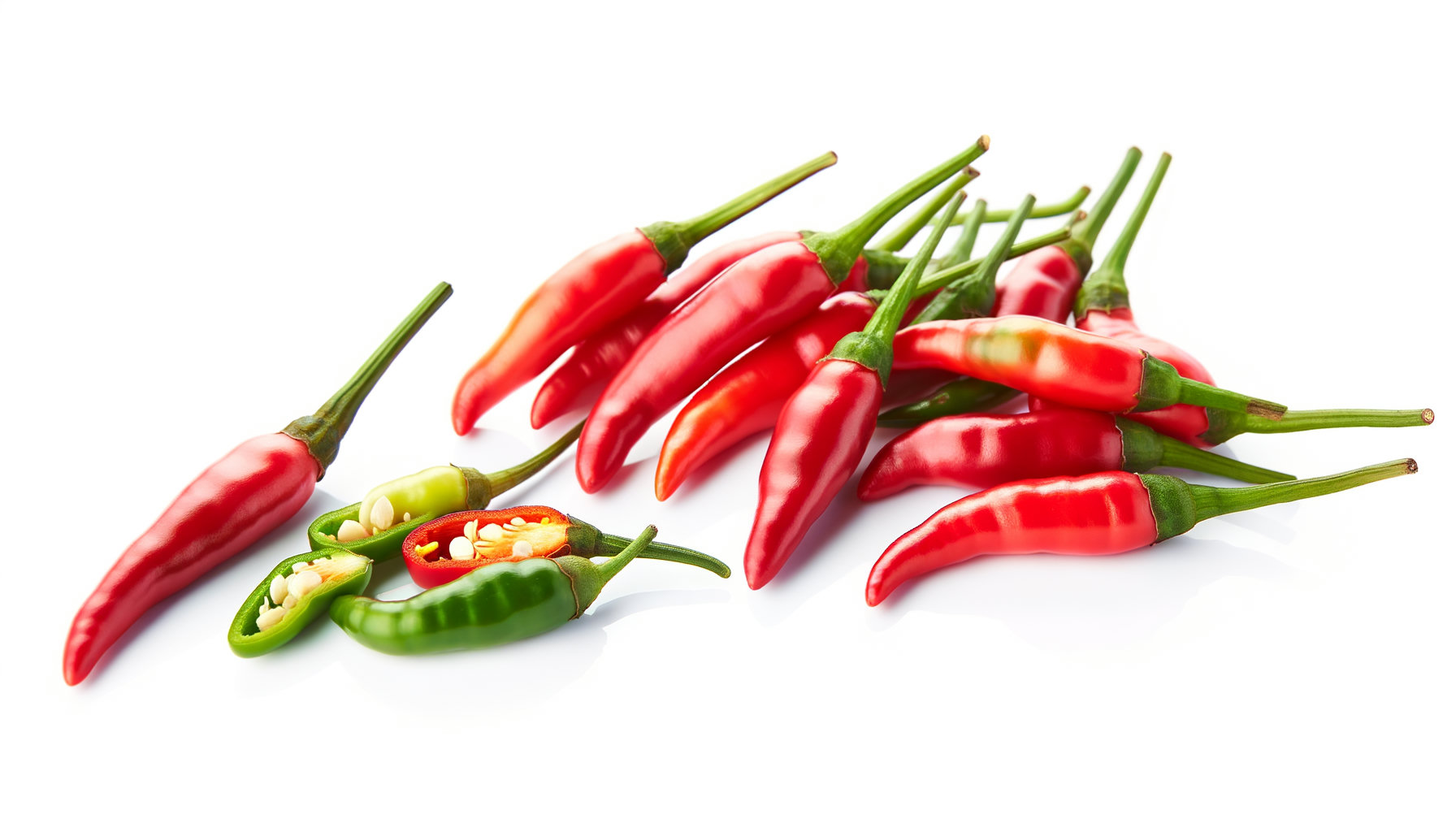
Thai Chili
Capsicum annuum
Sensory Profile
Tastes
Basic flavor profiles
Aromas
Scent characteristics
Stimuli
Sensory sensations
Textures
Physical properties
About Thai Chili
Thai Chili (Capsicum annuum), a member of the Solanaceae family, is renowned for its vibrant heat and complex flavor profile, characterized by a bright, fruity sweetness that balances its sharp, pungent spice. The aroma is intensely fragrant, with hints of fresh green grass and a subtle earthiness that can evoke the lush landscapes of Southeast Asia. When dried, Thai chilies develop a slightly smoky undertone, while their texture remains firm and crisp, making them ideal for both fresh and dried applications. In culinary contexts, Thai chilies are essential in iconic dishes such as Tom Yum Goong, where their heat enhances the soup's aromatic broth, creating a harmonious balance with the sour notes of lime and the umami depth of shrimp. They also shine in Nam Prik Pao, a roasted chili paste that benefits from the chili's natural sweetness and complexity, which melds beautifully with garlic and shrimp paste, creating a rich, layered flavor profile. Additionally, in Pad Thai, the chilies contribute a necessary kick that elevates the dish's sweet and tangy elements, while their capsaicin content aids in the release of flavors from proteins and vegetables, enhancing overall dish cohesion. Geographically, Thai chilies are predominantly cultivated in Thailand, where they hold cultural significance as a staple in everyday cooking and traditional festivals. The cultivation process often involves careful selection of seeds and growing conditions that maximize their heat and flavor, with farmers traditionally employing organic methods to ensure the purity and intensity of the chilies. What distinguishes Thai chilies is their unique chemical composition, particularly the presence of capsaicin, which not only provides heat but also interacts with other flavor compounds to create a more profound taste experience. This interaction is particularly evident when the chilies are incorporated into dishes that undergo cooking processes, such as stir-frying or simmering, where the heat releases their essential oils and compounds, intensifying the overall flavor profile. The ability of Thai chilies to maintain their vibrant color and flavor even when dried or processed further underscores their importance in culinary traditions, making them an indispensable ingredient in both authentic and modern interpretations of Thai cuisine.
Associated health effects(19)
- Capsaicin-Induced Appetite Suppression
- Cardiovascular Protection
- Antioxidant
- Aflatoxin Contamination Risk
- Gut Microbiota Modulation via Capsaicin
- Cancer-Preventive
- Capsaicin-Induced Pain Relief
- Capsaicin-Induced LDL Oxidation Reduction
- Anti-obesity Activity
- Capsaicin-Induced Thermogenesis
- Capsaicin-Induced Gastroprotection
- Digestive Distress
- All-Cause Mortality Reduction
- Pain Receptor Desensitization
- Weight Management
- Antimicrobial Activity (Capsaicin-Specific)
- Capsaicin-Induced Gastrointestinal Irritation
- Digestive Aid
- Anti-inflammatory
Nutrition per 100 g(4)
- Energy: 40 kcal
- Protein: 2 g
- Fat: 0.4 g
- Fiber: 1.5 g