
Trifoliate Orange Sensory Map
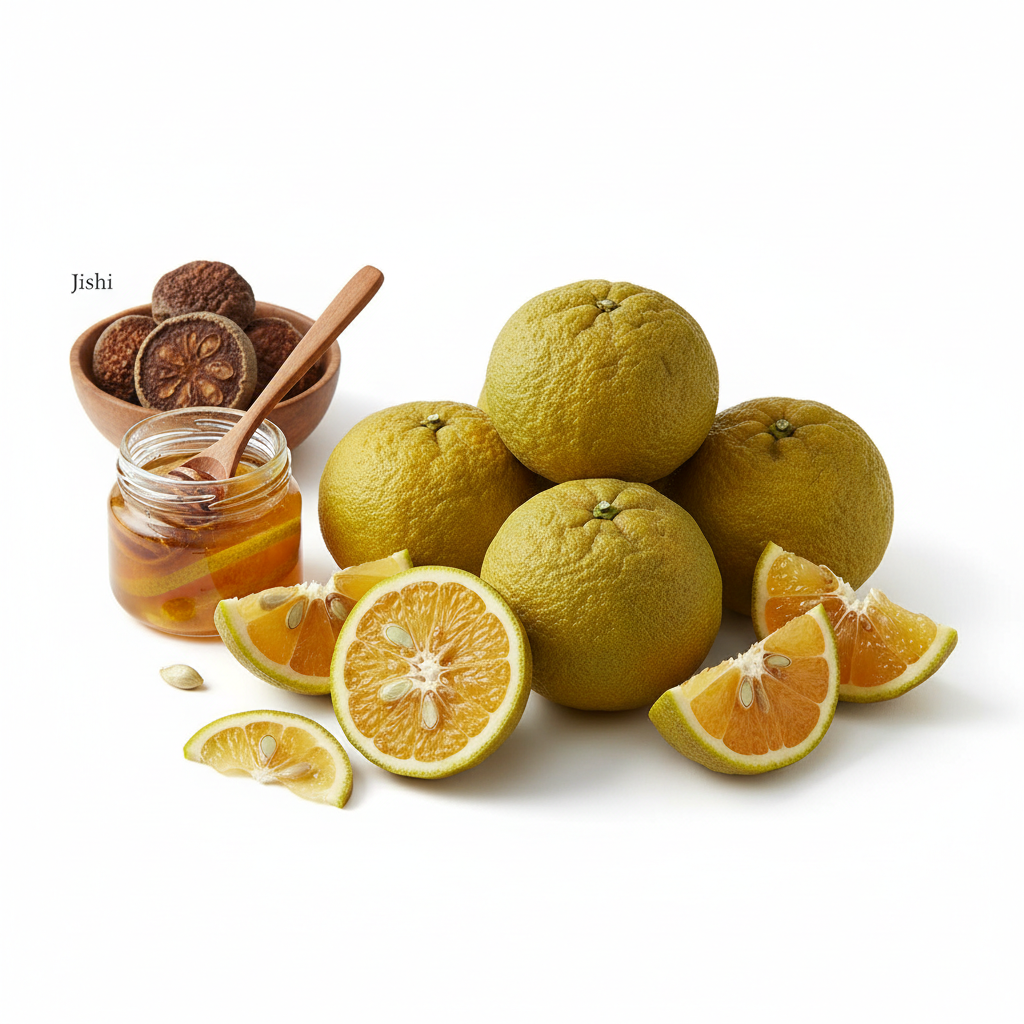
Trifoliate Orange
Citrus trifoliata
Sensory Profile
Tastes
Basic flavor profiles
Aromas
Scent characteristics
Stimuli
Sensory sensations
Textures
Physical properties
About Trifoliate Orange
The Trifoliate Orange (Citrus trifoliata), a deciduous member of the Rutaceae family, is distinguished by a complex sensory profile defined by a high concentration of ponciridin, which imparts a resinous, pine-like bitterness and a sharp, astringent acidity that far exceeds that of a standard lemon. Its aromatic bouquet is intensely floral and musky, reminiscent of a cross between bergamot and green hops, while the interior pulp is sparse, seedy, and encased in a downy, velvet-textured rind. In traditional East Asian medicine and culinary arts, particularly in China and Korea, the fruit is often sun-dried or fermented into *Jishi* (bitter orange tea) or sliced thin and preserved in honey to create *Yujacha*-style syrups; the high pectin content in the under-ripe fruit makes it a superior natural gelling agent for marmalades, where its volatile oils provide a sophisticated, tannic counterpoint to high sugar concentrations. Native to Northern China and Korea, this cold-hardy species is prized for its resilience, often serving as the primary rootstock for commercial citrus to impart frost resistance and soil-borne disease immunity. From a technical culinary perspective, the Trifoliate Orange is unique due to its high levels of coumarins and essential oils located in the flavedo, which, when aged or cured, undergo oxidative transformations that mellow the initial harshness into deep, woody notes suitable for flavoring complex bitters or infusions. When used in marinades, the fruit’s aggressive citric and malic acid profile acts as a potent denaturant for tough connective tissues in game meats, while its distinct bitterness serves to cut through the richness of fatty proteins, providing a structural balance that more common citrus varieties lack.
Associated health effects(14)
- Furanocoumarin-Induced Photosensitivity
- Adipogenesis Suppression
- Antioxidant
- Acidity-Induced Gastric Irritation
- Acidity-Induced Dental Erosion
- Mucosal Protection
- Antidiabetic Activity
- Digestive Discomfort
- Hepatoprotection
- Antiallergic Activity
- Digestive Protection
- Colonic Motility Enhancement
- Furanocoumarin-Induced Drug Interaction Potential
- Anti-inflammatory
Nutrition per 100 g(4)
- Energy: 40 kcal
- Protein: 0.8 g
- Fat: 0.2 g
- Fiber: 2.5 g