
Wakame Sensory Map
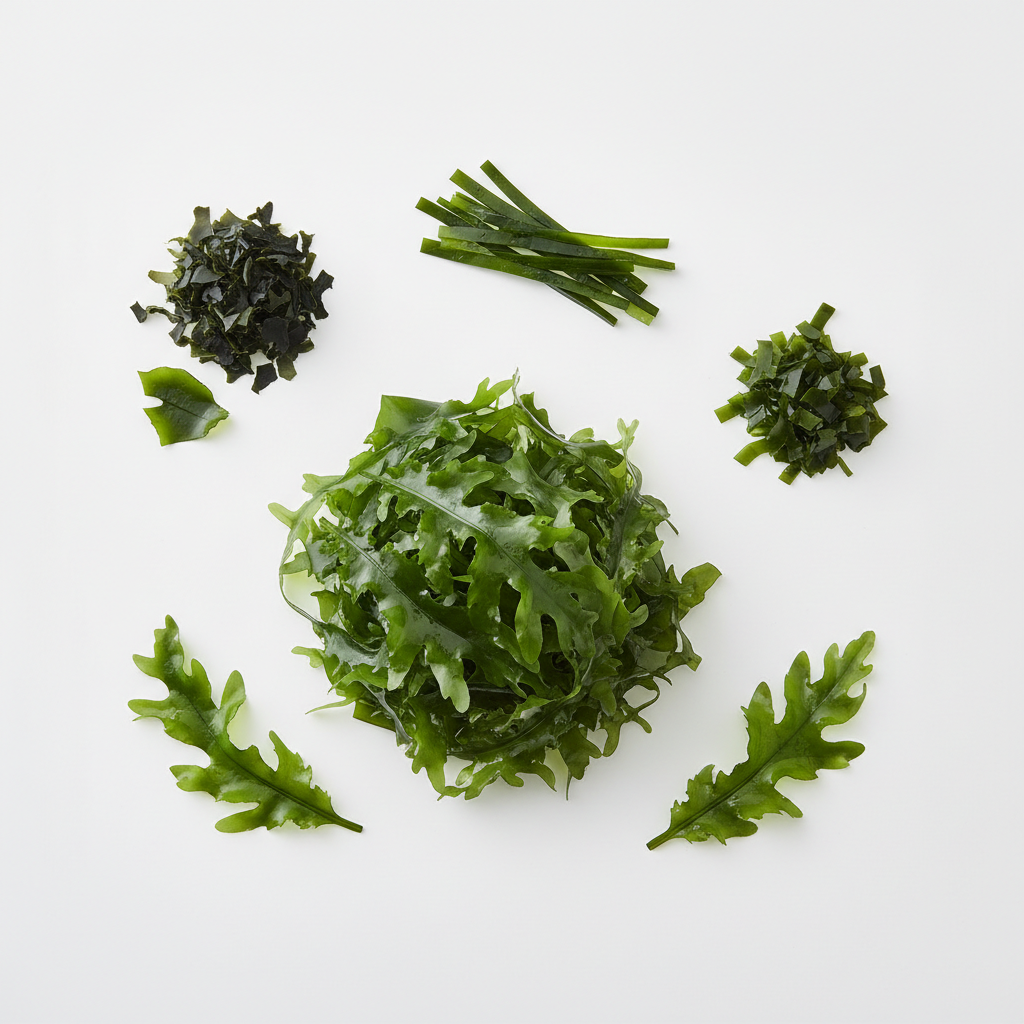
Wakame
Undaria pinnatifida
Sensory Profile
Tastes
Basic flavor profiles
Aromas
Scent characteristics
Stimuli
Sensory sensations
Textures
Physical properties
About Wakame
Wakame (Undaria pinnatifida), a member of the *Alariaceae* family, is a foundational brown macroalgae prized for its delicate, satiny texture and a nuanced sensory profile defined by a mild, vegetal sweetness and a clean, saline aroma reminiscent of the sea breeze rather than the intense fishiness of darker kelps. In the professional kitchen, it is most celebrated in Japanese *Miso* soup and *Sunomono* (vinegared salads), where its high concentration of glutamic acid acts as a natural flavor enhancer, providing a deep umami backbone that rounds out the acidity of rice vinegar or the fermentation notes of soybean paste. Originally native to the cold temperate coastal waters of Japan, Korea, and China, it is traditionally harvested in the spring and preserved through a "blanch-and-salt" method (*yu-toshi enzo*), a process that stabilizes its vibrant chlorophyll-green hue and prevents the enzymatic breakdown that would otherwise lead to mucilaginous degradation. Unlike its tougher relative, Kombu, Wakame is characterized by its thin, lobed fronds that rehydrate rapidly to a tender, succulent consistency, yet it retains a distinct structural integrity due to its alginate content, which allows it to withstand brief simmering without losing its shape. Beyond its immediate flavor, Wakame is technically unique for its high levels of fucoxanthin and its ability to act as a gentle thickening agent in broths, where its soluble fibers leach out to provide a subtle, silky mouthfeel that bridges the gap between liquid and solid components.
Associated health effects(13)
- Fucoidan-Mediated Anti-inflammatory Activity
- Blood Pressure Support
- Heavy Metal Contamination Risk from Edible Seaweeds
- Gut Health Promotion
- Fucoxanthin-Mediated Weight Regulation
- Dietary Mineral Content
- Dietary Fiber
- Cholesterol Absorption Inhibition
- Alginate-Mediated Fat Absorption Reduction
- Iodine Excess Risk
- Postprandial Lipid Attenuation
- Postprandial Glycemic Reduction
- Anti-inflammatory
Nutrition per 100 g(4)
- Energy: 45 kcal
- Protein: 3 g
- Fat: 0.6 g
- Fiber: 0.5 g