
Watercress Sensory Map
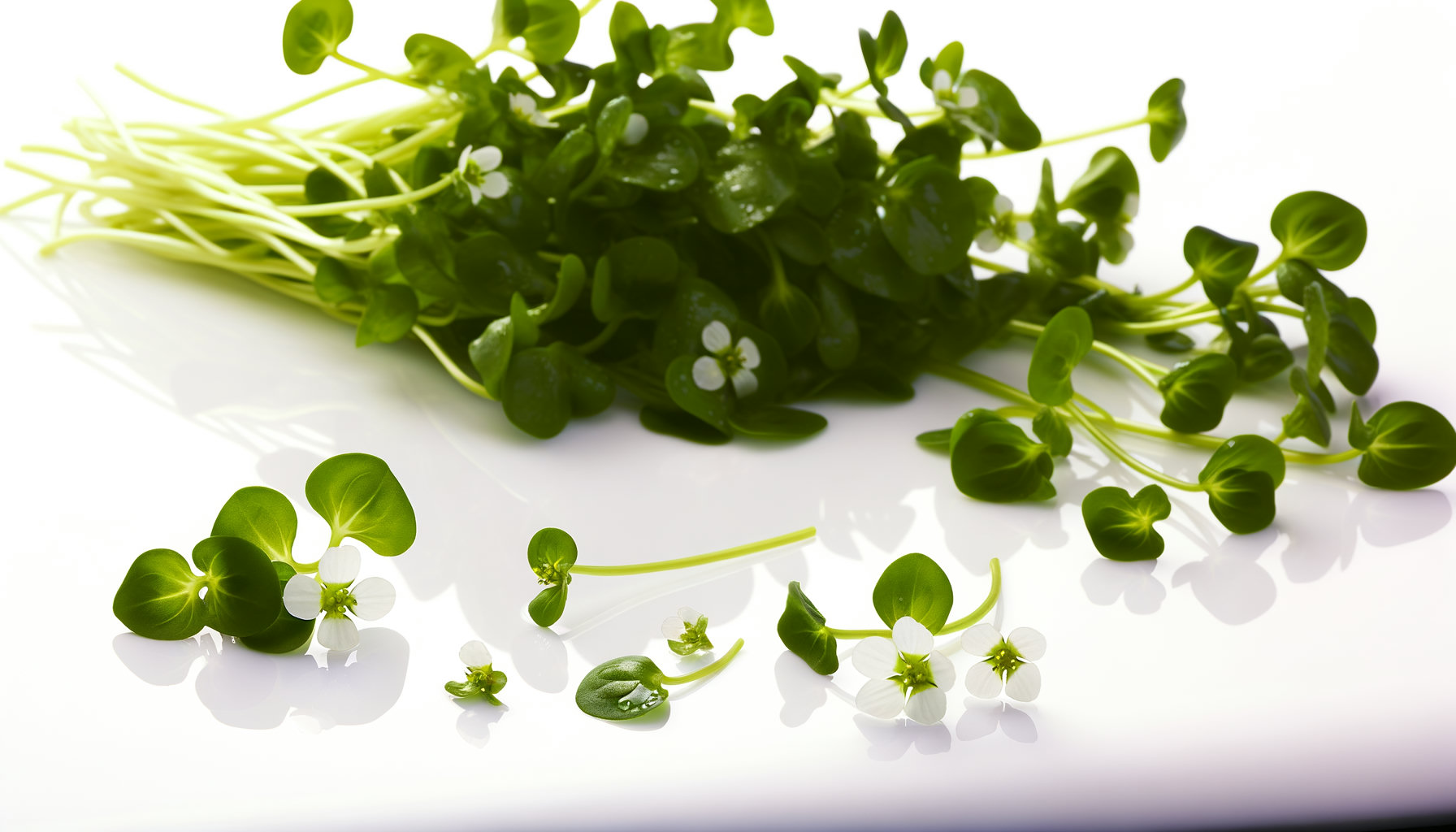
Watercress
Nasturtium officinale
Sensory Profile
Tastes
Basic flavor profiles
Aromas
Scent characteristics
Stimuli
Sensory sensations
Textures
Physical properties
About Watercress
Watercress boasts a distinctive peppery flavor with a crisp, slightly bitter undertone. Its refreshing, green taste is often compared to arugula, making it a vibrant addition to various dishes. This versatile leafy green is commonly used in salads, sandwiches, and soups, where it can be enjoyed raw or lightly cooked. Watercress pairs well with creamy dressings, citrus, and other fresh herbs, enhancing the overall flavor profile of dishes. It is also a popular garnish for seafood and can be blended into pestos or smoothies for an added nutritional boost. Watercress is native to Europe and Asia, thriving in freshwater environments such as streams and ponds. It has been cultivated since ancient times, with historical references dating back to the Roman Empire, where it was valued for both its culinary and medicinal properties. Belonging to the Brassicaceae family, watercress is characterized by its small, round leaves and delicate white flowers. It is a nutrient-dense green, rich in vitamins A, C, and K, as well as antioxidants. Its growth in aquatic environments contributes to its unique crisp texture and refreshing taste, making it a favored ingredient in health-conscious cuisine.
Associated health effects(67)
- Safety and Toxicity
- Blood Pressure Support
- Isothiocyanate-Mediated Anticancer Activity
- Nitrate-Induced Exercise Endurance Enhancement
- Micronutrient Density
- Collagen Synthesis Enhancement
- Bone Mineralization Support
- Apoptosis Induction
- Vitamin C Content Support
- Vitamin K Cardiovascular Protection
- Warfarin Interaction Risk
- Lutein and Zeaxanthin Provision
- Beta-Carotene-Mediated Vitamin A Support
- Antioxidant
- Isothiocyanate-Mediated Antioxidant Activity
- Cardiovascular Health
- Dose-Dependent Effects
- Vitamin K Drug Interaction Risk
- Toxicity and Safety
- Goitrogenic Activity
- Blood Pressure Reduction
- Folate Source
- Nephroprotection
- Nutritional Advantages
- Cancer-Preventive
- Lipid Profile Improvement
- Blood Cholesterol Reduction
- Phenethyl Isothiocyanate-Mediated Detoxification Enzyme Activation
- Low Caloric Density
- Vitamin K Source
- Antidiabetic Activity
- Oxalate Nephrolithiasis Risk
- Goitrin-Mediated Thyroid Interference
- Immune Booster
- Immune Modulation
- Glucotropaeolin-Mediated Antioxidant Activity
- Dietary Nitrate-Mediated Blood Pressure Reduction
- Rutin-Mediated Bone Formation Support
- Nitrate-Induced Vasodilation
- Glucotropaeolin-Mediated Anti-inflammatory Activity
- Health effect related to no evidence of toxicity, heavy metals, or contaminants
- Hepatoprotection
- Dietary Fiber
- Allergic Reaction Risk
- Vitamin K Content Support
- Bone Health
- Nitrate-Induced Platelet Aggregation Inhibition
- Cholesterol Management
- Antioxidant Immunity Support
- Antiscorbutic Activity
- Anti-aging Activity
- DNA Damage Reduction
- LDL Cholesterol Reduction
- Glucotropaeolin-Mediated LDL Oxidation Reduction
- Antibacterial
- Beta-Carotene-Mediated Eye Health Support
- Vitamin K-Mediated Coagulation Support
- Immune Function
- PEITC-Mediated DNA Protection
- Lipid Peroxidation Reduction
- Digestive Aid
- Vitamin A Source
- Lutein and Zeaxanthin Support
- Cholesterol Improvement
- Gastrointestinal Irritation
- Anticancer Potential
- Anti-inflammatory
Nutrition per 100 g(4)
- Energy: 11 kcal
- Protein: 2.3 g
- Fat: 0.4 g
- Fiber: 0.5 g