
Whey Sensory Map
Whey
Serum lactis
Sensory Profile
Tastes
Basic flavor profiles
Aromas
Scent characteristics
Stimuli
Sensory sensations
Textures
Physical properties
About Whey
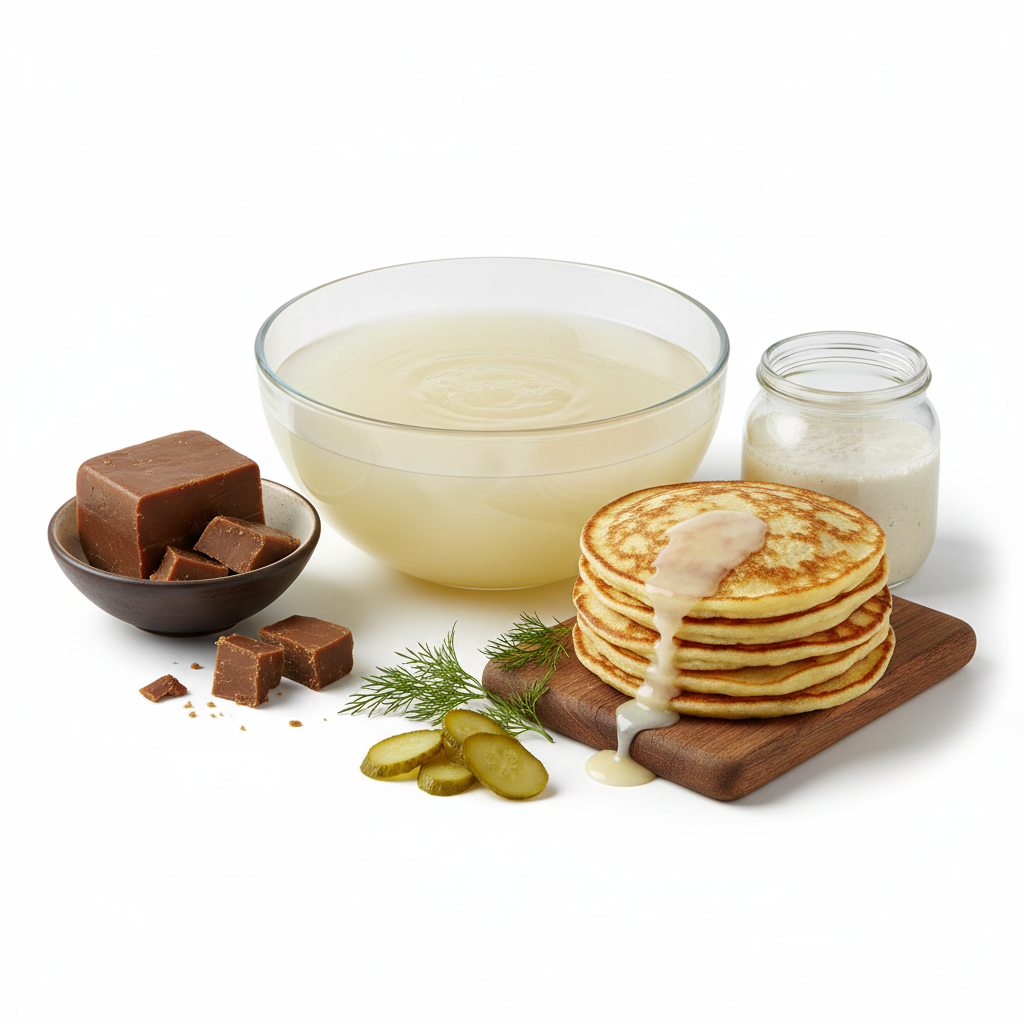
Whey (Serum lactis) is the nutrient-dense liquid byproduct of the cheesemaking process, characterized by a translucent, pale-straw hue and a complex sensory profile that balances lactic acidity with a subtle, malty sweetness and a thin, aqueous viscosity. In the professional kitchen, its primary utility lies in its high concentration of globular proteins—specifically beta-lactoglobulin and alpha-lactalbumin—which provide superior emulsification and moisture retention in applications like the Norwegian *Brunost*, where prolonged caramelization of the lactose through the Maillard reaction creates a dense, fudge-like texture and deep notes of burnt toffee. Beyond its role in concentrated reductions, whey serves as a potent biological leavening agent and tenderizer in traditional Slavic *Blini* or sourdough starters; the residual lactic acid bacteria break down complex gluten structures, resulting in a delicate, aerated crumb and a distinctively bright, tangy finish that water or whole milk cannot replicate. Historically rooted in the alpine dairy traditions of Central Europe and the Mediterranean, where it was prized as a "healing water," modern culinary application leverages its mineral salts and riboflavin to enhance the umami depth of fermented brines and lacto-fermented vegetables. What distinguishes whey from other dairy derivatives is its unique thermal stability; unlike casein, whey proteins remain soluble at low pH levels, allowing chefs to clarify stocks or create stable, acid-forward foams and gels that maintain structural integrity under heat.
Associated health effects(9)
- Blood Sugar Regulation
- Amino Acid Quality Support
- Excessive Protein Load Risk
- Blood Lipid Profile Improvement
- Milk Allergy Reaction Risk
- Appetite-Regulating Peptide Activation
- Lactose Intolerance Digestive Distress
- Muscle Maintenance and Repair
- Complete Protein Provision
Nutrition per 100 g(4)
- Energy: 329 kcal
- Protein: 80 g
- Fat: 1 g
- Fiber: 0 g