
Wild Thyme Sensory Map
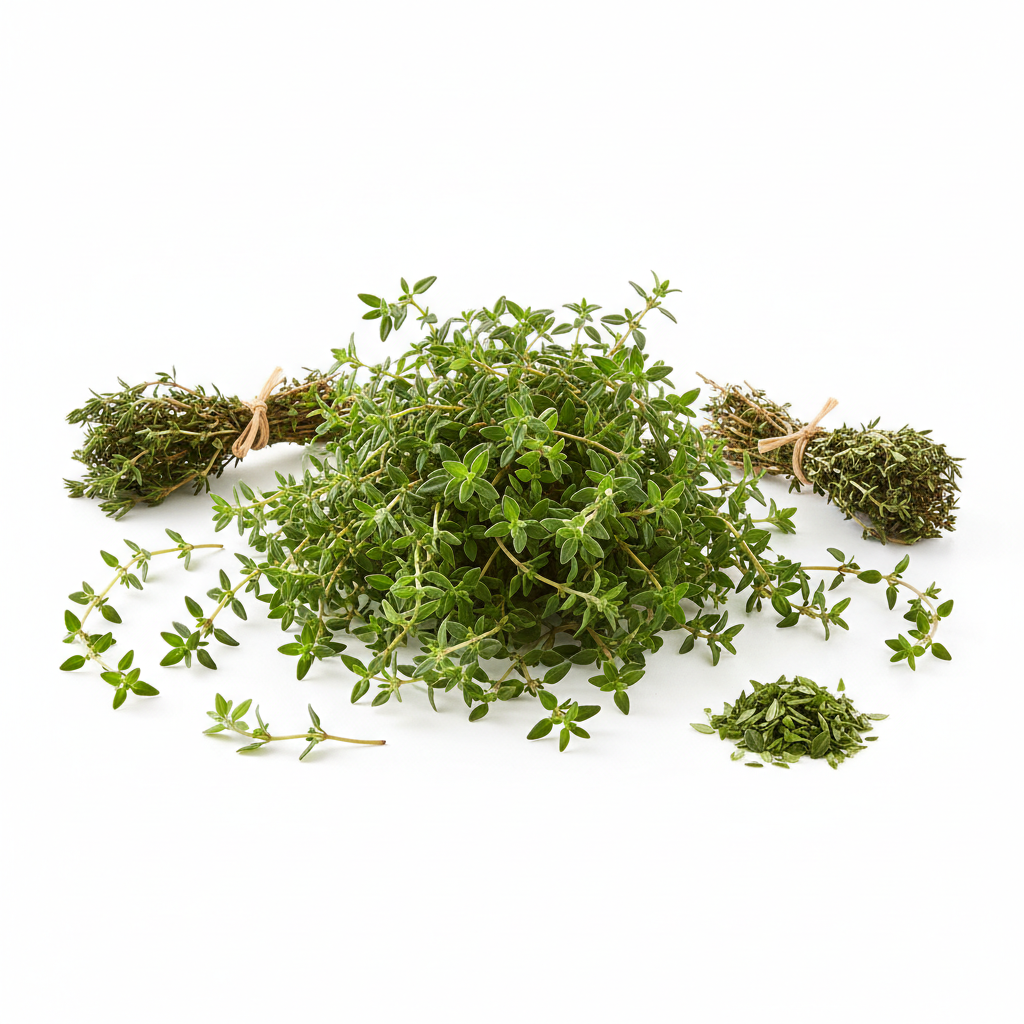
Wild Thyme
Thymus serpyllum
Sensory Profile
Tastes
Basic flavor profiles
Aromas
Scent characteristics
Stimuli
Sensory sensations
Textures
Physical properties
About Wild Thyme
Wild Thyme (Thymus serpyllum), often referred to as Creeping Thyme, presents a more nuanced and floral sensory profile than its upright garden counterparts, characterized by high concentrations of p-cymene and thymol that yield a sharp, camphoraceous aroma tempered by delicate notes of lemon peel and dry earth. In the professional kitchen, this herb is indispensable for slow-braised game meats like Civet de Chevreuil or traditional Mediterranean *Lamb Kleftiko*, where its robust essential oils withstand prolonged thermal exposure to break down tough connective tissues while neutralizing the heavy, gamey fats through its astringent chemical properties. Native to the rocky, sun-drenched slopes of Northern Europe and Western Asia, it has been wild-harvested for centuries, serving as a foundational element in the *Za’atar* blends of the Levant and the *Herbes de Provence* of Southern France, where it is traditionally air-dried in bundles to concentrate its phenolic compounds. Unlike the woody stems of *Thymus vulgaris*, *T. serpyllum* features tender, prostrate stems and a higher surface-area-to-volume ratio in its foliage, allowing for a more rapid infusion of flavor into lipid-based emulsions and sauces without the need for a *bouquet garni*. Its unique chemical composition acts as a natural antioxidant, effectively slowing the oxidation of fats in charcuterie and pâtés, making it a technical asset for preservation as much as a primary flavoring agent.
Associated health effects(8)
- Antioxidant
- Culinary Herb Polyphenol Contribution
- Digestive Symptom Relief
- Culinary Herb Nutrient Density
- Essential Oil Oral Toxicity
- Digestive Aid
- Anti-inflammatory
- Carminative
Nutrition per 100 g(4)
- Energy: 263 kcal
- Protein: 9.1 g
- Fat: 7.4 g
- Fiber: 14 g